

'Top down' disaster resilience doesn't work. The National Recovery and Resilience Agency must have community at its heart
- Written by Mark Duckworth, Senior Research Fellow, Centre for Resilient and Inclusive Societies, Alfred Deakin Institute for Citizenship and Globalisation, Deakin University, Deakin University
In the past ten years we have seen several major reports and announcements seeking to improve and transform the way emergency management works in Australia.
The National Recovery and Resilience Agency, announced last week and funded in Tuesday’s budget, is the latest.
After the 2009 Bushfires and the 2010-11 Queensland floods, the Council of Australian Governments endorsed the 2011 National Strategy for Disaster Resilience, which identified a need
[…] to develop and embed new ways of doing things […] to improve disaster resilience and prevent complacency setting in once the memory of a recent disaster has subsided.
Now, the new National Recovery and Resilience Agency will
[…] provide support to local communities during the relief and recovery phases following major disasters" along with hundreds of millions of dollars “invested in a new program of disaster preparation and mitigation.
This will certainly improve the way Australia prepares for and recovers from the increasing number of natural disasters we face. But will this new agency deliver the change we need?
A focus on resilience
A decade ago, few people in emergency management were embedding resilience into their thinking.
But more recently, the 2020 Royal Commission into National Natural Disaster Arrangements, established in the wake of the catastrophic fires of last summer, contained more than 300 references to resilience.
"Resilience” is part of the new agency’s title, as it is also with Resilience NSW, the name of that state’s lead on disaster management.
Communities are now at the centre of emergency management policies. Organisations such as Bushfire Recovery Victoria state:
Recovery can’t be about government telling communities how it’s going to be. It must be about listening, working together, and ensuring that rebuilding and recovery are both locally driven and delivered.
Will the new agency further this change?
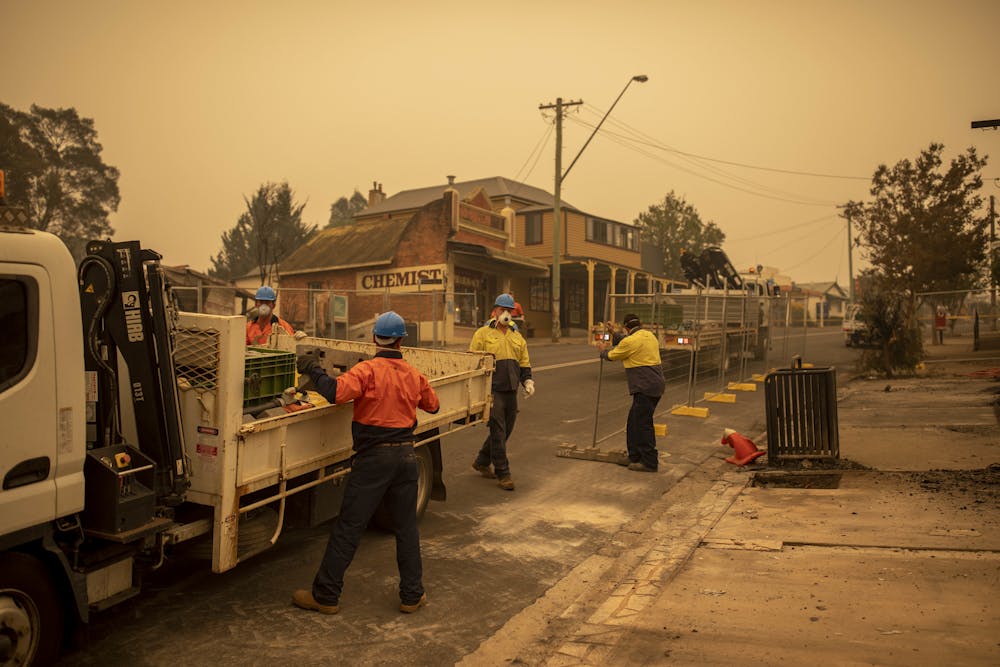 Effective recovery is planned in advance and is embedded in the initial disaster response.
AAP Image/Sean Davey
Effective recovery is planned in advance and is embedded in the initial disaster response.
AAP Image/Sean Davey
Changing the relationships between communities and government
While superb emergency response is clearly vital, the new National Recovery and Resilience Agency can build on the reforms of the past decade. It needs to further the shift to a much broader community-centred approach.
We must remember “disaster resilience” is not just some buzzword or brand name for grants or disaster-themed programs. It is about changing the relationships between communities and government.
This means recognising a community’s existing knowledge, skills, structures and networks, and using them to co-design programs and projects.
Resilient communities:
- function reliably and well under stress
- successfully adapt
- are self-reliant
- have high levels of social support, social cohesion, and social capacity.
Governments are moving away from the model in which officials plan and deliver a service after community consultation. Co-designing local initiatives involves the community and government joining up to design and deliver a program. It is more than just improving community consultation.
This approach helps strengthen communities and their resilience — but it takes time and money. And that time and money must be invested before disaster strikes.
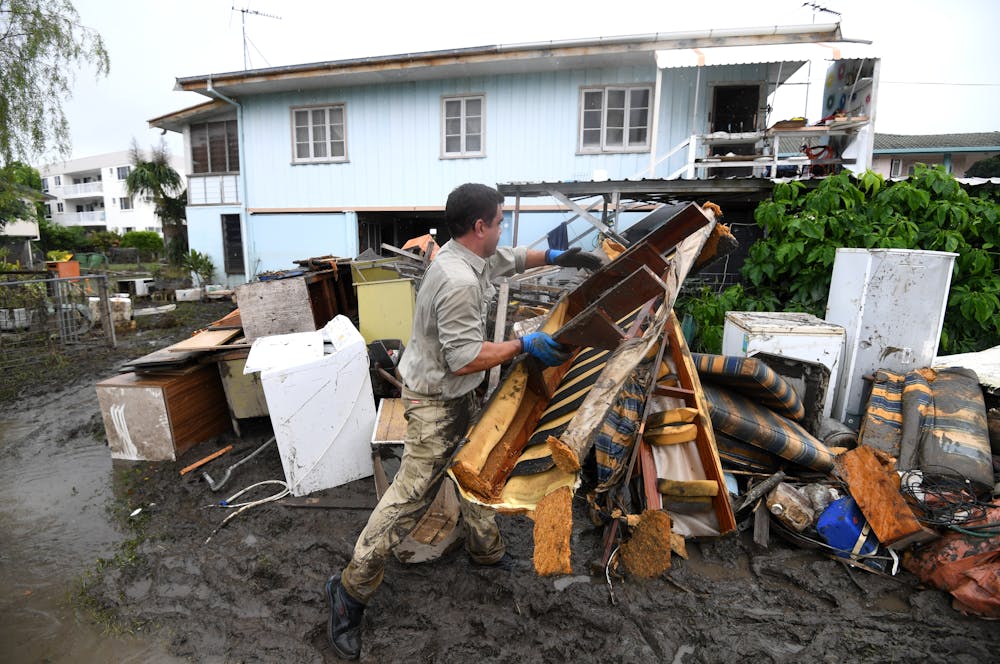 Resilient communities have high levels of social support, social cohesion, and social capacity.
AAP Image/Dan Peled
Resilient communities have high levels of social support, social cohesion, and social capacity.
AAP Image/Dan Peled
Hope — but warning signs, too
The Royal Commission into National Natural Disaster Arrangements recommended in its final report last year that an agency such as this be created, dedicated to
[…] championing resilience across the nation[…] Its remit should be to think broadly about all of the measures necessary to make the country resilient to natural disasters, and plan and respond accordingly.
Will the National Recovery and Resilience Agency be this champion? There is hope with the new agency’s guiding principle of “locally led recovery”. But there are also some warning signs.
Australia already has the roadmap for this change in the National Strategy for Disaster Resilience and the 2018 National Disaster Risk Reduction Framework.
In carrying out its role of providing policy advice to government, the new agency must focus on fulfilling the vision of the existing key strategies and not reinvent them.
There is some real money (A$600 million) for disaster preparation and mitigation. It is not a lot compared to the billions of dollars lost through natural disasters, but it’s a start. This type of investment must become core funding.
Welcome, too, is the funding for disaster recovery scenario training and two pilot Resilience Hubs. The pilot resilience hubs will coordinate regional training and capability development across all levels of government.
However, this does not replace the loss of a dedicated centre like the former Australian Emergency Management Institute (AEMI), which closed after cuts announced as part of the 2014-15 federal budget.
It is a good move to have a dedicated agency to provide support to local communities during the relief and recovery phases following major disasters, and to focus on long-term recovery.
We know effective recovery is planned in advance and is embedded in the initial disaster response. This is why resources must be invested in advance, and not just after disasters.
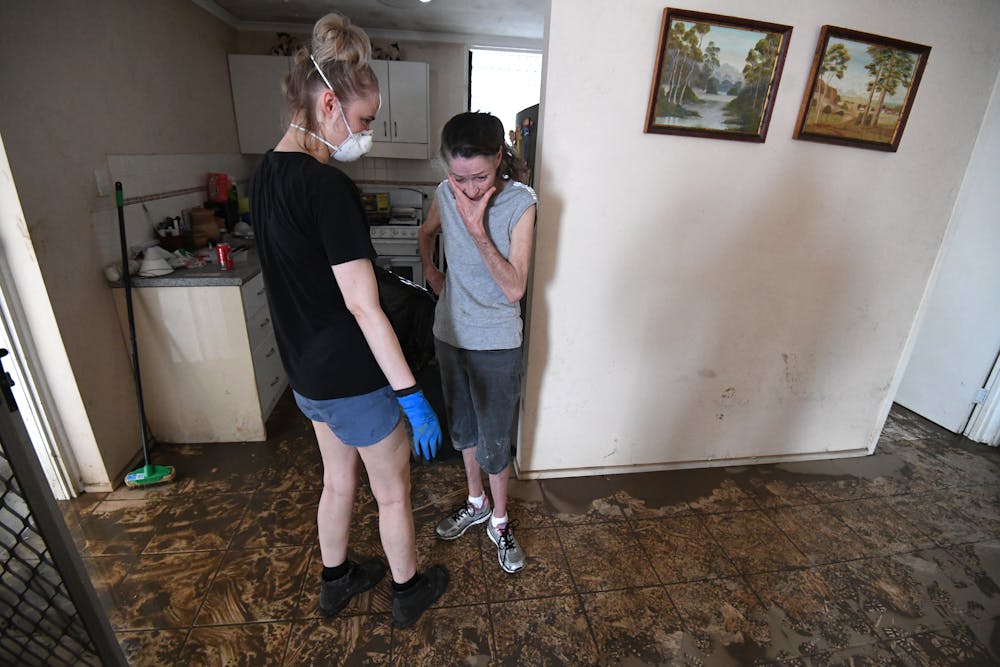 Post-disaster recovery happens over the long term.
AAP Image/Dan Peled
Post-disaster recovery happens over the long term.
AAP Image/Dan Peled
There are also some potentially complex governance, and intergovernmental, issues. How will the new agency relate to the work of Emergency Management Australia and to state recovery agencies?
Locally led recovery is crucial
Will the new National Recovery and Resilience Agency be able to lead the emergency management sector to the next phase in which communities are provided with resources to develop their own plans and tailor actions to local needs?
Or will it be another top-down government agency doing things to people rather than doing things with them?
Although policies now talk about being community centred, many communities still see themselves as being left out of emergency planning and recovery. Government agencies often lack local knowledge.
Also, as disaster research expert Lisa Gibbs points out in another article on The Conversation:
We must allow people to recover at their own pace, in their own way and have long-term support in place to do that.
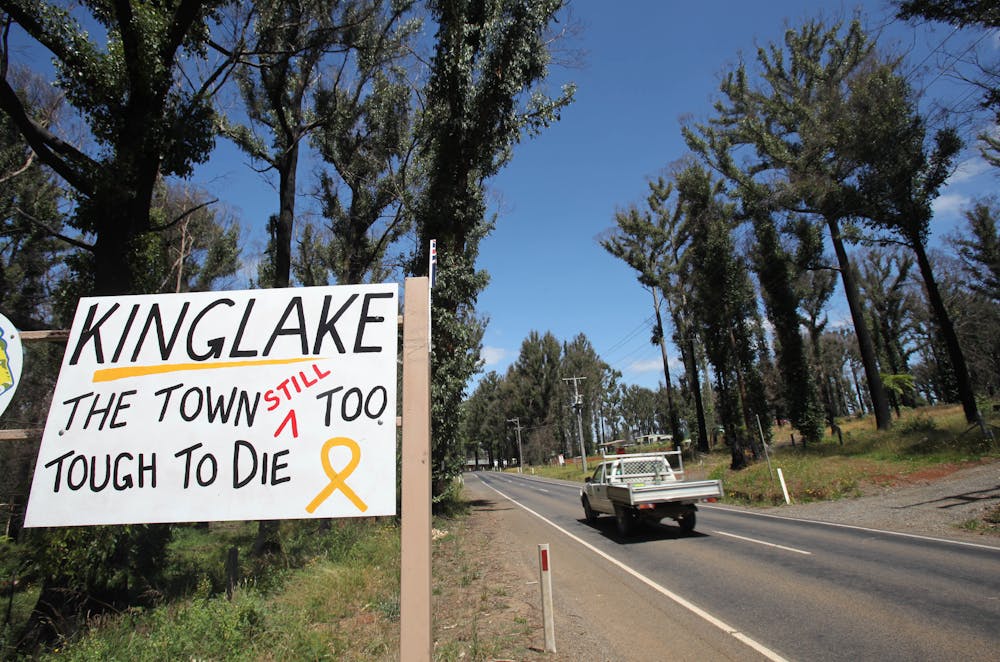 Resilient communities function reliably and well under stress.
AAP Image/David Crosling
Resilient communities function reliably and well under stress.
AAP Image/David Crosling
Disaster resilience is not built through increased centralisation. Indeed, the core of resilience building is to let local communities develop customised approaches based on their own understanding of the risks with which they live. Doing this well requires trust and building relationships of trust require time.
Will initiatives be co-created with communities, based on existing community strengths, and reflecting the local context?
How will the success of the new agency be measured? It must be more than just delivering a certain number of grants and programs.
The real success of the National Recovery and Resilience Agency will be not only in what it does, but in how it carries out its work, in the relationships it forges, and in the trust it gains.
This story is part of a series The Conversation is running on the nexus between disaster, disadvantage and resilience. You can read the rest of the stories here.
Authors: Mark Duckworth, Senior Research Fellow, Centre for Resilient and Inclusive Societies, Alfred Deakin Institute for Citizenship and Globalisation, Deakin University, Deakin University

















