

how do e-changers feel about having left the city now lockdowns are over?
- Written by Tania Lewis, Professor of Media and Communication and Co-Director, Digital Ethnography Research Centre, RMIT University
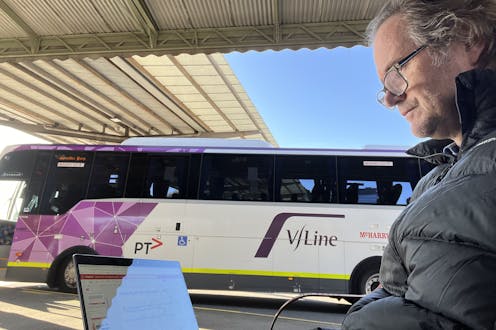
In 2020, propelled by the pandemic and the push to work from home, thousands of Australian households made the decision to move from the city to the country. A significant swathe of these internal migrants were “e-changers”, workers holding on to their city jobs and working remotely.
During the thick of the lockdown period, as growing numbers of city slickers swapped their urban lifestyles to work in remote and rural settings, we undertook online interviews with householders in e-change coastal hotspots and “lifestyle towns” in Victoria, New South Wales and Queensland. We were interested in their experiences of lifestyle migration, including the challenges facing these pioneers of remote working and living. We then spoke to our e-changers one year later to see how they fared.
Read more: Fancy an e-change? How people are escaping city congestion and living costs by working remotely
One of the early pandemic e-changers was Charles and his partner. They relocated to a coastal location two hours’ drive from Melbourne in March 2020.
Before the pandemic Charles was a busy librarian in a large inner-urban university. Working in the buzzing heart of the city, his day job involved regular face-to-face engagement with academic staff and students in the library and across the campus.
Fast forward to today and Charles’s daily routine when working remotely looks very different. His workday – now largely spent online – is still extremely busy, but it might start with a surf and end with a walk on the beach.
To many, this scenario probably sounds like a dream lifestyle, especially for those of us who spent large chunks of the past two years under lockdown. But is the shift to remote regional work as idyllic as it seems? What kinds of people decided to become e-changers? And what have their experiences been?
Read more: Flexibility makes us happier, with 3 clear trends emerging in post-pandemic hybrid work
3 kinds of e-changers
The e-changers in our study were a diverse group of people with various motivations for moving to the country. We found three broad groups of e-changers, marked by different stages of life.
The first group – represented by older couples like Charles and Di – had often been planning a lifestyle change for some time, in early anticipation of retirement.
The second group were younger couples and singles. They were often motivated by a desire to live closer to natural amenities such as beaches, forests or mountains. Research manager Irene and her partner, for instance, moved from inner Melbourne to Mt Macedon in Victoria in May 2020. Irene recalled:
We’d been talking about this for a while because we’re both from regional areas. But after the first Melbourne lockdown, we thought ‘let’s just do it’, so we found a rental here. For us it was about having greater access to the outdoors – we both enjoy biking, hiking, running and climbing.
The third and largest group were households with dependent children. They were generally seeking more affordable and larger homes with space for their children to spend time outdoors. Kevin, an engineer whose family relocated from Sydney to Wollongong, is a good example of these aspirations:
When we had our second child […] we wanted to buy a family house but were priced out of Sydney, so we cast our net around remote and regional areas – the Blue Mountains, the Central Coast, but Wollongong came top of the list based upon distance to my office, a more relaxed lifestyle, closer to beach and bush, good schools, good health care, wasn’t too small, wasn’t too large.
Read more: The 'city' is becoming increasingly digital, forcing us to rethink its role in life and work
Different groups, different outcomes
We spoke with our e-changers one year later. How were they finding the experience of living a significant distance from the cultural life and amenities of a major city?
While they miss the cosmopolitanism and vitality of the city, Charles and Di are still enjoying the calmness, daily encounters with wildlife and close connection to neighbours in their small coastal locale. But they now rent an Airbnb in Melbourne for a couple of nights a week. These regular commutes enable them to reconnect with colleagues and get a dose of urban vibrancy.
By contrast, Irene and her partner have returned to Melbourne from Mount Macedon. While the e-change experience was a “fun break from the city and an experience of regional life”, Irene’s commitment to her career meant she wanted to be near her office. Lengthy commutes on the train – made worse by service cancellations and delays – made her city workdays long and tiring.
Read more: It seemed like a good idea in lockdown, but is moving to the country right for you?
Long-term e-changers Kevin and his family have no regrets about the move. They cannot imagine returning to the city. For Kevin, the flexibility of working from home has enabled him to share more of the role of home care, such as cooking dinner and doing school drop-offs, with his partner, a busy healthcare worker.
It’s [working from home] the way forward. I don’t think anyone’s gonna go back.
However, for professionals like Kevin, living and working remotely still has some limitations in terms of access to transport and airports.
We have to have access or a link to a major centre, whether through rail, public transport, so we never lose that ability to be able to go into a meeting in the city if they need to. And I think Australia is going to get better at that.
Authors: Tania Lewis, Professor of Media and Communication and Co-Director, Digital Ethnography Research Centre, RMIT University

















