

Are you walking your dog enough?
- Written by Paul McGreevy, Professor of Animal Behaviour and Animal Welfare Science, University of Sydney
Australia has nearly five million dogs, with nearly 40% of Australian households owning one.
But it seems that 40% of Australian dogs are not walked enough and that a similar percentage of dogs are overweight or obese. With colleagues at the University of Sydney, we are interested in collecting more recent data on these trends.
So why do we need to walk our dogs? And how much is enough?
Read more: What 'walkies' says about your relationship with your dog
Why do dogs need to be walked?
Some people assume that a big backyard gives dogs enough exercise to keep them happy and healthy.
But dogs need to be walked for several reasons. As well as exercise, being walked lets them socialise with other dogs, explore the tantalising smells beyond their home and play with their preferred playmates. Dogs are opportunists and optimists, which is why so many turn themselves inside out with joy at the prospect of a romp around the park.
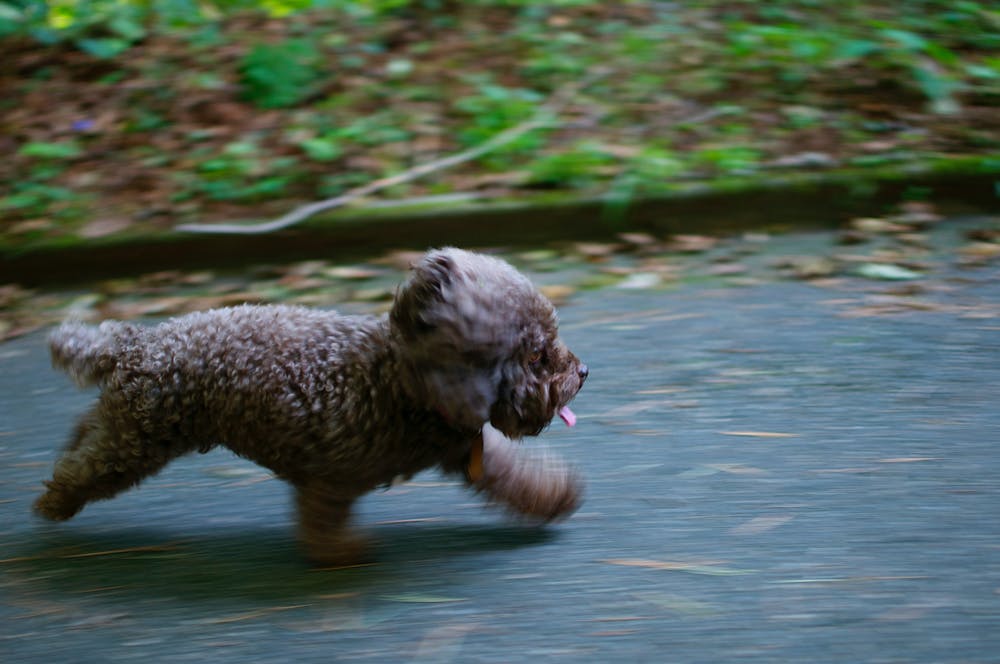
Go go go go! Leo Rivas/Unsplash, CC BY
Walks also allow dogs to spend time with their human social group. We shouldn’t underestimate the value of one-on-one attention between owners and their dogs. People who are strongly bonded with their dogs are most likely to exercise them. Dogs, in turn, act as catalysts for humans to engage with others in their community.
Read more: Our pets strengthen neighbourhood ties
Without enough exercise dogs can develop physical problems, such as muscular, cardiovascular or metabolic diseases, and behavioural problems that are manifestations of frustration and increased irritability.
How much walking is enough?
Clearly, the exact amount of exercise time your dog needs will vary according to its age, breed and size. A ten-year study in Perth found that people may not walk their dogs as much if the dog is sick, older, or a smaller breed. Yet all dogs need some time out of the house and yard every day.
As part of Pawgust, Guide Dogs Australia is encouraging owners to take their dogs for two 30-minute walks a day – one in the morning and one in the evening. If this seems too demanding for the humans in your dog’s world, it may be worth checking that everyone in your household is engaged in dog-walking, so that the opportunity can be shared.

Get the whole family to help walk your pets. Terricks Noah/Unsplash, CC BY
Fortunately, dogs don’t always need extremely long walks. If your dog has health issues or is elderly, just 20 minutes out of the house can do wonders.
Read more: Walking a dog won't make your child fitter, but it can give them a healthier start
If you have particular worries about your dogs, or they have previously been very inactive, it’s worth consulting with your veterinarian to create an exercise plan. Remember that, like humans, dogs need to warm up and warm down. Walking dogs to the park can be enough to get their blood moving before a vigorous game of fetch.
Some barriers to walking
There are rare dogs that don’t seem to enjoy themselves when out on a leash. These are most commonly dogs that were not adequately socialised as pups. Others have learned that there is little they can do to assert themselves while on the leash and, as such, are examples of learned helplessness.
Also, although many dogs enjoy playing with other dogs throughout life, a significant number do not. As they age, they develop prejudices, aches and pains, and learned play styles that may not gel well with other dogs. These are the dogs that should be kept out of off-leash dog parks.
A reasonable strategy for exercising urban dogs with these tendencies is to take them for walks at night. This is generally less stressful, as there is less activity and less chance of bumping into other dogs.
Comments from other people is another possible barrier. Some breeds provoke negative feedback from others, and there is evidence that overweight dogs embarrass their owners. Unwelcome dog behaviour can also sometimes cause embarrassment. So, it’s important to train your dog to respond to you on and off the leash, both at home and away, and to remember that the secret to having a happy, healthy and well-socialised dog starts with regular mental and physical exercise.
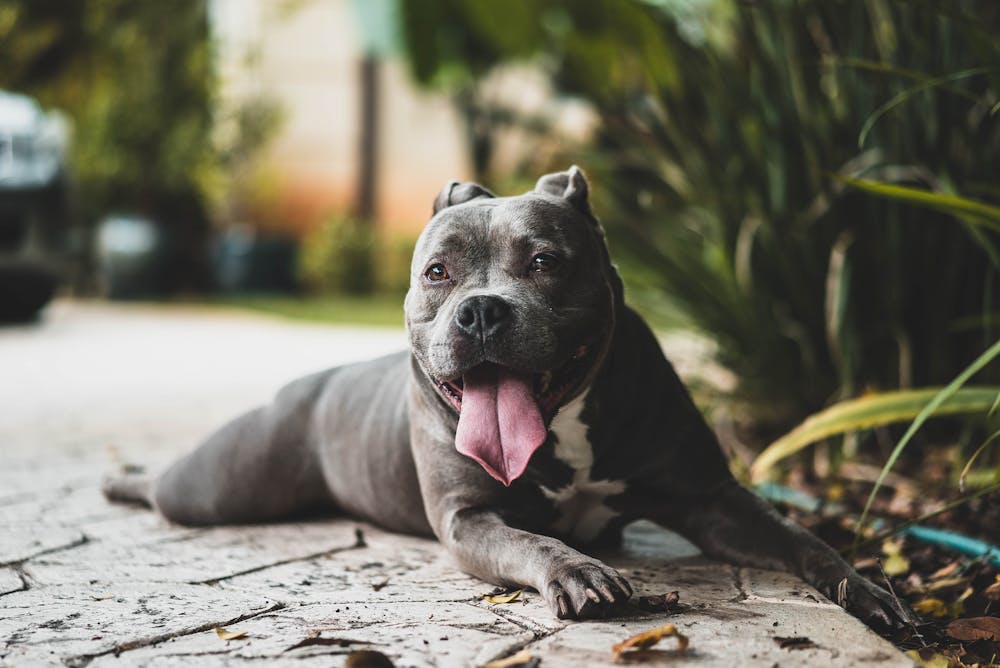
Some breeds, like pitbulls, have bad reputations. Christopher Ayme/Unsplash, CC BY
Bad weather may also act as a deterrent, but don’t let that stop you! Dog owners in the UK confront more cold, rainy days but are more committed to exercising their dogs than Australians.
Clearly, the heat of summer is a consideration for Australian dog owners, and it is generally more comfortable to exercise dogs in the early mornings and late evenings in midsummer.
The benefits of dog-walking for humans
So the benefits of dog-walking for dogs is clear. The good news is that it’s also hugely beneficial to people.
Regular physical activity for humans has major health benefits, yet around half of adult Australians are still insufficiently active for health, and have remained so for 22 years.
Dog-walking offers an unrealised, but simple, community-wide solution to the challenge of human physical inactivity. One benefit is that walking can improve mental well-being and increase social connections for many people. Modelling the concept of universal dog-walking provides surprising results.
Read more: Four ways having a pet increases your lifespan
If most of the dog owners in Australia who currently don’t walk their dogs started going on 20-minute walks every day, 12-17% more adult Australians would be sufficiently active.
This would halve inactivity, and could prevent up to 5% of all cases and deaths from heart disease and stroke, and up to 10% of major colon and breast cancers.
Dog-walking is also a great way to get the whole family moving, as a dog can be walked by children and parents. Increased walking has health, social and mental benefits. Isn’t it time you walked your dog more?
If you are interested participating in studies on dog-walking and human health, visit our dog ownership and human health research node.
Authors: Paul McGreevy, Professor of Animal Behaviour and Animal Welfare Science, University of Sydney
Read more http://theconversation.com/are-you-walking-your-dog-enough-100530

















