

Orhan Pamuk's Nights of Plague feels eerily prescient
- Written by: Jane Turner Goldsmith, PhD candidate, Creative Writing, University of Adelaide
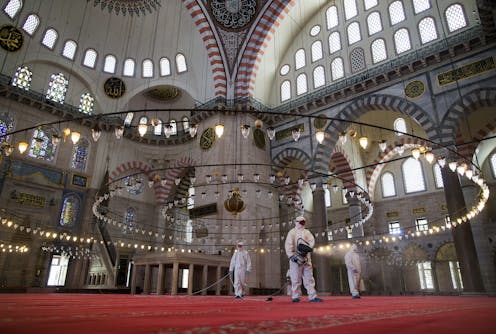
Nobel prize-winning author Orhan Pamuk spent five years working on Nights of Plague, well before the onset of the current pandemic. Perhaps he foresaw history repeating itself; the political fallout from the outbreak of the bubonic plague on his make-believe island of Mingheria in 1901 resonates eerily with our world today.
Whether Pamuk was intentionally writing an allegory, the audacity of the narrative action has opened him up to attack. Last year Pamuk was “under investigation” for “insulting the founder of modern Turkey and for ridiculing the Turkish flag” in the book – not the first time he has been censored. (He recently told The Times of India, “anyway, they’re not pursuing it, my case is lost in the labyrinths of Ankara”.
Review: Nights of Plague – Orhan Pamuk (Penguin Random House)
Pamuk, who won the Nobel Prize for Literature in 2006, does not shy away from the representation of sensitive cultural and political attitudes, as we witness throughout Nights of Plague. The novel provokes in other ways too. At 683 pages it is a good choice for a long journey, a sleepless night or even a period of COVID isolation.
There are two narrative voices whom the reader suspects might not be completely reliable. We are invited in a “preface” to trust the account of a Mina Mingher, writing from Istanbul in 2017. Mina becomes “we” – a pair? a group? – of apparently credible historians, who interject regularly to commentate events. Mina’s primary source is a body of letters written by Princess Pakize, the daughter of a deposed sultan, to her sister during the period of the plague outbreak on the island.
The dissonance created by the use of this ambiguous narrative never quite leaves the reader. We don’t quite know whom to trust. Perhaps this too is deliberate; if Pamuk wanted to evoke an atmosphere of suspicion, mistrust and unreality, he has succeeded.
The reader nonetheless slips effortlessly into Pamuk’s fantastical world, at the turn of the 20th century, with the Ottoman empire, frequently characterised as “the sick man of Europe”, in decline.
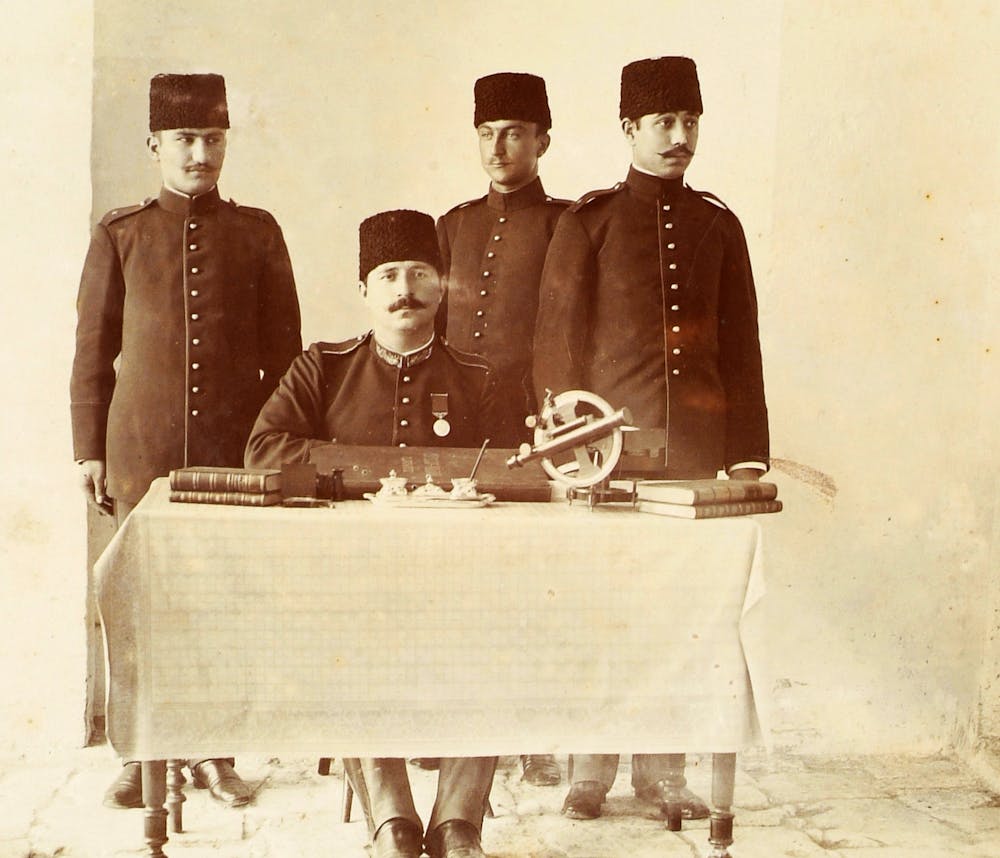
The action
The novel opens with the steamship Aziziye about to make a stopover on the island of Mingheria. Onboard is an important delegation of high-status passengers: newlyweds Princess Pakize, niece of the tyrannical Sultan Abdul Habib, and her husband, the Prince Consort and esteemed quarantine doctor, Nuri Bey.
About to disembark on the island is the Ottoman empire’s Chief Inspector of Public Health and Sanitation, Bonkowski Pasha, tasked with addressing the suspected outbreak of plague on the island. When he meets an unfortunate end 67 pages into the novel, Dr Nuri is called upon to take over his impossible mission. As the back cover warns: “plague is not the only killer”.
 What follows in this sprawling, multi-faceted novel is the monumental struggle to contain the spread of disease and the rising death toll, as well as the fear and suspicion surrounding it. It is a battle to maintain law and order. The island’s populace comprises warring Christians, Muslims, Greeks, Ottoman Turks, locally born Mingherians, and rebels and rogues from Crete and other nearby regions.
In the 600 pages to follow there is no shortage of action. The “historians” promise to “faithfully describe” the “horrors” citizens are about to face, and this is only a third of the way into the novel! We take a deep breath and plunge in.
The attempt to enforce quarantine measures triggers widespread panic and rebellion. There are poisoning murders of those who would use medical science to back up public health restrictions. There are uprisings and vengeful, bloody retribution (much flaying of the feet of insubordinates).
The vocabulary of the novel is uncomfortably familiar: spray pumps, disinfection of corpses, escalating death tolls, incineration of contaminated effects. People are isolated in the Maiden’s tower or thrown into the Arkaz castle prison without evidence of plague infection and denied their rights. Most die from mistreatment if not the plague. Such injustices are hardly fictional, given the historical era.
Read more:
From Black Death to COVID-19, pandemics have always pushed people to honor death and celebrate life
‘The state will sort everything out’
The control and manipulation of information is one of the most pervasive threads of the novel. With constant “infelicitous news”, the post office is closed by Major Kâmil, the princess’s erstwhile protector (but a man with higher ambitions).
The solution to the threat of receiving unpopular orders from Istanbul is simply to cut off the telegraph lines. The new queen of Mingheria complains about unfavourable reports in the French and Greek presses and seeks to suppress their publication. If you don’t like the message, cut off the source. Sound familiar?
What follows in this sprawling, multi-faceted novel is the monumental struggle to contain the spread of disease and the rising death toll, as well as the fear and suspicion surrounding it. It is a battle to maintain law and order. The island’s populace comprises warring Christians, Muslims, Greeks, Ottoman Turks, locally born Mingherians, and rebels and rogues from Crete and other nearby regions.
In the 600 pages to follow there is no shortage of action. The “historians” promise to “faithfully describe” the “horrors” citizens are about to face, and this is only a third of the way into the novel! We take a deep breath and plunge in.
The attempt to enforce quarantine measures triggers widespread panic and rebellion. There are poisoning murders of those who would use medical science to back up public health restrictions. There are uprisings and vengeful, bloody retribution (much flaying of the feet of insubordinates).
The vocabulary of the novel is uncomfortably familiar: spray pumps, disinfection of corpses, escalating death tolls, incineration of contaminated effects. People are isolated in the Maiden’s tower or thrown into the Arkaz castle prison without evidence of plague infection and denied their rights. Most die from mistreatment if not the plague. Such injustices are hardly fictional, given the historical era.
Read more:
From Black Death to COVID-19, pandemics have always pushed people to honor death and celebrate life
‘The state will sort everything out’
The control and manipulation of information is one of the most pervasive threads of the novel. With constant “infelicitous news”, the post office is closed by Major Kâmil, the princess’s erstwhile protector (but a man with higher ambitions).
The solution to the threat of receiving unpopular orders from Istanbul is simply to cut off the telegraph lines. The new queen of Mingheria complains about unfavourable reports in the French and Greek presses and seeks to suppress their publication. If you don’t like the message, cut off the source. Sound familiar?
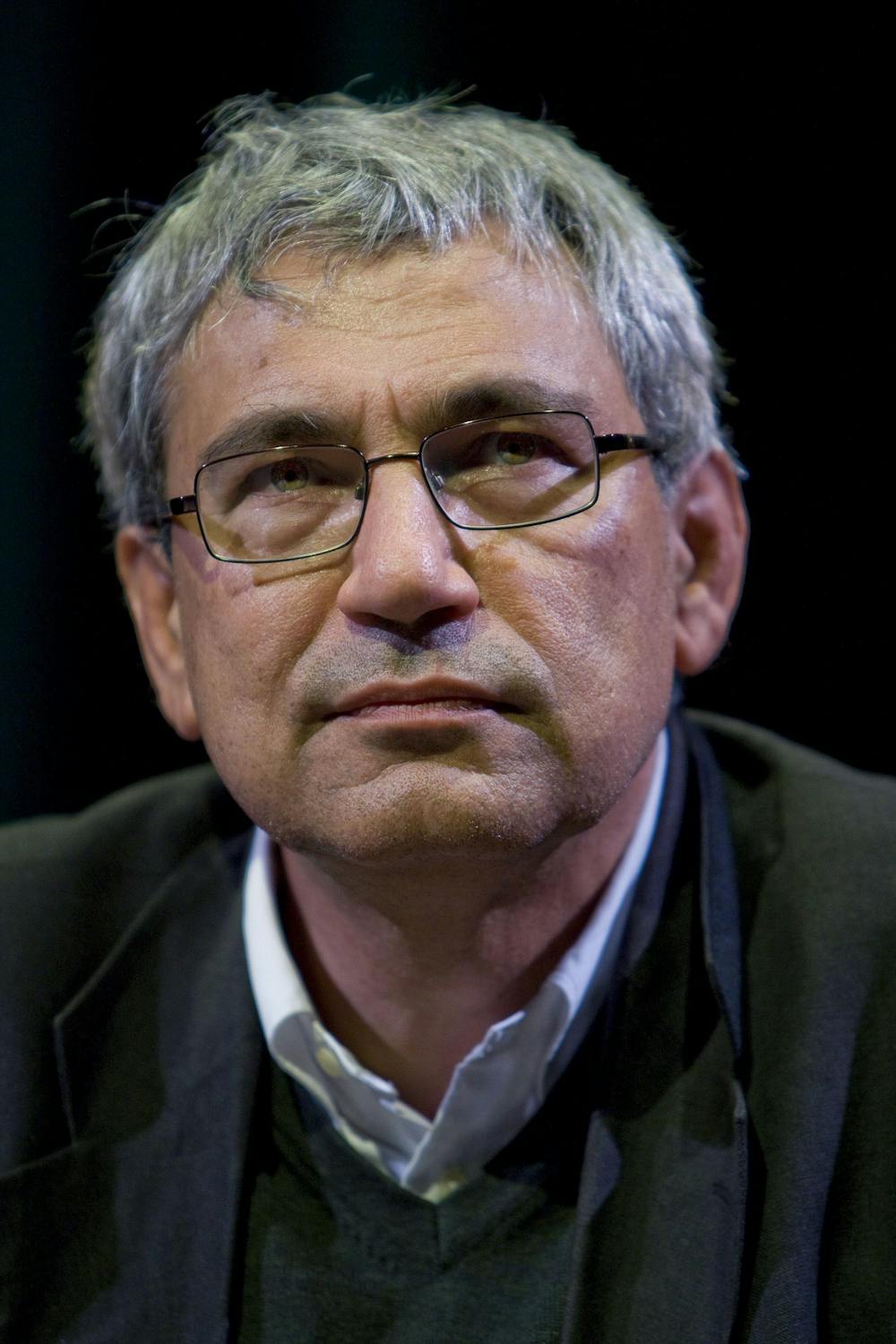 Pamuk pictured in 2009.
Ed Oudenaarden/EPA
Mingheria’s governor and major player Sami Pasha claims at first “there is absolutely no epidemic in our city”. Paranoid and incompetent, we do not trust him now, nor later when he reluctantly admits to the presence of plague. “You mustn’t despair! The state will sort everything out.”
But the state has to reconcile the polarised beliefs and customs of the warring factions. The governor knows that quarantine is seen by the Muslim population as a “diabolically European invention designed to punish and kill”. In his defence, Sami Pasha does have their interests at heart.
“Compared with the island’s Christian population,” he claims, “the local Muslim community was poorer, less educated, and more disengaged from the rest of the world”. Sami Pasha tries but fails to influence them to take up protective quarantine measures “for their own self-preservation”.
But ultimately and perhaps predictably (history repeating itself) he decides “it can be more useful to frighten people than to win their hearts” and the much feared Quarantine Brigade is brought in to shoot anyone who breaks curfew.
In the vacuum of governance that ensues, rumour, superstition, conspiracy, riot and rebellion sweep in. By turns, the governor, the major and the sheik dispose of rebels and traitors on their way to self-appointed and highly promoted positions of power. We witness their ugly corruption, hubris and vanity. The new (self-appointed) president’s main concern is “to see his own likeness” on postage stamps. Top secret documents are seized from the state chambers to be hidden in a private residence.
The exhausted reader starts to feel a sense that “nothing actually means anything anymore” (to steal a phrase from Stephen Colbert). There is a strong January 6th atmosphere to the events of the novel – whether insurrection and the propaganda that paves its way represent an intentional portrayal of history repeating itself.
Wariness towards the West is ever-present. The governor has a watch “with two dials, one showing the European way, and the other the Ottoman way”, revealing his jealous admiration of European fashion, technology, medicine, science and culture, while, to curry popularity, he must be seen as rejecting these.
Pamuk pictured in 2009.
Ed Oudenaarden/EPA
Mingheria’s governor and major player Sami Pasha claims at first “there is absolutely no epidemic in our city”. Paranoid and incompetent, we do not trust him now, nor later when he reluctantly admits to the presence of plague. “You mustn’t despair! The state will sort everything out.”
But the state has to reconcile the polarised beliefs and customs of the warring factions. The governor knows that quarantine is seen by the Muslim population as a “diabolically European invention designed to punish and kill”. In his defence, Sami Pasha does have their interests at heart.
“Compared with the island’s Christian population,” he claims, “the local Muslim community was poorer, less educated, and more disengaged from the rest of the world”. Sami Pasha tries but fails to influence them to take up protective quarantine measures “for their own self-preservation”.
But ultimately and perhaps predictably (history repeating itself) he decides “it can be more useful to frighten people than to win their hearts” and the much feared Quarantine Brigade is brought in to shoot anyone who breaks curfew.
In the vacuum of governance that ensues, rumour, superstition, conspiracy, riot and rebellion sweep in. By turns, the governor, the major and the sheik dispose of rebels and traitors on their way to self-appointed and highly promoted positions of power. We witness their ugly corruption, hubris and vanity. The new (self-appointed) president’s main concern is “to see his own likeness” on postage stamps. Top secret documents are seized from the state chambers to be hidden in a private residence.
The exhausted reader starts to feel a sense that “nothing actually means anything anymore” (to steal a phrase from Stephen Colbert). There is a strong January 6th atmosphere to the events of the novel – whether insurrection and the propaganda that paves its way represent an intentional portrayal of history repeating itself.
Wariness towards the West is ever-present. The governor has a watch “with two dials, one showing the European way, and the other the Ottoman way”, revealing his jealous admiration of European fashion, technology, medicine, science and culture, while, to curry popularity, he must be seen as rejecting these.
 Basil Rathbone as Sherlock Holmes: a recurring motif.
Wikimedia Commons
“If the state collapses,” Dr Nuri warns, “it will definitely be the British who take over”. Pasha too fears that the island “would go back to being slave and colony to some other great power”.
Sherlock Holmes – so admired by the sultan – is a reoccurring motif symbolising Westernised deductive reasoning that is the hope for solving both the murder mystery of Bonkowski Pasha and the end of the plague.
Disappointing female characters
While accessible to the general reader, Nights of Plague is more likely to appeal to fans of historical fiction, particularly those interested in the fascinating and geographically spectacular region including Istanbul and the islands of Crete, Rhodes and mainland Greece.
The downside of so much diversion and detail is the loss of narrative momentum. There are a few too many convenient deaths. While omniscient narration is common in world-building historical and fantasy novels, here the interrupting narrative voice can unsettle and confuse. The characterisation is at times barely believable – and yet despotic sultans, scheming governors and self-serving heroic revolutionaries did exist during the Ottoman era.
No one character truly wins our confidence, with the possible exception of the dedicated Doctor Nuri, on whom we pin our hopes for a way out of the devastation. The female characters – protesting princesses, beautiful weeping maidens, long-suffering mistresses – will disappoint in having no real agency.
What are we to make of Nights of Plague? Is it an allegory of the fall of empire and rise of the modern Turkish state; a grand contemplation on the unending tensions between East and West and power, corruption and revolution; or a giant farce of murder and mayhem?
Perhaps, quoting Major Kâmil, Pamuk is prompting us to consider more deeply this question: has the plague really made everyone “more cowardly, more stupid, and more selfish” than they really are?
Authors: Jane Turner Goldsmith, PhD candidate, Creative Writing, University of Adelaide
Basil Rathbone as Sherlock Holmes: a recurring motif.
Wikimedia Commons
“If the state collapses,” Dr Nuri warns, “it will definitely be the British who take over”. Pasha too fears that the island “would go back to being slave and colony to some other great power”.
Sherlock Holmes – so admired by the sultan – is a reoccurring motif symbolising Westernised deductive reasoning that is the hope for solving both the murder mystery of Bonkowski Pasha and the end of the plague.
Disappointing female characters
While accessible to the general reader, Nights of Plague is more likely to appeal to fans of historical fiction, particularly those interested in the fascinating and geographically spectacular region including Istanbul and the islands of Crete, Rhodes and mainland Greece.
The downside of so much diversion and detail is the loss of narrative momentum. There are a few too many convenient deaths. While omniscient narration is common in world-building historical and fantasy novels, here the interrupting narrative voice can unsettle and confuse. The characterisation is at times barely believable – and yet despotic sultans, scheming governors and self-serving heroic revolutionaries did exist during the Ottoman era.
No one character truly wins our confidence, with the possible exception of the dedicated Doctor Nuri, on whom we pin our hopes for a way out of the devastation. The female characters – protesting princesses, beautiful weeping maidens, long-suffering mistresses – will disappoint in having no real agency.
What are we to make of Nights of Plague? Is it an allegory of the fall of empire and rise of the modern Turkish state; a grand contemplation on the unending tensions between East and West and power, corruption and revolution; or a giant farce of murder and mayhem?
Perhaps, quoting Major Kâmil, Pamuk is prompting us to consider more deeply this question: has the plague really made everyone “more cowardly, more stupid, and more selfish” than they really are?
Authors: Jane Turner Goldsmith, PhD candidate, Creative Writing, University of Adelaide 

















