

'Are you telling me it’s all in my head?' Endometriosis in the Australian press in the 1970s
- Written by: Erin Bradshaw, Research Assistant, Monash University
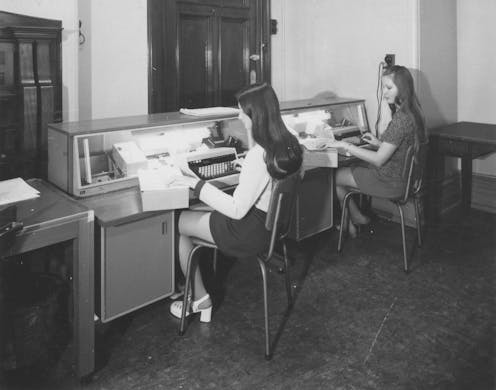
In 1974, Woroni, the student magazine of the Australian National University, published an article looking at the lives of lesbians at the university.
One contributor, “Jody”, told of her experience with a doctor who pressured her for details on how she has sex, and who didn’t believe her reports of pain, suggesting it may be “in her head”.
Jody recounted asking the doctor:
‘Are you telling me that I didn’t get endometriosis from a rotten abortion six years ago, that it’s all in my head?’ He quickly retreated and admitted that he knew I had endometriosis and that wasn’t psychological.
It’s important to state categorically you cannot get endometriosis from an abortion, despite what Jody believes caused her endometriosis.
But beliefs like this weren’t alone in the Australian press in the 1970s. It appears from both Jody’s story, and from another article published in the 1960s, it may have been public opinion abortions could result in endometriosis.
As an academic and sufferer of endometriosis, I wanted to know what the history was behind my own disease. How long ago did we start talking about endometriosis?
I went looking in the Trove archive to see how long endometriosis has been talked about in Australian newspapers and magazines, and how it was being written about. The earliest article I found was from 1949, but the 1970s was the first decade we saw endometriosis really being discussed by name in newspapers and magazines.
Read more: You no longer need surgery to be diagnosed with endometriosis. Here's what's changed
What is endometriosis?
Endometriosis is a condition in which tissue similar to the lining of the uterus grows outside the uterus, around other parts of the body.
It affects more than 830,000 Australians and costs Australia $9.7 billion annually in direct medical costs and in lost productivity.
Despite these numbers, many people still don’t know about endometriosis.
Historical texts suggest endometriosis has been around for a very long time. Its most common symptoms of pelvic pain, adhesions and infertility were written about as far back as 1855 BCE.
Doctors were able to identify the disease microscopically in 1860, and it was named endometriosis in 1927 by gynaecologist John Sampson.
A 'frequently occurring’ disease
I was able to find 12 articles mentioning endometriosis in the Australian popular press of the 1970s. Compared with earlier decades, the disease was now being talked about in personal stories alongside comments from experts.
Endometriosis was often talked about as a comorbidity to infertility, with other symptoms such as pain taking a backseat. Medical experts were the most common people quoted in articles.
Leading up to the 1970s, medical research into endometriosis had established it could grow on the lungs, lymph nodes and the bowels, among other organs. Treatment for the disease during this time was often hormonal therapies, excisions or hysterectomies.
During the 1970s in Australia, news was circulating about Danocrine (also known as Danazol) – a hormonal treatment to combat menstruation pain. Both The Canberra Times and the Australian Women’s Weekly wrote about this “capsule that could end menstrual pain”.
A 1975 feature story in Australian Women’s Weekly presented a couple who sought to have a baby under difficult medical circumstances, including endometriosis. The narrative used in the story is one of fertility “miracles” and impossible odds to clear to become a mother:
When a Sydney girl was told that, because of her medical history, it was unlikely she could ever have a child, she and her husband began talking of adopting – until the unbelievable happened. She became pregnant.
The relationship between pregnancy and endometriosis has a long history, and frequently appeared together in the articles I found. Pregnancy as a cure or symptom suppressor has been around since the Ancient Greeks. Indeed, the first mention I found of endometriosis in the Australian press, an article in Catholic Weekly in 1949, touted pregnancy as the only nonsurgical and “conservative” option for treatment.
(Despite medical research saying pregnancy is not a cure for endometriosis, patients are reporting GPs are still “prescribing” pregnancy in the incorrect belief it relieves symptoms or even cures the disease outright.)
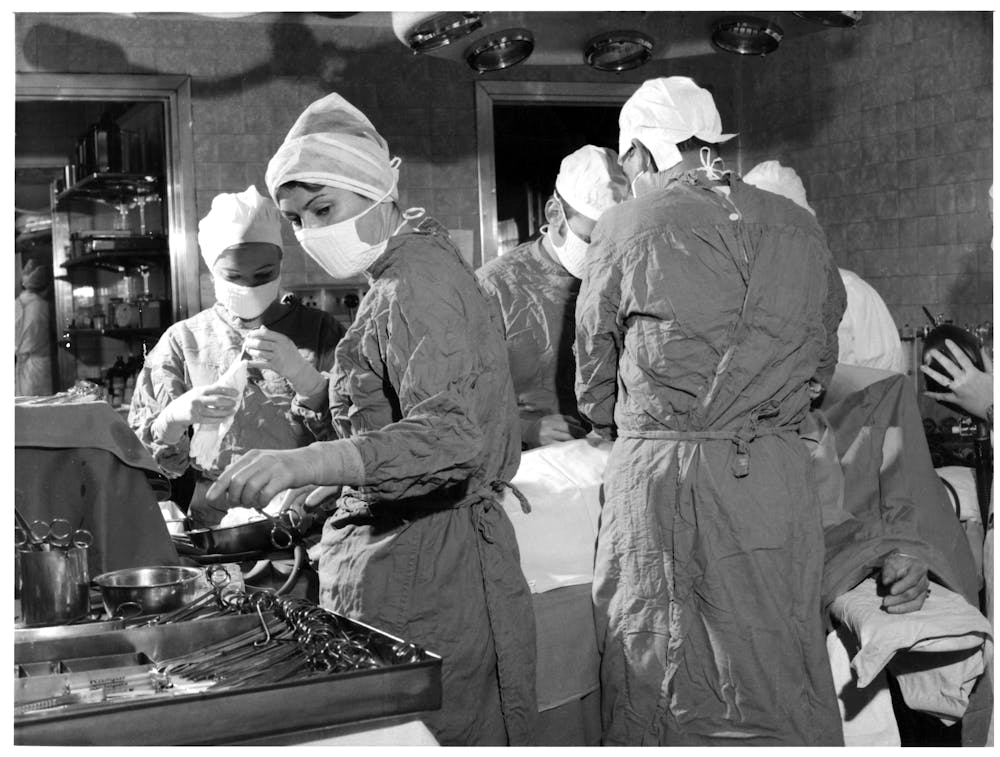
 Pregnancy was often cited as a ‘treatment’, but the science doesn’t support this view.
Queensland State Archives, CC BY-NC-ND
Pregnancy was often cited as a ‘treatment’, but the science doesn’t support this view.
Queensland State Archives, CC BY-NC-ND
The Australian Women’s Weekly appeared often in my data collection. The magazine did not shy away from talking about topics like the contraceptive pill, infertility and hysterectomies. The magazine published three separate articles on hysterectomies during the 1970s, reassuring readers they’d still be “all woman”.
Read more: Pregnancy doesn't 'cure' endometriosis, so where does this advice come from?
Learning from our past
What can we learn from historical news articles? In my opinion, a great deal.
Press coverage of diseases plays a huge role in the public’s understanding of a disease. By better understanding how endometriosis was perceived in previous decades, we can identify useful patterns of reporting and make sure the information presented on the disease today is accurate and helpful.
Today, media coverage about endometriosis is more likely to look at endometriosis through new lenses such as its chronic pain, the cost of treatments and loss of productivity.
And unlike in the 1970s, where medical voices were the primary source, now the patient’s voice is front and centre in these stories.
Read more: Endometriosis costs women and society $30,000 a year for every sufferer
Authors: Erin Bradshaw, Research Assistant, Monash University


















