

Orange-bellied parrot shows there's more to saving endangered species than captive breeding
- Written by: Dejan Stojanovic, Postdoctoral Fellow, Australian National University
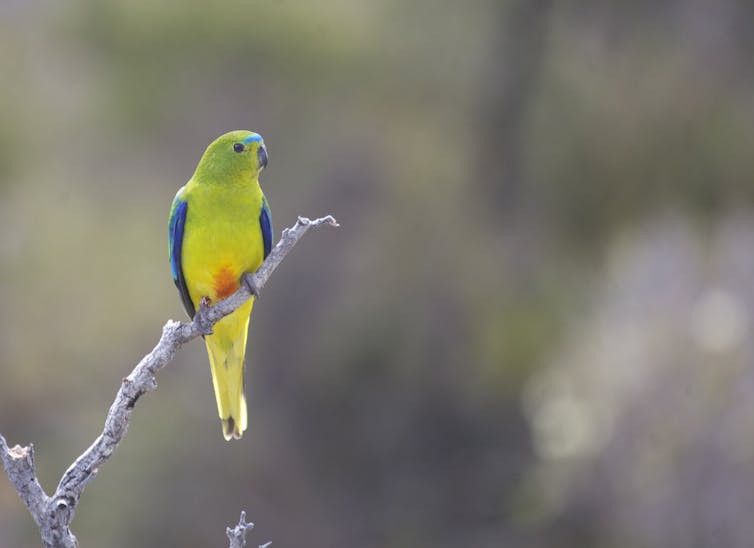
Captive breeding of threatened species for release into the wild is an important conservation tool. But where threats to wild populations remain unresolved, this tool may not guarantee population recovery in the long term.
Our new research on one of the most endangered birds in the world shows we need to tackle underlying threats to survival if we are to save species from extinction in the wild.
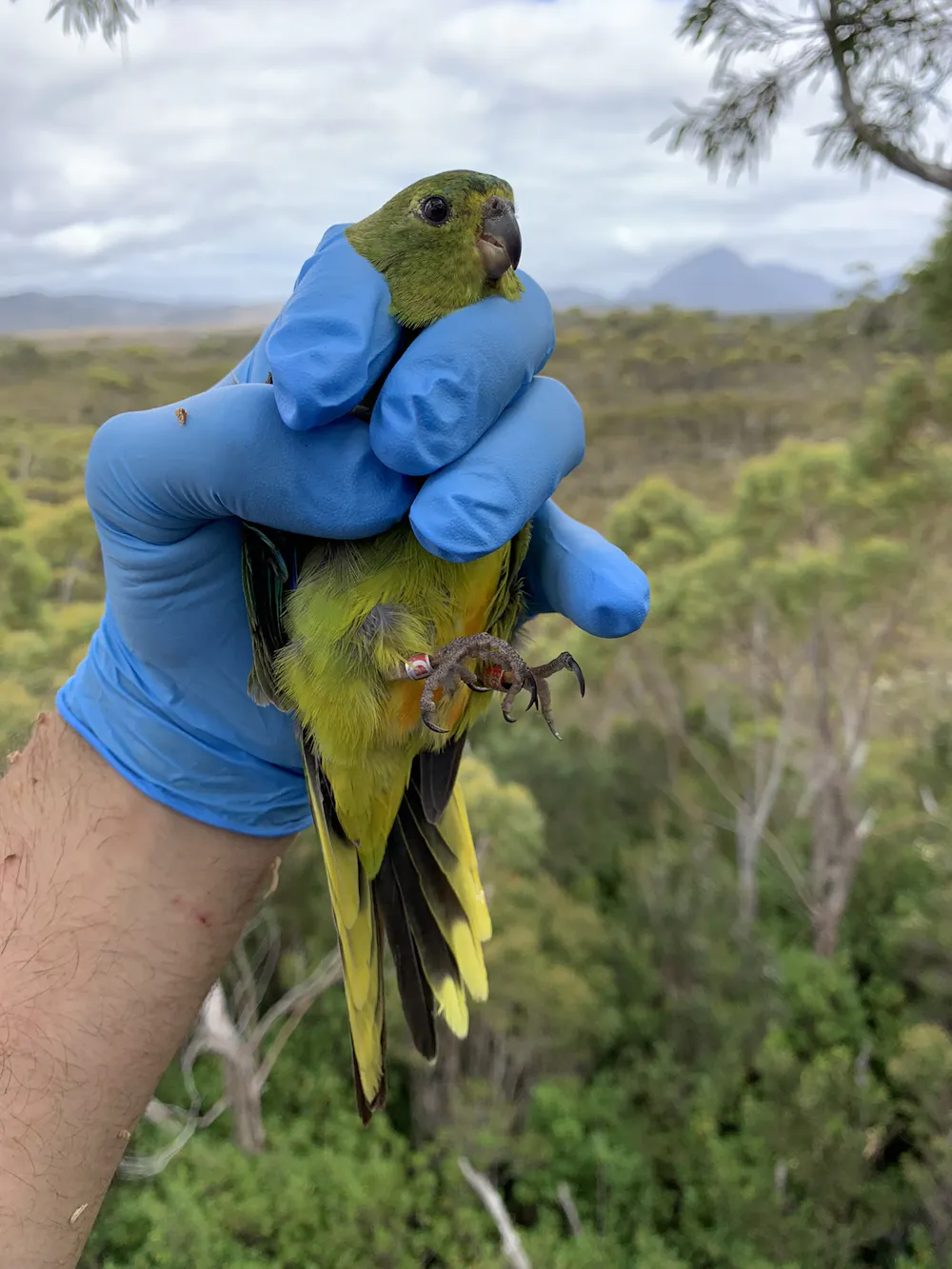
Captive breeding and release is sustaining the population of orange-bellied parrots, holding extinction at bay. But most of the young born into the population each year die during their migration and winter.
Our modelling shows that if captive breeding and release stopped tomorrow, orange-bellied parrots would soon become extinct. The natural birth rate is too low to compensate for the high death rates of juveniles. So we’re locked into releasing captive-bred parrots until we can solve the underlying problems afflicting the wild population. Unfortunately, it’s not clear exactly what those problems are.
No guarantees when threats remain
Globally, captive breeding has prevented the extinction of iconic species such as the California condor.
However, despite the benefits of captive breeding, success is not guaranteed. This is especially so when captive-bred animals are released into habitats where threats remain unresolved. In such cases, captive-bred animals will succumb to the same threats as their wild counterparts.
For some species, identifying and correcting threats is straightforward. For example, removing introduced predators from islands may be a way to eliminate a threat and optimise the benefit of releases from captivity.
But the exact nature of threats is often not clear-cut, especially for species that move over large areas. This can create uncertainty about what the threats are, where they occur, and how to resolve them.
Inability to mitigate threats may result in lost opportunities for released animals to learn crucial behaviours such as migration or song, and ultimately, the decline of wild populations.
Conservationists may sometimes need to “buy time” and prevent extinction in the wild by releasing animals to ensure the continuity of animal cultures in landscapes where threats persist.
Locked into a cycle of dependency
The orange-bellied parrot is one of the most endangered birds in the world. In 2016, just four females returned to Tasmania from migration, and only one of them produced a surviving descendant. (The species migrates from its summer breeding ground in southwestern Tasmania to the coasts of southeastern mainland Australia, but these movements take a toll on the population.)
Fortunately, despite ongoing uncertainty about reducing threats, intensive conservation efforts have grown the population. More than 30 females have returned from migration annually over the past two years. Despite this success, most juvenile parrots (both captive-bred and wild-born) that leave Tasmania on their northward migration die.
Overcoming the unresolved threats that drive this high mortality is crucial for making this population self-sustaining. Unfortunately due to the practical limitations of studying a small, scattered population across remote areas, it is unlikely that this knowledge gap can be addressed in the short term. In the meantime, there are several options available.
We used simulations to compare the benefits of different management scenarios on the orange-bellied parrot. We showed that of all the potential intervention options available to the recovery project, releasing captive juveniles in autumn – to learn from wild adults, and increase the size of migrating flocks – was the most beneficial.
However, none of the interventions available to managers can directly address the underlying problem of high juvenile mortality, so their benefits were temporary. When we simulated stopping captive releases, the populations rapidly went extinct. Without addressing the underlying threats faced by the species, we found the natural birth rate too low to compensate for high juvenile mortality rates.
Until a solution is found for high migration and winter mortality rates, orange-bellied parrots will remain dependent on captive breeding and release to prevent extinction and grow the population.
Lulled into a false sense of security
Orange-bellied parrots provide a stark reminder that there is no “quick fix” for most threatened species. Although captive breeding for release can effectively prevent extinction in the short term, long-term self-sustaining populations in the wild depend on finding solutions for the threats that caused their decline in the first place. Until solutions can be found, management agencies may be locked into a cycle of conservation dependency aimed at preventing extinction, but struggle to address the threats that cause the underlying problems.
Read more: Australia’s red goshawk is disappearing. How can we save our rarest bird of prey from extinction?
Given the global popularity and visibility of captive breeding programs, it is easy to be lulled into a false sense of security that they are a quick fix for the extinction crisis. However, identifying the threats to wild populations early is crucial because re-establishing “extinct in the wild” species from captivity is extremely difficult, albeit not impossible.
In the case of the orange-bellied parrot, we hope preventing extinction of the wild population through releases of captive-bred birds may buy enough time to identify and mitigate the causes of high juvenile migration/winter mortality. But we also hope our study is a reminder to policymakers that conservation of wild populations should focus on identifying and preventing threats, negating the need for captive breeding in the first place.
Read more: Get the basics right for National Environmental Standards to ensure truly sustainable development
Authors: Dejan Stojanovic, Postdoctoral Fellow, Australian National University


















