8 ways to tone down the Christmas lights to help wildlife – and why we should
- Written by Jaana Dielenberg, University Fellow, Charles Darwin University
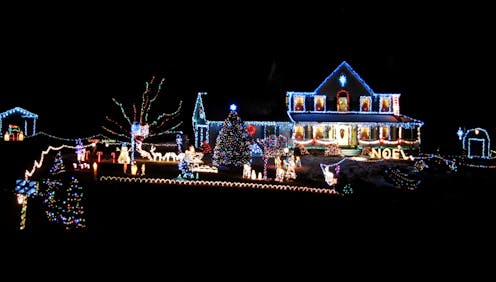
The Australian government has launched a campaign asking people to “switch off light pollution” to protect wildlife. So, what does the science say? Should we rethink Christmas lights?
In our latest report, we reviewed research into the effects of artificial light at night on mammals, frogs, birds and reptiles. We found artificial lights cause problems for a wide range of species, and energy-efficient LED lights often make matters worse.
Most people don’t realise their outdoor lights can harm wildlife. At Christmas the problem grows because many people put up more decorative lights.
Here we offer eight easy ways to reduce light pollution at Christmas while still showing your festive spirit.
Bright flashing Christmas lights make our gardens stressful for wildlife (The Biodiversity Council)Read more: Getting smarter about city lights is good for us and nature too
Easy ways to help
These eight simple actions will help you support local wildlife while also enjoying festive decorations. Most will save electricity too.
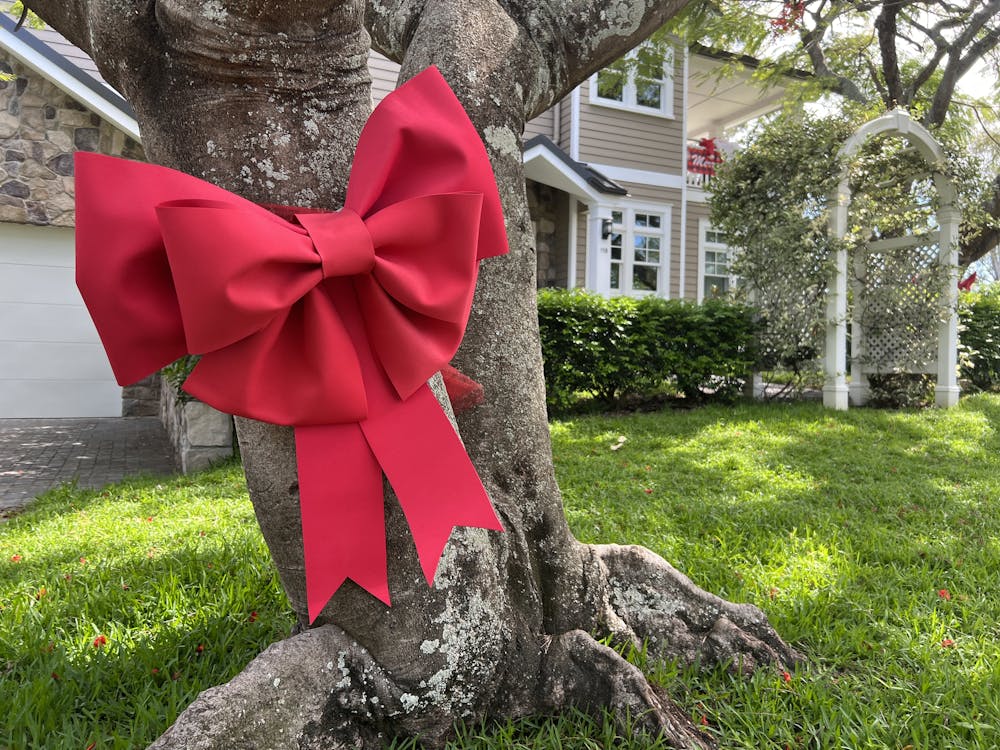
Switch to daytime decorations such as big red bows on trees. Better still, plant a garden with festive colour. Bottlebrush, woolly bush, Christmas bush and Christmas bells are all gorgeous native Australian plants that bloom brightly over Christmas.
Instead of covering your house and fence, which can also trap animals and block their movement, make your decorative lights window displays. At bedtime, close your curtains so indoor lights cannot disturb either sleeping or active animals outside.
Don’t leave lights on all night. Pick a short period, and avoid dusk or dawn when animals can be most active. Timers are helpful.
Instead of bright white or blue lights, use warm colours such as amber or red, as they are less harmful to wildlife.
Use low-intensity lights – they are supposed to look pretty, not light up a surgery.
When using spotlights, keep them angled downward and focused on where you need them. Use shields to stop light shining into the sky or nearby vegetation.
Leave your trees and shrubs as dark refuges for nocturnal wildlife – don’t load them up with lights.
Camping or travelling? Minimising your light pollution is a great way to help animals in the bush and along the coast. Thousands of young seabirds and baby turtles die on their first trip because artificial lights attract them and cause them to move in the wrong direction.
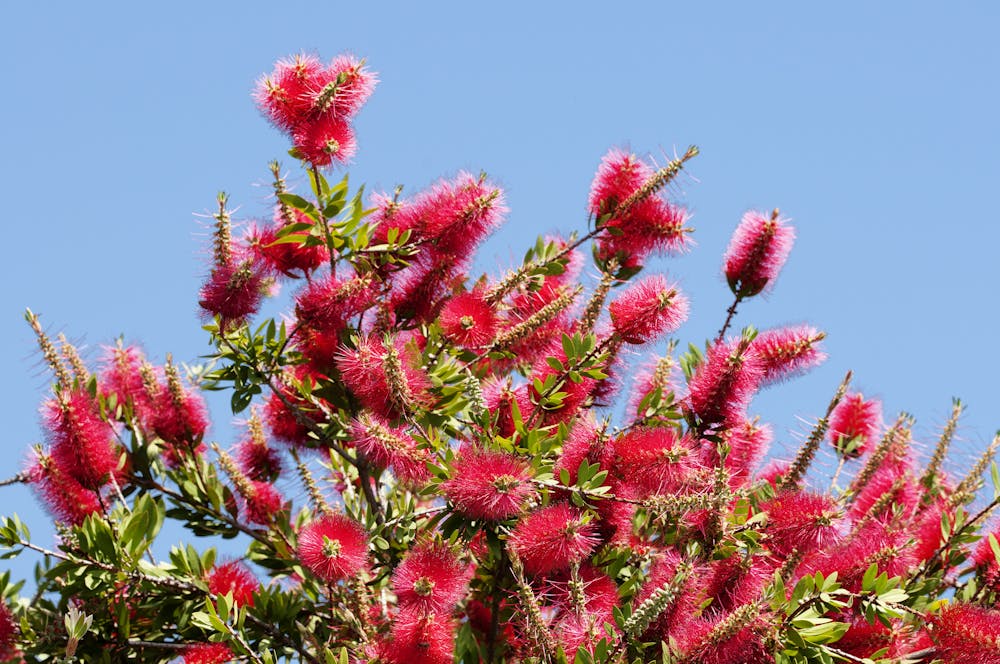 Plants like bottlebrushes and Christmas bells can add a festive feel to gardens.
Zeynel Cebeci/Wikimedia Commons, CC BY-SA
Plants like bottlebrushes and Christmas bells can add a festive feel to gardens.
Zeynel Cebeci/Wikimedia Commons, CC BY-SA
Read more: Bright city lights are keeping ocean predators awake and hungry
Why get involved?
Research in Australia and overseas has found artificial light at night has a wide range of harmful effects on many types of animals, from making them stressed and more vulnerable to predators, to changing their reproduction and making migrating birds more likely to crash into windows.
It’s such a significant issue for our wildlife that the Australian government launched the “Let’s switch off light pollution” campaign in November.
You might not realise how important your garden is to wildlife, because most of our mammals and frogs, and many birds and reptiles, are active at night and are great at hiding as they try to stay out of sight of predators.
Depending on where you live, your yard may be visited at night by possums, bats, bettongs, bandicoots, gliders, antechinus, echidnas, koalas, owls, tawny frogmouths, bush stone curlew, frogs, snakes, moths and geckos.
You can help these animals by minimising the amount of artificial light you shine outdoors.
By stopping lights shining up into the sky or out into the distance, you can also help animals further away. Migrating birds flying high overhead, baby sea turtles and even fish in the coast can be disturbed by artificial sky glow, which they see from far away.
Unfortunately, increasingly common energy-efficient LED lights appear to have greater impacts on many animal species than other lighting types because they are rich in short-wavelength white and blue light. That means minimising the amount of scattered light has become more important than ever.
Blue light at night is a problem for humans too and can make it hard to sleep, which is why many mobile phones have a night-light setting that reduces blue light and makes the phone glow appear orange-tinted.
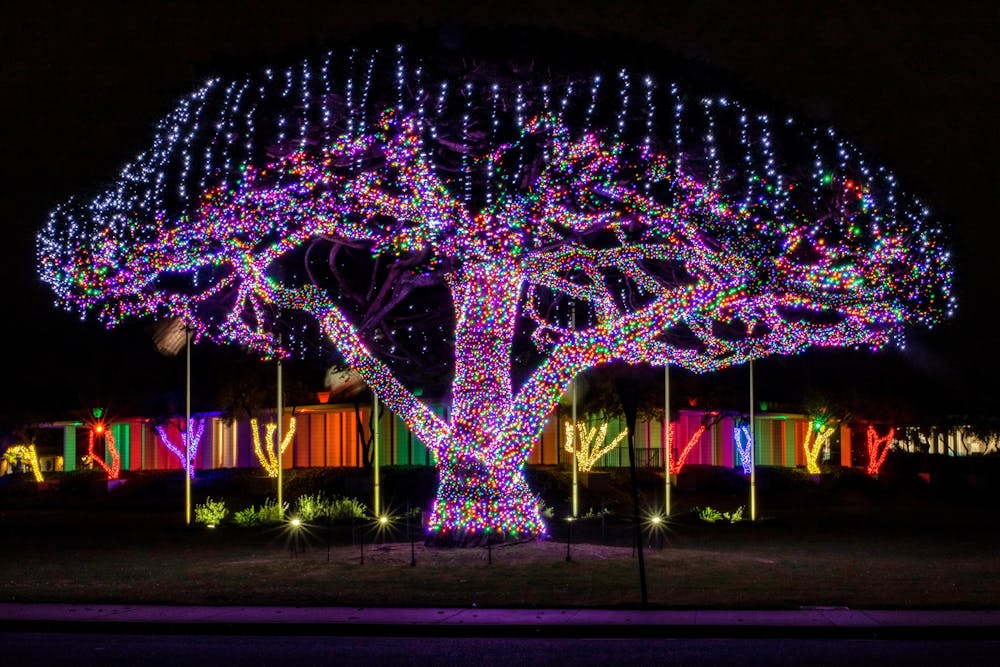 Trees provide vital habitat for wildlife, but when they are lit like this few animals can use them.
Mick Haupt/Unsplash
Trees provide vital habitat for wildlife, but when they are lit like this few animals can use them.
Mick Haupt/Unsplash
Your lighting choices make a difference
At Christmas and year-round, minimising light pollution is a great way to help wildlife.
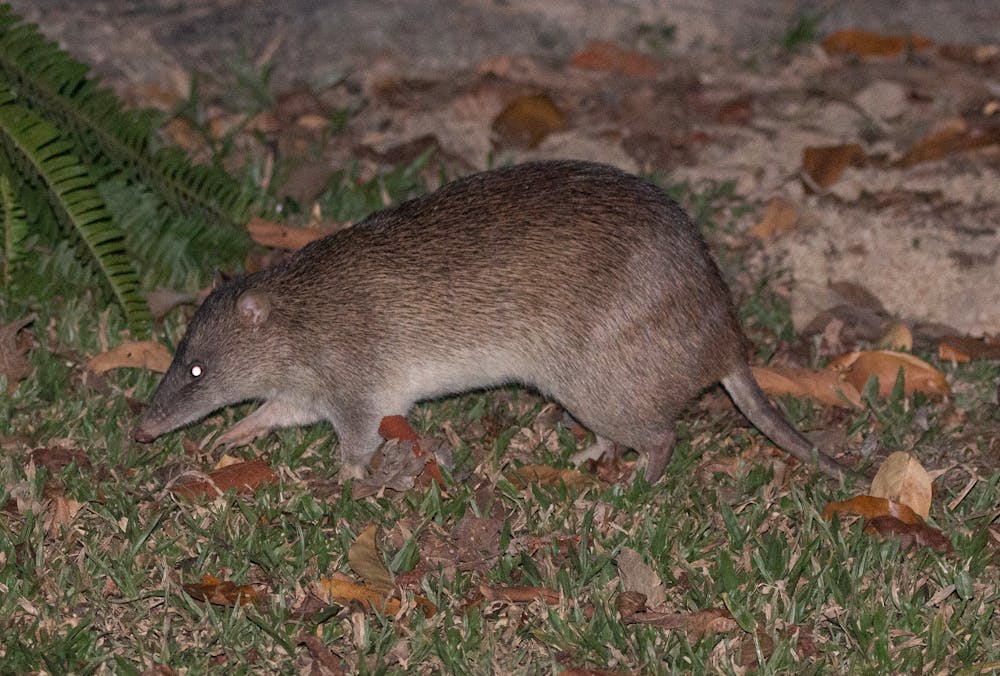 Bandicoots occur in many urban areas around Australia. Artificial lighting disturbs the bandicoot’s vision and makes them more visible to predators.
Mark Gillow/Flickr, CC BY
Bandicoots occur in many urban areas around Australia. Artificial lighting disturbs the bandicoot’s vision and makes them more visible to predators.
Mark Gillow/Flickr, CC BY
Light pollution is not the only problem facing our wildlife, but it can make it much harder for animals to survive other pressures.
For some species, such as seabirds, light pollution is one of the biggest threats to their survival.
Even though urban areas are already bright at night, your actions still make a difference.
Like other types of pollution such as carbon emissions, light pollution adds up. This means every light you can turn off, turn down or stop pointing into nature helps. If many people get involved, the difference we can make will be enormous.
Read more: Artificial light at night can change the behaviour of all animals, not just humans
Authors: Jaana Dielenberg, University Fellow, Charles Darwin University