We rely heavily on groundwater – but pumping too much threatens thousands of underground species
- Written by Mattia Saccò, Lecturer in ecology, Curtin University
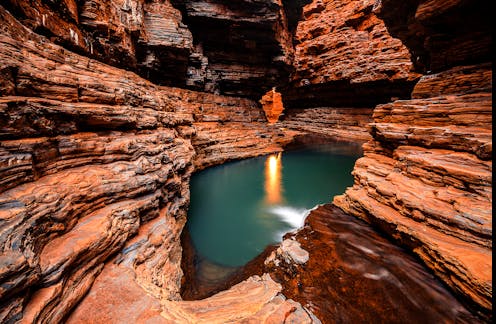
Groundwater is the world’s largest unfrozen freshwater reserve. Australia’s Great Artesian Basin alone holds enough water to fill Sydney Harbour 130,000 times. Worldwide, groundwater provides drinking water for half the world’s population. Countries like Denmark and Austria rely entirely on it for drinking water.
Globally, we pump almost 1,000 cubic kilometres of this ancient water each year. We’re using it far faster than it can naturally replenish. About a third of the world’s largest groundwater basins are in distress, meaning levels are continuously declining.
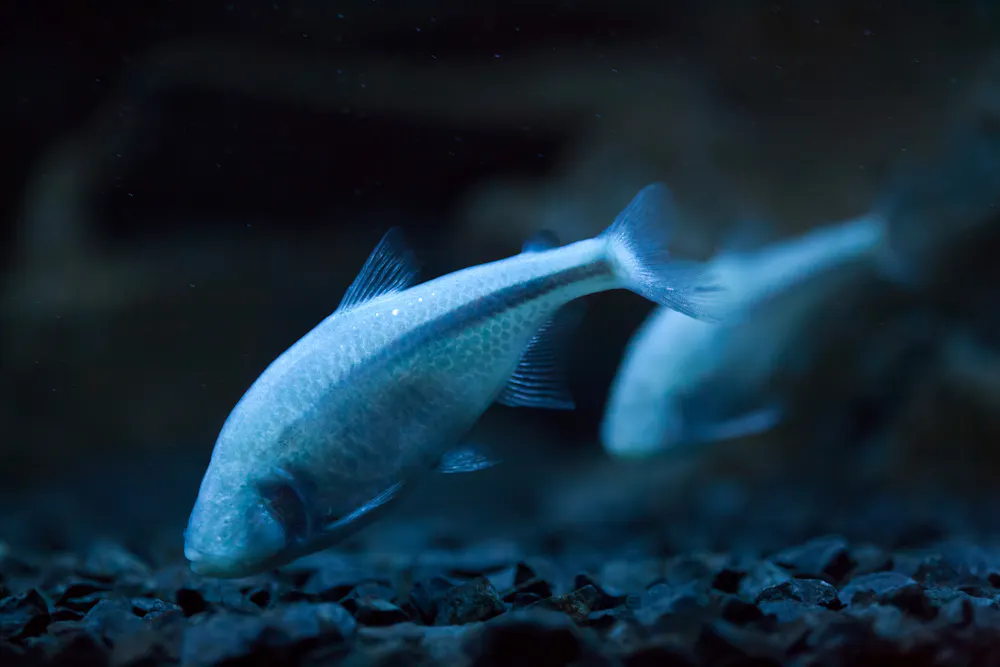
That’s bad news for the thousands of species living down there, including the cavefish, blind eels, blind beetles and translucent crustaceans that rely on groundwater.
There’s little to no protection in place for these species globally. But groundwater ecosystems play a vital role in surface ecosystems. Our new research shows groundwater supports areas of high surface biodiversity across one half of the world.
What crawls beneath
Recent estimates put the world’s number of animal species in freshwater and salty groundwater at upwards of 25,000. Most of these live in aquifers, not caves.
They range from microscopic beings to millimetre-long crustaceans to 40cm-long cavefish. We now know there are hotspots of groundwater biodiversity, such as the porous karstic environments of the Krim region in Slovenia and the Edwards aquifer in Texas, as well as three regions of Western Australia – the northwest’s Pilbara and Cape Range, and the Yilgarn region east of Perth.
In the northwest WA hotspots, you can find the blind cave eel (Ophisternon candidum), the longest cavefish in Australia, while the Yilgarn’s naturally cemented calcrete deposits are home to the world’s largest number of subterranean diving beetle species – 91 and counting.
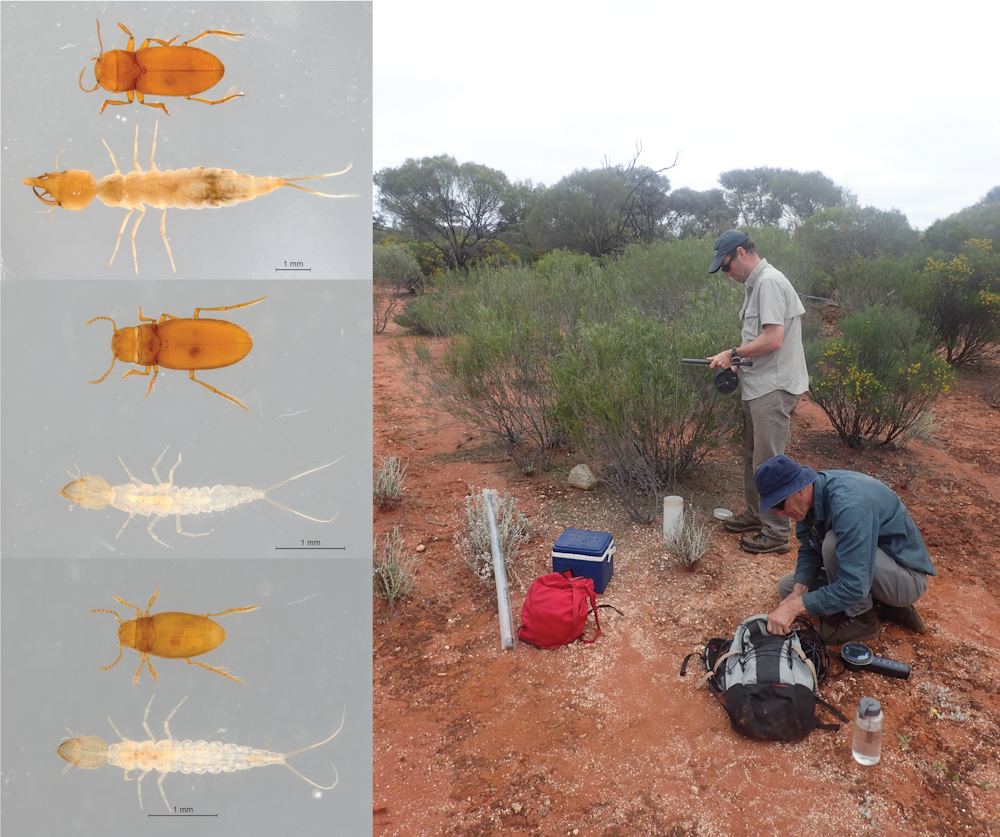 Groundwater ecologists Dr Bill Humphreys and Dr Steve Cooper looking for life in an aquifer in Western Australia’s Yilgarn region and the three species of blind beetles found.
Mattia Saccò, CC BY-ND
Groundwater ecologists Dr Bill Humphreys and Dr Steve Cooper looking for life in an aquifer in Western Australia’s Yilgarn region and the three species of blind beetles found.
Mattia Saccò, CC BY-ND
How did these species get here? Some migrated in search of water and over time, evolved to thrive in these lightless conditions. They lose their eyes, drop the skin colour, increase in longevity, get better at finding food and mates using other senses, and become more resistant to starvation. For example, the olm (Proteus anguinus) – a cave salamander – can live beyond 100 years and survive food deprivation for 96 months or more without signs of illness.
Many of these ecosystems rely on microbes as the basic food source, with predators living off bacteriophages (bacteria eaters). These species can also provide essential services to us. Underground aquatic invertebrates – known as the “architects of the underworld” – actually keep aquifers working through their burrowing. Their diet of microbes cleans the water and keeps nutrient levels down.
Our research found surface ecosystems had a medium-high interconnection with groundwater across 52% of the Earth’s land. That figure rises to 75% when we exclude deserts and high mountains, where groundwater is either scarce or the water table can be very deep. Water can flow from lakes and rivers into groundwater, and groundwater can emerge to top up wetlands, rivers and lakes.
When we mapped groundwater biodiversity based on what we know from sampling as well as predictions based on global modelling, we found an overlap in over half the globe. That is, high surface biodiversity coincides with some degree of groundwater interactions.
Groundwater, for instance, supports huge numbers of above ground species in groundwater-dependent ecosystems such as forests, rivers, wetlands and springs. Underground species can provide nutrients, clean water and trace elements to surface ecosystems, while underground life also relies on water coming down from above.
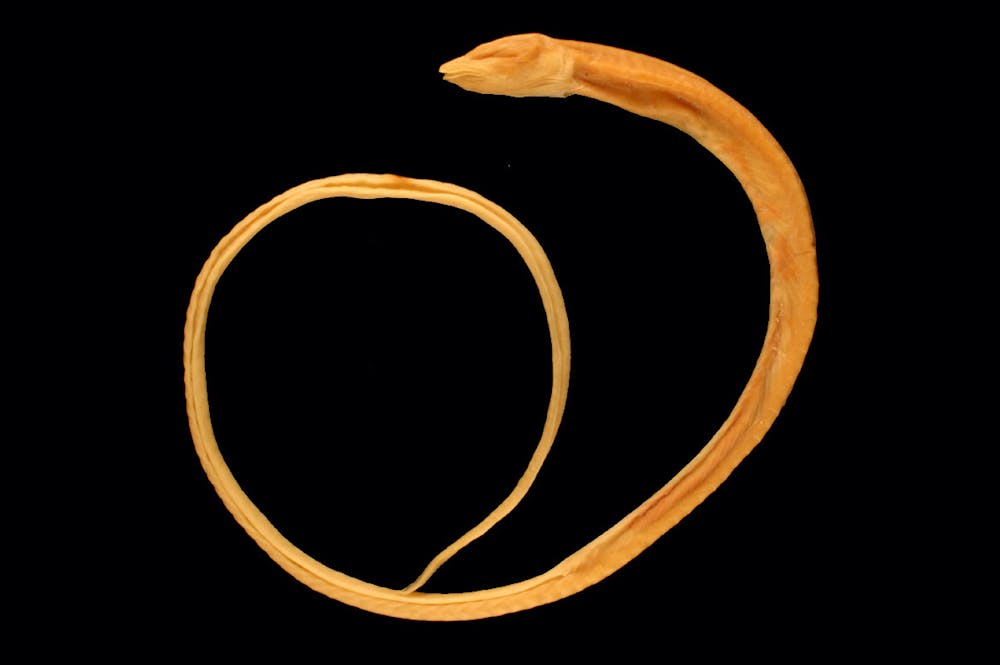 Northwestern Australia’s blind cave eel (Ophisternon candidum) is the largest of our underground fish species.
Mark Allen/Wikimedia, CC BY-ND
Northwestern Australia’s blind cave eel (Ophisternon candidum) is the largest of our underground fish species.
Mark Allen/Wikimedia, CC BY-ND
What should we take from this?
Our research suggests we must not overlook the life beneath our feet. We believe these are keystone ecosystems, providing resources essential for other species.
Underground microbes degrade harmful contaminants, turn over carbon and even regulate dangerous viruses and microorganisms.
As invertebrates move, feed and breed underground, they help mix the water, dirt and rock, boosting nutrient cycling and helping to aerate the groundwater. The combined efforts of microbes and invertebrates act as a natural filtration and purification system, safeguarding the quality of groundwater resources.
That, in turn, means we should be careful about how much groundwater we extract.
In Australia, almost one-third of all our fresh water is pumped up from groundwater – over 5,000 gigalitres every year. This is beyond what nature can replenish in most regions.
In other countries, the problem is even worse – in India, for instance, most water used on farms comes from groundwater.
As the climate changes, rainfall patterns change too. The water doesn’t disappear, but it can move. Some areas will get drier, others hit by intense sudden rains. If rain is no longer reliable in an area, aquifers will not replenish as fast.
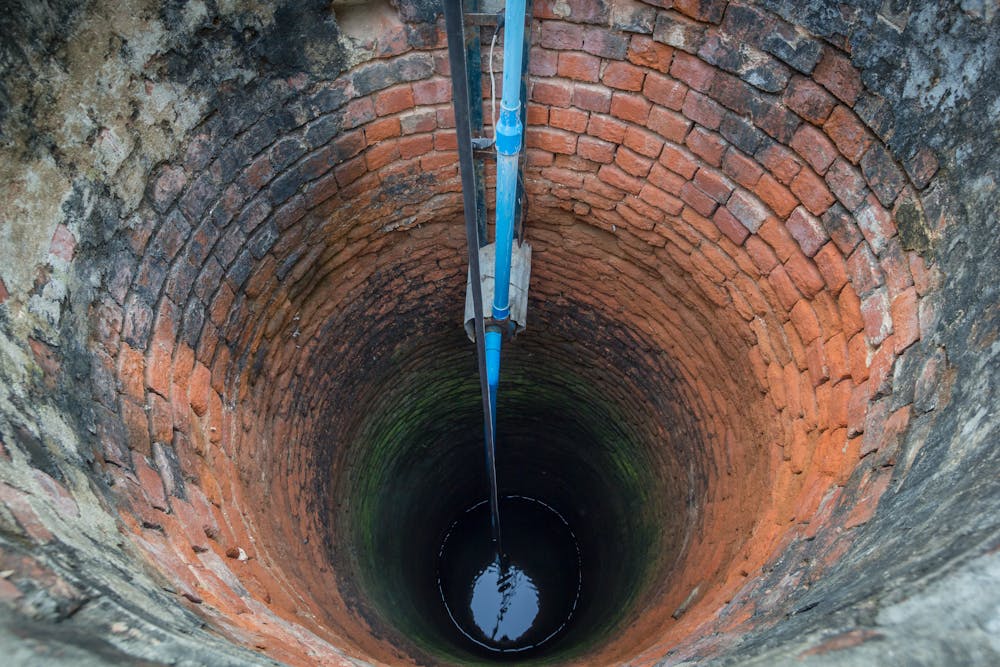 Aquifers can – and do – run dry.
Shutterstock
Aquifers can – and do – run dry.
Shutterstock
At present, the species in our groundwater are worryingly overlooked by environmental protection laws, both in Australia and worldwide. This hidden water is hard to access, and many of us simply don’t know about the life in groundwater – and the life it enables.
To fix it, we can move towards approaches which actively consider the ecological role of groundwater in the global water cycle – and which protect it.
Water, after all, is the basis of life on Earth. If we ignore the ecological integrity of the largest freshwater resource on Earth, we threaten the sustainability of entire ecosystems – and our own societies.
Authors: Mattia Saccò, Lecturer in ecology, Curtin University