

Getting clean drinking water into remote Indigenous communities means overcoming city thinking
- Written by Nina Lansbury Hall, Lecturer, Environmental Health Unit, School of Public Health, The University of Queensland
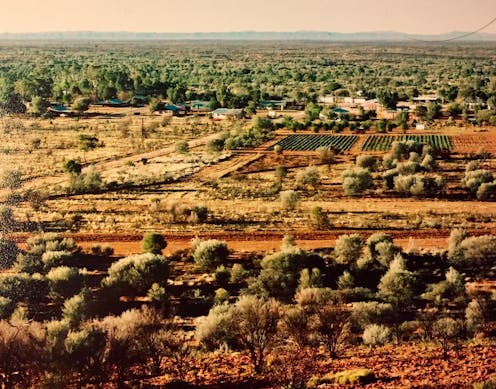
Many people in Australia do not have access to safe drinking water. It’s particularly difficult in Indigenous communities because they are small, remote and challenged by additional issues to secure essential power and water services. To make sure everyone has access to safe drinking water, we’ll have to get smarter about the way we treat it.
Drinking water contamination can come from naturally occurring chemicals, such arsenic, cadmium, nitrates, uranium and barium. It can also come from microbes from sewage and animal wastes.
Read more: Better boil ya billy: when Australian water goes bad
There are also chemicals in farming areas from pesticides, and from mining areas, and also in defence areas that have leached fire-fighting foam into the groundwater (“PFAS” chemicals).
In our research and conversations with residents and water operators in remote Indigenous communities, we have been told that their water is not safe to drink, and that they have no reasonable or practical alternatives and no help.
Hearing from the locals
One Indigenous custodian from Katherine, NT, told us that the levels of PFAS from fire-extinguisher foam were high in their soil and water. Worried locals stopped picking berries or fishing from the river. Despite their protests for action, they said they felt ignored.
Their fears were based on the 2017 testing of water bores around Katherine’s RAAF base with raised PFAS levels. Defence provided bottled water to 50 homes.
Over in the Kimberley, WA, an traditional owner said,
our water is contaminated with nitrates … They say the level is … too high for babies under three months and pregnant women … now the whole community (150 people) cart water from this one tap for drinking and cooking. … We feel fear and we don’t know how much damage is being done to us.
Data reflects the scope and seriousness of the problem. For example, a WA Auditor-General’s report in 2015 found that many communities had unsafe levels of the chemical contaminants nitrates and uranium in the two-year reporting period.
Read more: We asked five experts: do I have to drink eight glasses of water per day?
In Borroloola, NT, situated neat a zinc mine, the community were told by the mining company that the ground (bore) water on the McArthur River was contaminated with lead and manganese. Community representatives told us,
[We were told] we should not drink it, and then they said it was safe and that the high lead had come from our pipes and not the mine … a monitoring group said that our fish are toxic with lead from the mine, so we stopped fishing and started worrying … We can’t live with this contamination anymore. We need the water to be clean.
The McArthur River Mining Pty Ltd’s own Environmental Impact Statement reflects that values “exceed” the trigger value for further investigation in sulfate, zinc and lead. Recent statements in the media from the company indicate the levels are safe.
Safe water for all
Treating drinking water can be different and difficult in remote locations compared to cities.
There are different types of drinking water treatments depending on the type of water (freshwater vs saltwater), the cleanliness of the water (lots of sediment vs dissolved chemicals), and the cost of the treatment (remote communities often only use basic chlorine treatment as they are too small to justify the investment for reverse osmosis). Then there are extreme weather events, such as cyclones and flooding, and the “people factor”, including the skills of the water plant operators.
Only now are government agencies and water utilities starting to realise that there are no “one size fits all” or simple technological fixes for treating water in remote areas. Instead, they are beginning to seek water treatment technology specifically designed for these regions. Sometimes the simplest technologies are going to be longest-serving as they can be fixed, will not be damaged in cyclones, and can be operated by one person.
For example, Queensland Health ran a successful pilot project in the outer Torres Strait Islands to reduce microbial contamination of water. They focused on the “people factor” by building the skills of local staff. They addressed the “governance facto” by ensuring that all relevant government agencies collaborated. And they addressed the “technology factor” by upgrading the technology for water disinfection.
Chemicals in water can also be removed with simple technologies that are locally-appropriate. For instance, Indigenous teenager and Science Teachers’ Association WA’s Young Scientist of the Year Uriah Daisybell, from the Christian Aboriginal Parent-directed School in Coolgardie, WA invented a water treatment system by burning shells and combining with magnets to create a charcoal filter. Testing of the filtered water found that heavy metals were reduced to safe levels.
Read more: Why does some tap water taste weird?
Australia is a vast country, with naturally-occurring chemicals in water and high risk of man-made contamination. Innovation and attention is required to achieve the United Nations’ Resolution to provide safe, clean, accessible and affordable drinking water and sanitation for all – especially in our remote communities.
We are bringing together a Safe Water Summit this month in Brisbane, with representatives from Indigenous and farming communities.
Authors: Nina Lansbury Hall, Lecturer, Environmental Health Unit, School of Public Health, The University of Queensland

















