

Want to be buried on your own land, at sea or in a forest? A guide to unconventional send-offs
- Written by: Sandra van der Laan, Professor of Accounting, University of Sydney
At some point, you or someone else will need to make a decision about your “send-off”.
Most Australians die in an institution, such as a hospital or aged care facility.
This situation often puts pressure on next-of-kin to make hasty funeral arrangements. Most contact their local funeral director and tee up a conventional service plus burial or cremation.
But what if your loved one wanted something different? We’ve researched the funeral industry for years. Here are some of the interesting options we’ve learned about along the way.
Read more: You can pay to have your ashes buried on the moon. Just because you can doesn't mean you should
What if I want to be buried on my land?
The requirements for burial on your own land differ from state to state.
If in New South Wales, your property must be at least five hectares and you still need permission from the local council to ensure the burial site doesn’t contaminate a water source or interfere with access.
The family of media mogul Kerry Packer successfully sought permission to bury him on his 27,000 hectare property near Scone, in NSW.
In Victoria, you need permission from the secretary of the Department of Health for burials outside cemeteries. Permission will generally only be granted if there are other burials on the land.
There are other considerations too, including size of the land, the depth of the interment, and how you’ll care for the burial site.
In South Australia and Tasmania, local council permission is also required. While there is no minimum property size stipulated, an urban block of land is deemed unsuitable in both states.
In Western Australia, burial on your own land is more restrictive. Only under exceptional circumstances will you be granted permission to be buried outside a cemetery.
These circumstances include a significant historical or cultural association with the land.
The Queensland rules are similar to WA.
What if I want to be buried in the bush or in a forest?
While burying someone on public land is generally not permitted in Australia, you can scatter ashes in many places. But you might need permission first from landowners, land managers or councils.
Remember: human remains create around two kilograms of ashes or “cremains”. That’s a lot of material to scatter! Some people like to scatter half in one place and retain the rest for burial.
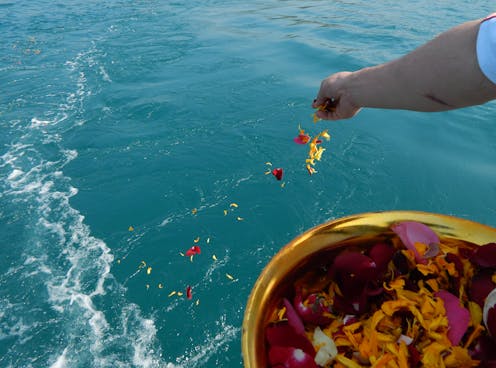
What if I want to be buried at sea?
Burial at sea requires a permit issued by the federal government at a cost of A$1,675.
Applicants need a valid reason, such as the deceased person having been a fisherman or surfer or having served in the navy.
Sea burials require specific preparation; using a burial shroud made of biodegradable material and an ocean site at least 3,000 metres deep.
These requirements, combined with boat hire, can make sea burials expensive.
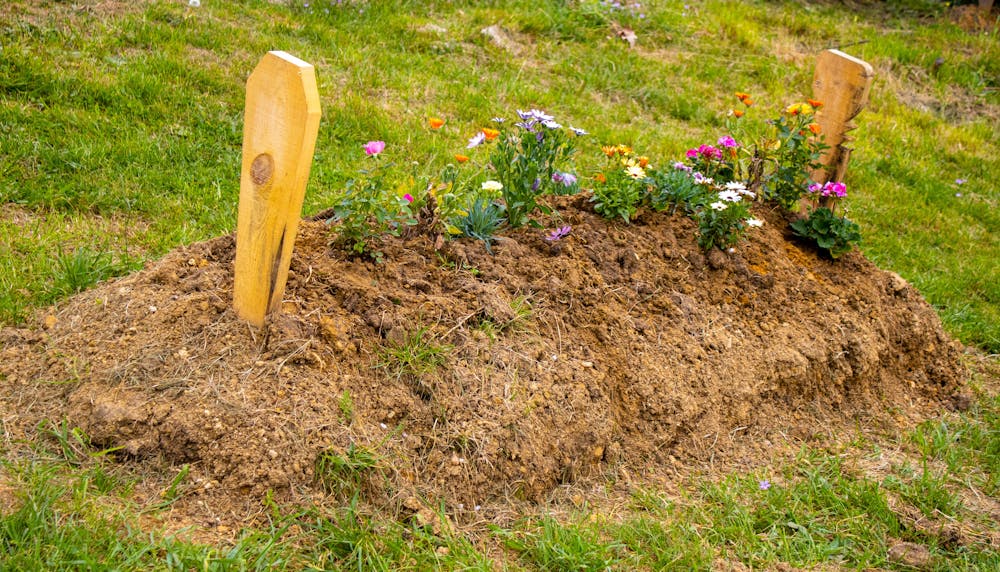
 Burial outside a cemetery is not straightforward.
Sue McArthur/Shutterstock
Burial outside a cemetery is not straightforward.
Sue McArthur/Shutterstock
What if I want to donate my body to science? What do I need to know?
There are two types of body donation.
First is body donation to a university for teaching or research. This requires consent from the donor while living. If your body is accepted, it may be used in the study of anatomy or forensic science.
Second, you can donate your body for organ and tissue harvesting for transplantation. Organ donation is heavily regulated and not everyone is eligible.
However, the donation of certain body parts and tissue (known as an allograft) is another option. Allografts can potentially improve the quality of life for others.
For example, your muscles, joints, bones and ligaments could help others in orthopaedic surgery. Your skin could help severe burn victims (such as runner Turia Pitt, who was burned in a bushfire). Heart valves and veins may be used in cardiac surgery.
This option does not preclude you from having normal funeral arrangements as well, since the body parts are harvested within 24 hours of death.
What about an environmentally-friendly option?
While new green technologies such as human composting and freeze drying are available in other countries, currently in Australia the lowest environmental impact option is water cremation (also known as alkaline hydrolysis).
This is where water and chemicals break down the body’s flesh and organs. These are disposed of. Remaining bone material is ground into powder and returned to next-of-kin.
Another option is a natural burial cemetery. This where the body is dressed in biodegradable material and left to naturally decompose in a shallow grave. Not all cemeteries provide this option.
It’s worth remembering many urban cemeteries only offer limited tenure. At the end of the lease any memorial is removed from the grave site and in a process known as “lift and deepen”, the coffin is lifted from the plot and the deceased person’s remains removed. The burial site is then deepened and the remains placed at the bottom, allowing a new burial on top.
What do you want to have happen to your body when you die? There are myriad choices.
Make your wishes clear to the executor of your will or next-of-kin.
Read more: From body snatchers to dodgy marketers: the dirty history of funeral schemes
Authors: Sandra van der Laan, Professor of Accounting, University of Sydney


















