

Modern Australian
The Times

We need to better support First Nations women with violence-related brain injuries. Here’s how

  • Written by Michelle Fitts, ARC DECRA Fellow, Institute for Culture and Society, Western Sydney University
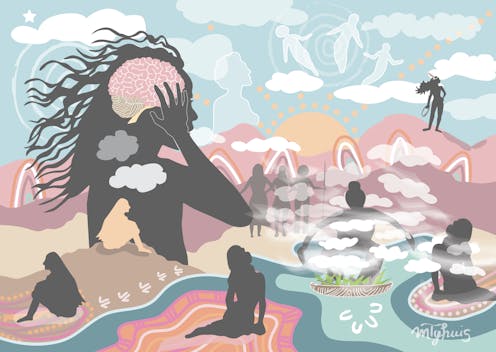
We need to better support First Nations women with violence-related brain injuries. Here’s how

Please be advised this article contains details of family violence.

Domestic violence causes disability for women through lasting impacts on their brains.

Traumatic brain injury refers to damage to, or alteration of, brain function due to a blow or force to the head. This leads to bruising, bleeding and tearing of brain tissue.

Such injury can have short-term (acute) effects or cumulative effects (over months or years).

A 2008 study by researchers in Adelaide found Aboriginal women experience head injury – including traumatic brain injury – due to assault at 69 times the rate of non-Indigenous women.

We spoke to Aboriginal and Torres Strait Islander women and communities in regional and remote Australia about their experiences of traumatic brain injuries from violence and their decision-making about health care access.

We also spoke to family members about what they observed in other women who were important to them and had experienced traumatic brain injury.

Here’s what we found – and how it can inform the development of better health care and support services.

Not feeling like the person I used to be

Violence-related traumatic brain injuries are not isolated experiences. The Aboriginal and Torres Strait Islander women we spoke to reported repetitive, violence-related head injuries over prolonged periods. Most women reported dozens of head injuries or had lost count of the number of injuries suffered.

The violence experienced was usually from Indigenous and non-Indigenous current or former male partners.

Aboriginal and Torres Strait Islander women reported living with and managing many common changes from traumatic brain injuries, including:

  • memory troubles
  • dizziness and headaches
  • difficulty with concentration and organisation
  • trouble with taking in information and thinking (sometimes described as “mixed up thinking”)
  • finding it hard to start a yarn or keep conversations going with family and friends (described as “losing the words or having the words disappear” or feeling like “my brain went blank”)
  • mood swings and impulsivity.

Coral shared:

Black out, now suffering from memory loss, like finding hard to be telling a yarn. These are stories that have happened to me. But I can’t remember it.

Kirra said about her own experience:

I put something somewhere, like, book, keys, phone. If I can’t see it, I forget where I put it. I have troubles keeping focused on one thing.

The women we interviewed also frequently mentioned being strangled. Non-fatal strangulation is also harmful to the brain because it reduces blood flow to the head and deprives the brain from getting oxygen.

When and why women access health care

Women felt accessing health care and support services after violence-related traumatic brain injury was not always an option for them. This was primarily because they were experiencing coercive control or were worried they would be reported to child protection authorities.

The characteristics of the injury also influenced their decisions about accessing health care. If there was no visible bruising, lacerations or marks, blood or recalled loss of consciousness (or blacking out) many Aboriginal and Torres Strait Islander women did not go to hospital and managed their own symptoms.

As Cathy explains:

Then one night he hit me. There was no hospital, no blood, bleeding, no one would have thought there was domestic violence that happened to me. Didn’t think it was serious enough to go.

How women manage symptoms of traumatic brain injury

Journey Home After Brain Injury, Shirleen Nampajinpa Campbell, 2021. Aboriginal and Torres Strait Islander women practised a range of activities to help improve their memory and manage anxiety after their traumatic brain injury. This included: painting and weaving listening to meditation music completing puzzles and other tactile activities. Family and friends helped Aboriginal and Torres Strait Islander women with daily activities like shopping at the supermarket, paying bills and attending appointments. As Pat shares: Someone from the family talks to me on the phone when I’m at the shop so I don’t forget. Sometimes my daughter or grandchildren will take a photo and send to me. However, homelessness, isolation and ongoing violence undermined many Aboriginal and Torres Strait Islander women’s capacity to seek medical care for traumatic brain injury and to use these strategies. The need for regional and remote investment We need to strengthen access to health care and other support services for Aboriginal and Torres Strait Islander women with violence-related traumatic brain injuries. Our research shows this should include: developing standardised coordinated care pathway within emergency departments and remote community clinics developing a specialised workforce with training in traumatic brain injury and violence (such as Aboriginal social workers and Aboriginal allied health workers) who can support women in the health-care setting and in the community the inclusion of traumatic brain injury pre-screening questions in primary health and family violence screening tools, including Aboriginal and Torres Strait Islander health checks and state/territory family violence risk assessments educational resources that raise awareness and knowledge of traumatic brain injury and non-fatal strangulation among women, families and communities. This must include information that lasting harm to the brain can occur even when the person doesn’t lose consciousness or there is no visible injury needs-based funding for crisis accommodation services in regional towns and remote communities to ensure services can respond effectively to local need investment in the development of concussion clinics in regional and remote Australia. Any recommendations implemented must include local partnerships with Aboriginal and Torres Strait Islander peoples to ensure these practical measures are community-led, culturally appropriate and are beneficial overall, without doing further harm. If this article raises issues for you or someone you know, contact 1800 RESPECT (1800 737 732) or 13YARN (13 92 76). In an emergency, call 000. We acknowledge and thank the Aboriginal and Torres Strait Islander women whose stories appear in this article. We also acknowledge the artists who contributed to the project, including Shirleen Nampajinpa Campbell and Michelle Tyhuis.

Authors: Michelle Fitts, ARC DECRA Fellow, Institute for Culture and Society, Western Sydney University


Read more https://theconversation.com/we-need-to-better-support-first-nations-women-with-violence-related-brain-injuries-heres-how-233329

How Long Do Bathroom Renovations Melbourne Take? Step-by-Step Process Explained

Planning a bathroom renovation is exciting, but one of the biggest questions homeowners ask is, "How long will it take?" While every project is uniq...

Why Your Skin Breaks Out: The Science of Acne Explained

Acne is the most common skin condition in the world. An estimated 85% of people experience it at some point between the ages of 12 and 24, and a gro...

10 Swimwear Trends Australian Women Are Wearing This Summer

Every Australian summer brings a fresh wave of swimwear trends, but some styles have much greater staying power than others. While fashion constantly ...

Why Regular Skills Updates Are Essential for Licensed Security Officers

A guard at a Brisbane shopping centre gets a call about a shoplifter who's turned aggressive.  They’ve done the job for six years. But their de-...

10 Benefits of Choosing Professional Tutoring Penrith Services

Every student has unique learning strengths, challenges, and academic goals. While classroom teaching provides essential knowledge and structure, so...

Sunshine Coast Baby Classes Prove Big Hit Among First-Time Mums

There's a movement gaining traction on the Sunshine Coast, providing a village of support, socialisation and relief for first-time mothers and babie...

Father's Day Gift Ideas for Men Who Are Hard to Buy For

Some dads are easy to buy for. Others do not want anything, already have everything, or give you the classic "don't worry about me" answer every yea...

Top 5 Mistakes That Wear Out Your Brakes Faster

Brakes don't need frequent replacements like oil changes do.   But a lot of the wear happens quietly, over months, because of habits most drivers...

Plantation Shutters vs Curtains: Which Is Better for Your New Home?

Moving into a new home is an exciting opportunity to personalise your space and make it your own. While many homeowners focus on furniture, flooring...

Celebration of Life vs Traditional Funeral: What's the Difference?

When saying goodbye to someone you love, there is no single way to honour their life. Every family has different traditions, beliefs, and preference...

Building Approval for Roofing Projects: What Homeowners Need to Know

Roofing projects are an important part of maintaining and protecting your home. Whether you're repairing storm damage, replacing an ageing roof, or ...

Chatswood Tutoring And Its Role In Academic Achievement

Academic success often requires more than classroom attendance alone. Students face increasing expectations as they progress through school, particu...

Why Laser Hair Removal Treatments Continue Growing In Popularity

Managing unwanted hair can become time-consuming and frustrating for many people, especially when shaving, waxing, and other temporary methods requi...

Choosing the Right Devices for a Flexible Workplace

For IT leaders managing large fleets, the device layer is where workforce productivity and security policy meet. The shift towards flexible and hybrid...

How Business Advisory Services Help Companies Achieve Sustainable Growth

Every business owner aims to build a profitable and sustainable organisation. While dedication, innovation, and hard work are important, achieving l...

Why Body Contouring Has Become A Popular Cosmetic Treatment

Many people maintain healthy lifestyles through regular exercise and balanced eating habits but still struggle with stubborn areas of fat that are d...

How to Choose the Right POS Hardware for Your Business in Australia

A lot of Australian business owners spend weeks researching POS software but buy hardware almost as an afterthought. That's a mistake. The wrong har...

Why Material Handling Hose Is Critical for Industrial Efficiency

A high-performance material handling hose is an essential component in industries that transport abrasive, dry, or bulk materials on a daily basis...
















