

Many people in the Pacific lack access to adequate toilets – and climate change makes things worse
- Written by: Benny Zuse Rousso, Research Fellow, International Water Centre, Griffith University
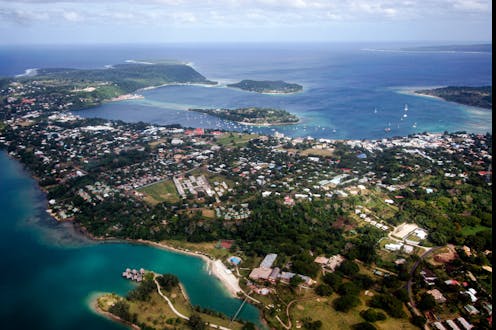
The Pacific Islands may evoke images of sprawling coastlines and picturesque scenery. But while this part of the world might look like paradise, many local residents are grappling with a serious public health issue.
Across Pacific nations, almost half a million people are living in informal urban settlements with a lack of proper sanitation, which can include difficult access to working toilets.
This affects health, wellbeing, education and livelihoods, especially for women, children, older people, and people with disabilities.
Our new study, published in the Nature journal NPJ Clean Water, examined the state of sanitation in several informal urban settlements in two Pacific countries – Fiji and Vanuatu. Our findings show this is an issue which needs urgent attention.
Research on the ground
We partnered with researchers from the University of the South Pacific to survey households and inspect sanitation infrastructure. Our team examined 393 households in nine informal urban settlements in the capital cities of Fiji (Suva) and Vanuatu (Port Vila).
These settlements develop when people settle on unoccupied land that has not been planned for housing, generally due to a lack of affordable housing options. Informal urban settlements often lack access to essential services and infrastructure such as sewerage systems, power, sealed roads and rubbish collection.
We identified that although piped water is available, most households (from 56% to 100% of the households in each settlement) still rely on unsafe sanitation to manage human waste. Many use poorly built dry pits – for example, a pedestal above a hole in the ground – or cesspits. In these toilets, there’s no plumbing and no running water is used to flush. All are onsite (in the house or adjacent to it), meaning the waste, treated or untreated, stays in the settlement.
On top of everyday challenges, we found one in every three households loses access to functioning toilets during heavy rain, cyclones, or floods. Dry pit systems face four to eight times higher odds of damage during climate events than water-based systems in the same settlements.
We also found safe waste management, particularly from septic tanks and pits, poses significant challenges for residents. Even when toilets are available and working well, there is often no safe and sustainable way to manage the waste that builds up in pits and tanks.
In many cases, the sludge is dumped either on open spaces in the settlement, into local rivers, or seeps into the ground. This can pollute water sources and create serious environmental and public health risks.
Further, we found cyclones and heavy rains damage sanitation systems, causing waste to overflow and contaminate water supplies.
Vulnerable communities
Melanesian countries, including Vanuatu and Fiji, are particularly susceptible to severe climate hazards, making it crucial that sanitation infrastructure in informal urban settlements can withstand these environmental threats.
Poor sanitation in these areas leads to the spread of diseases such as diarrhoea, intestinal worms and trachoma. Studies show that improving water and sanitation systems significantly reduces the chances of childhood deaths and deaths from diarrhoea specifically.
Estimates from the World Health Organization and UNICEF indicate that less than 3% of urban populations in Fiji and Vanuatu use unimproved or unsafe sanitation – that is, sanitation that does not safely contain, treat and dispose of human waste.
That figure contrasts sharply with our finding that most households in informal urban settlements rely on unsafe sanitation. This highlights the need for improved monitoring strategies which distinguish informal settlements from formally planned areas.
How can we address this problem?
Toilets alone won’t solve the problem. Communities need a comprehensive approach that addresses sanitation management at every stage. This will involve creating a complete service chain that ensures reliable waste removal, treatment, and disposal, and which is resilient to disasters.
This means enhancing local expertise, supporting local service providers, ensuring systems are well maintained, and fostering community ownership of these systems to guarantee long-term sustainability.
In informal settlements, providing these services is much more challenging than in formal urban areas, largely because of insecure land ownership and limited access to adequate infrastructure, which adds complexity for service providers.
However, with a significant portion of the Pacific urban populations living in informal settlements, finding effective ways to safely manage sanitation in these communities is essential.
The sixth sustainable development goal aims to provide clean water and sanitation for all. Solving the sanitation crisis in the Pacific Islands is about protecting health, restoring dignity, supporting livelihoods, and building resilience at the level of households and communities, who are at the frontline of an increasingly uncertain future.
Authors: Benny Zuse Rousso, Research Fellow, International Water Centre, Griffith University


















