

Foreign interference can be hidden in plain sight. Here’s how countries use ‘sharp power’ in Australia
- Written by Ihsan Yilmaz, Deputy Directory (Research Development), Deakin Institute for Citizenship and Globalisation & Research Professor of Political Science and International Relations, Deakin University
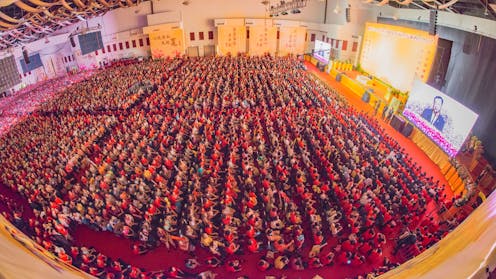
Last week, Australian authorities arrested a woman for foreign interference. The Chinese citizen and Canberra resident is just the third person ever charged under our foreign interference laws.
According to the Australian Federal Police, she was allegedly gathering information on, and may be involved in efforts to infiltrate, the Guan Yin Citta Buddhist association. The group is banned in China, where the government regards it as a dangerous cult.
Read more: Chinese national accused under foreign interference law of spying on Buddhists
The story might seem unimportant. After all, it doesn’t involve defence secrets or political leaders, but a small, relatively obscure community.
But this is exactly why it matters. The case shows the Chinese Communist Party is deeply interested in Australia’s Chinese diaspora communities. It’s willing to disregard Australian law to police and manipulate them in ways that serve Beijing’s interests.
It also shows how authoritarian regimes use “sharp power”, or covert, manipulative influence, to do more than just spy. They also surveil, intimidate and control communities far beyond their borders.
From elections to TV dramas
Foreign interference in Australian affairs is no longer a hypothetical concern. Earlier this year, Australia’s spy chief warned that foreign agents were targeting the AUKUS submarine program, critical infrastructure and even political debate.
Beyond Australia, Russia has tried to sway US elections through disinformation campaigns.
Diaspora communities are a new front in wars for influence. For example, India’s government has attempted to mobilise its supporters in Canada against people demanding a separate homeland for Sikhs in India.
In Turkey, the ruling Justice and Development Party uses TV dramas. These glorify the Ottoman Empire to export Islamism, authoritarianism and pro-violence attitudes to other Muslim majority countries, in an effort expand Turkish influence across the world.
This is how sharp power works. It’s about shaping public narratives, creating division and undermining a country’s capacity to make independent, confident decisions.
What is sharp power?
The best way to understand sharp power is to compare it against “hard power” and “soft power”.
We are used to measuring power in economic and military terms, such as how many soldiers or warships a country has. This is “hard power”: the ability of a nation to coerce others to act according to its wishes through military prowess and economic dominance.
This kind of power is used by US President Donald Trump to bully other nations into accepting unequal trade deals. It can also be seen in Russia when it threatens nuclear war on Europe.
Many countries also use “soft power” to win the admiration of people in foreign countries. For example, despite its history of imperial domination, postwar Japan has enjoyed enormous soft power in Asia and beyond thanks to its popular culture.
Sharp power is different. It manipulates and distorts the information people receive, quietly shaping how they see the world and the choices they think they have. It’s the use of covert, manipulative and often emotional tactics to shape how other countries think, decide and act, often without them realising it’s happening.
The troubling thing about sharp power is that it sometimes wears a benign mask, such as TV dramas.
Scholar Joseph Nye argues the line between soft power and sharp power comes down to truth and openness.
When China’s state news agency, Xinhua, operates openly in other countries, it is playing the soft power game. But when China Radio International secretly funds 33 radio stations in 14 countries, or when Turkey spreads anti-Western conspiracy theories and disinformation, it crosses into sharp power.
Sharp power in Australia
The Canberra spy case shows how Beijing can shape opinions by infiltrating local Chinese organisations. It can also control information and mobilise people in ways that serve its own political interests. It reveals how some authoritarian governments regard co-ethnic, co-religious, or culturally linked diasporas in the West as part of their national community and seek to influence them accordingly.
Australia’s universities have also been targets of China’s sharp power. Scholars critical of Beijing’s oppression of Tibetans, Uighur Muslims, and pro-democracy activists in Hong Kong have faced pressure from student groups aligned with Chinese state interests.
The Chinese language media in Australia has also become deeply influenced by Beijing’s narratives. Many once independent outlets now republish state controlled content, narrowing the diversity of views available to Chinese-speaking Australians. This also encourages them to remain loyal and connected to China.
Given these other examples, it’s clear the Canberra spy case is far from an isolated incident. It’s part of a deliberate and evolving strategy used by a variety of authoritarian powers. These powers manipulate information environments and public opinion, and interfere in elections. They repress diaspora communities and influence nations.
For a multicultural society such as Australia, the challenge is to respond firmly to authoritarian sharp power attacks without undermining the openness and diversity that are among our greatest democratic strengths.
Indeed, if Australia responds to Chinese sharp power with blunt measures, it risks alienating Chinese Australians. Ultimately, that would do Beijing’s sharp power work for it.
Authors: Ihsan Yilmaz, Deputy Directory (Research Development), Deakin Institute for Citizenship and Globalisation & Research Professor of Political Science and International Relations, Deakin University

















