

How NZ can survive – and even thrive – in Trump’s new world of great-power rivalry
- Written by Nicholas Ross Smith, Senior Research Fellow, National Centre for Research on Europe, University of Canterbury
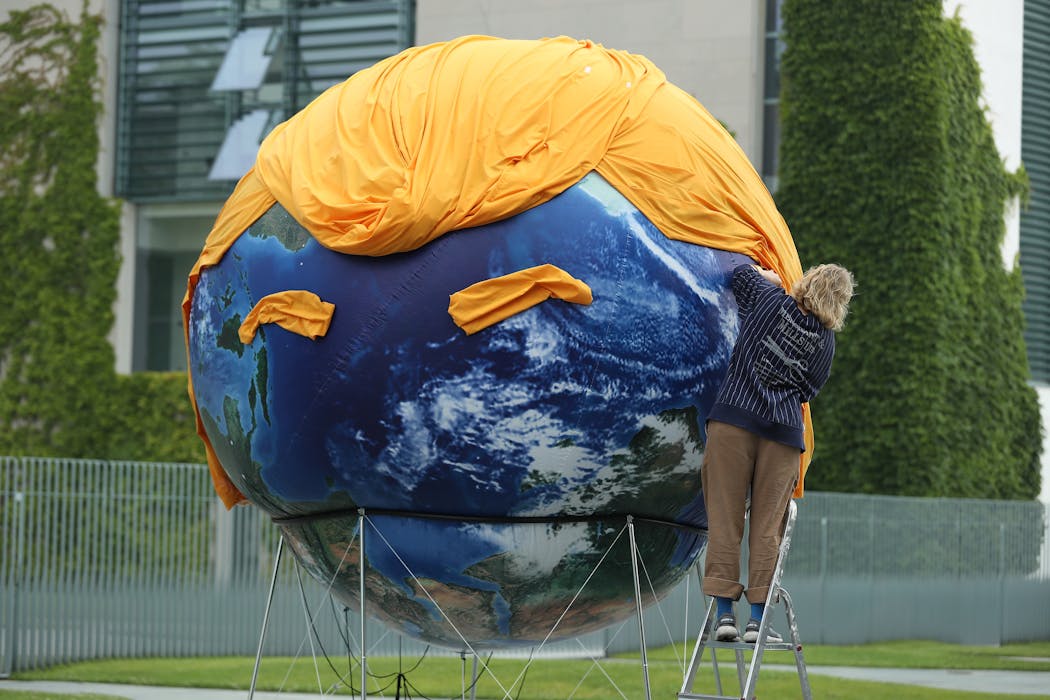
In the wake of the US military intervention in Venezuela and Donald Trump’s repeated threats towards Greenland, a wave of pessimism has swept the western world.
For countries wedded to a rules-based international order arbitrated by a mostly benevolent America, the emergence of what Trump has branded a “Donroe Doctrine” represents an existential crisis.
This is certainly true in New Zealand, which for 75 years has looked to the US as a security guarantor. What has been heralded as a new epoch of naked great-power politics will require what political theorists call a “realist” approach to a world of competing, self-interested powers.
When Winston Peters became foreign minister in 2024, he largely foreshadowed this, saying he would take “the world as it is” – a famous realist maxim.
But the problem with a realist outlook is that it can embed a pessimistic (even paranoid) view of world affairs. Through such a lens, for example, the threat of China can be exaggerated, along with what New Zealand needs to do to survive.
There is another way of looking at the world, however. The theory of “multiplexity” – pioneered by international relations scholar Amitav Acharya – offers such a vantage point.
Not a single global order
Multiplexity stems from observing that the current international environment lacks a truly dominant global power, or “hegemon”, such as the US arguably was after the Cold War.
At the same time, there is a proliferation of influential nations and a more open global political space. There is more cultural, ideological and political diversity as well as broader interdependence between countries.
In Acharya’s words: “a multiplex world is like a multiplex cinema” as it gives the audience – that is, countries – a choice of what they want. It is “not a singular global order, liberal or otherwise, but a complex of cross-cutting, if not competing, international orders”.
This is an era when international relations have moved from rigid bipolar and unipolar systems to a more complex, decentralised state of affairs. Traditionally silenced voices – particularly from the Global South – now have growing confidence and agency.
This may make little sense to the current US administration, with its “might makes right” attitude.
But China is more suited to a multiplex world because much of its engagement comes from a relational world view: unique and complex relationships, not the actors themselves or any overarching hierarchical structures, are the key element of international relations.
To this end, China has been effective in convincing Global South partners – including in the Pacific – that it is not beholden to colonial or Cold War mentalities and can offer important material support.
Of course, China is also self-interested, and the power asymmetries in these relationships naturally produce uneven outcomes. But so far, China has avoided pursuing an overt “strings attached” approach with other countries.
A new non-aligned movement
New Zealand could excel in a multiplex world, given it has already had success managing strong relationships with both China and the US.
This could be enhanced by drawing inspiration from te ao Māori (the Māori worldview), which mirrors the Confucian and Daoist thought underpinning China’s foreign policy, and offers a relational understanding of the world.
This would make most sense in the South Pacific region where New Zealand has real influence.
Drawing from Melanesian, Micronesian and Polynesian traditional knowledge, the Pacific Islands Forum released its 2050 strategy for the Blue Pacific Continent in 2022, as an alternative to the largely Western concept of the Indo-Pacific.
The strategy speaks of “our shared stewardship of the Blue Pacific Continent” and the “need for urgent action to combat climate change”.
Such sentiments may be easy to dismiss, coming from tiny island states with no real influence in the world of realist great power politics. But inspiration can be sought from the Non-Aligned Movement which emerged in the 1950s.
This galvanised a disparate collection of countries – spearheaded by Egypt, Ghana, India, Indonesia and Yugoslavia – to work together and push back against the great power politics of the Cold War.
The movement eventually lost steam, in part due to the deaths of key leaders, India’s Jawaharlal Nehru and Egypt’s Gamal Abdel Nasser. But for a time it demonstrated how smaller states could collectively resist great power encroachment.
Part of its success was a focus on issues that resonated widely among smaller states, such as the threat of nuclear annihilation and the need for equitable decolonisation. The Blue Pacific is also centred on an issue that resonates widely: climate change.
Furthermore, like the Non-Aligned Movement, the Blue Pacific is firmly against great power politics and warns against exaggerating the threat of China. As Tuvaluan politician Simon Kofe stated in 2022:
If we’re truly serious about world peace and addressing climate change, then there really is no good guys and bad guys […] We need China on board. We need the US on board.
Rather than retreating into pessimism, New Zealand could embrace multiplexity and chart its own course. Using its unique cultural perspectives and Pacific partnerships, it could demonstrate to other small powers an alternative to the prevailing realist vision of international relations.
Authors: Nicholas Ross Smith, Senior Research Fellow, National Centre for Research on Europe, University of Canterbury

















