

Who is Mojtaba Khamenei, Iran’s presumed next supreme leader? And would he bring change – or more brutal suppression?
- Written by Mehmet Ozalp, Professor of Islamic Studies, Head of School, The Centre for Islamic Studies and Civilisation, Charles Sturt University
The death of Iran’s supreme leader, Ali Khamenei, during the holy month of Ramadan marks one of the most consequential turning points in the history of the Islamic Republic of Iran.
His successor, widely expected to be his son Mojtaba Khamenei, represents both continuity and contradiction in the revolutionary system established after the Iranian Revolution in 1979.
At stake is not only who leads Iran, but what the Islamic Republic has become, nearly half a century after the revolution that promised an end to dynastic rule.
Who is Mojtaba Khamenei?
Mojtaba Khamenei is a cleric who has spent most of his career outside public office but close to power, working within the Office of the Supreme Leader. He was often seen as a gatekeeper and powerbroker rather than a public political figure with a formal portfolio.
At 17, he briefly served in the Iran–Iraq war. He only began attracting public attention in the late 1990s, by which time his father’s authority as supreme leader was firmly established.
Over time, his reputation has centred on two key features. The first is a close relationship with Iran’s security establishment, particularly the Islamic Revolutionary Guard Corps (IRGC), and its hardline networks.
The second is a strong opposition to reformist politics and Western engagement.
Critics have linked him to the suppression of protests following the disputed 2009 presidential election. He is also believed to have wielded influence over Iran’s state broadcasting organisation, giving him indirect control over parts of the country’s information landscape and state narrative.
In 2019, the first Trump administration sanctioned Mojtaba, accusing him of acting in an official capacity on behalf of the supreme leader despite holding no formal government position.
Mojtaba’s legitimacy as leader
Iran’s constitution dictates that the Assembly of Experts (an 88-member clerical body) selects the supreme leader.
The assembly lists the religious, political and leadership qualifications of possible candidates. But in practice, it is not a neutral electoral body. Candidates for the assembly itself are vetted through institutions ultimately shaped by the supreme leader’s orbit, and its deliberations are opaque.
This creates a familiar Iranian scenario – the constitution supplies the choreography, while the security-clerical establishment supplies the music.
That matters when assessing why Mojtaba is seen as a viable supreme leader amid critiques he lacks the senior religious standing traditionally associated with the office.
A mid-ranking cleric, he was only given the title ayatollah in 2022. The title is necessary to become supreme leader, so the promotion signalled he was being groomed to take over from his ageing and ill father.
The revolution’s founding myth was clearly anti-dynastic. After toppling the shah, the revolution’s leaders rejected hereditary rule.
To many Iranians, a son following his father as supreme leader looks like an ideological backslide. The regime appears more like a theocratic monarchy, less the famous “guardianship of the jurist”.
Yet, it is also important to be precise. Mojtaba cannot inherit the position by bloodline alone. The assembly must select him.
Still, political systems can become dynastic without rewriting constitutions. Dynastic outcomes emerge when informal power networks, such as family ties, political patronage, security ties, and control over the media, can make one candidate appear more natural, safe or inevitable.
That has essentially been the Mojtaba story in Iran for years: a man who built influence not by winning elections, but by managing the gate to the most powerful office in the country.
The circumstances of Ali Khamenei’s death add another layer of significance and, ironically, legitimacy to Mojtaba’s ascension.
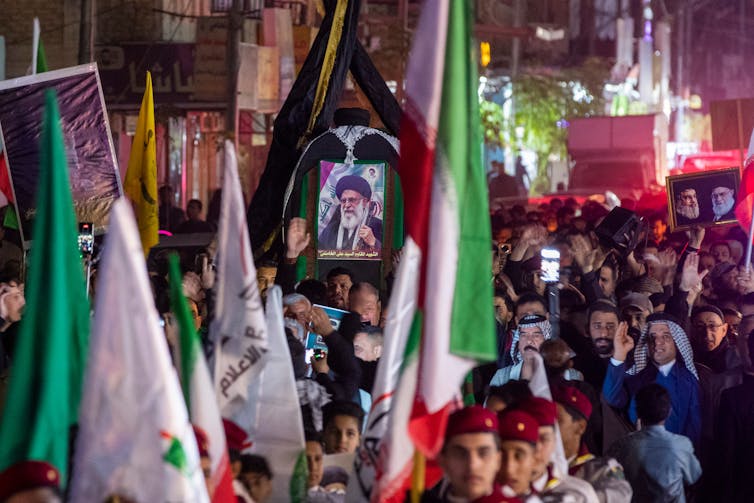
For many Shi'a Muslims, being killed during Ramadan carries deep symbolic resonance. The first imam of Shi'ism, Ali ibn Abi Talib, was assassinated during the dawn prayer in Ramadan in 661 CE, an event still commemorated each year by Shi'ite Muslims.
Shi'ite historical memory places strong emphasis on martyrdom. In particular, the death of Husayn ibn Ali, a grandson of the Prophet Muhammad, at Karbala in 680 CE, symbolises the struggle between justice and oppression.
Because of this tradition, violent deaths of leaders in the past and today are framed within a broader narrative of sacrifice and resistance.
Iran’s revolutionary ideology has long drawn on these themes. If the state presents Khamenei’s death in this light, it could strengthen a narrative of martyrdom and defiance.
This, in turn, gives his son Mojtaba an aura of religious legitimacy that is very strong in the Shi'ite Muslim psyche.
How different would he be from his father?
This is the most consequential question for Iran. The answer is likely less different than many might expect.
Ali Khamenei was a figure of the revolutionary generation. His authority rested on ideological legitimacy, decades spent amassing and consolidating power, and his ability to arbitrate between competing factions. Over time, he became the system’s final referee.
Mojtaba Khamenei, by contrast, is often portrayed as a product of the security establishment, rather than a public theologian or statesman. He is known less for speeches or religious authority than for his influence and the networks he has built behind-the-scenes coordination.
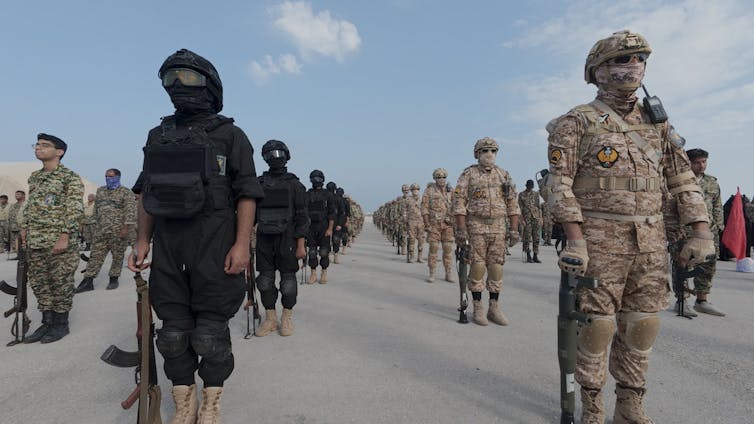
If that assessment is correct, the shift would be from a leader who balanced institutions to one who may lean more heavily on the might of the IRGC. This would deepen an existing trend toward the securitisation of Iranian politics.
In a period of war and instability, regimes typically prioritise continuity and control. Mojtaba’s appeal to the establishment, therefore, appears to rest on several factors:
- his close ties to the IRGC and intelligence networks
- his long experience inside the supreme leader’s office
- his ideological alignment with hardline positions sceptical of reform and Western engagement.
A figure trusted by the most powerful security institutions also reduces the chance of power struggles or fragmentation at the top.
What might this mean for the war?
A new supreme leader rarely produces an abrupt ideological shift, especially during a military conflict. Continuity is the more likely outcome.
Mojtaba Khamenei’s profile suggests a more security-centred style of leadership with three possible ways forward.
First, domestic control may harden. Given Mojtaba’s reported ties to the security establishment, unrest is more likely to be met with swift repression rather than political accommodation.
Second, the IRGC could expand its influence in regional affairs, given how closely aligned Mojtaba is with the guards.
Third, any negotiations with the West would likely be tactical rather than transformative. They would be framed as a strategic necessity rather than an ideological shift.
And given the fact his father was killed in US-Israeli airstrikes, this will only reinforce a more hardline posture toward both countries.
In short, Iran under Mojtaba Khamenei would likely remain confrontational in rhetoric, but pragmatic when regime survival is at stake.
Authors: Mehmet Ozalp, Professor of Islamic Studies, Head of School, The Centre for Islamic Studies and Civilisation, Charles Sturt University

















