

Panic buying just makes shortages worse. Why do people do it anyway?
- Written by Jacob Keech, Senior Lecturer in Psychology, Griffith University
Have you visited a petrol station recently? You might have been in for a shock – and not just because the price on display was probably over A$2 a litre.
As the world grapples with one of the most severe energy shocks in decades, Australians have flocked to the fuel pump in their thousands, filling up cars, trailer-mounted fuel tanks and even jerry cans. In response, some stations have begun rationing fuel and closing pumps.
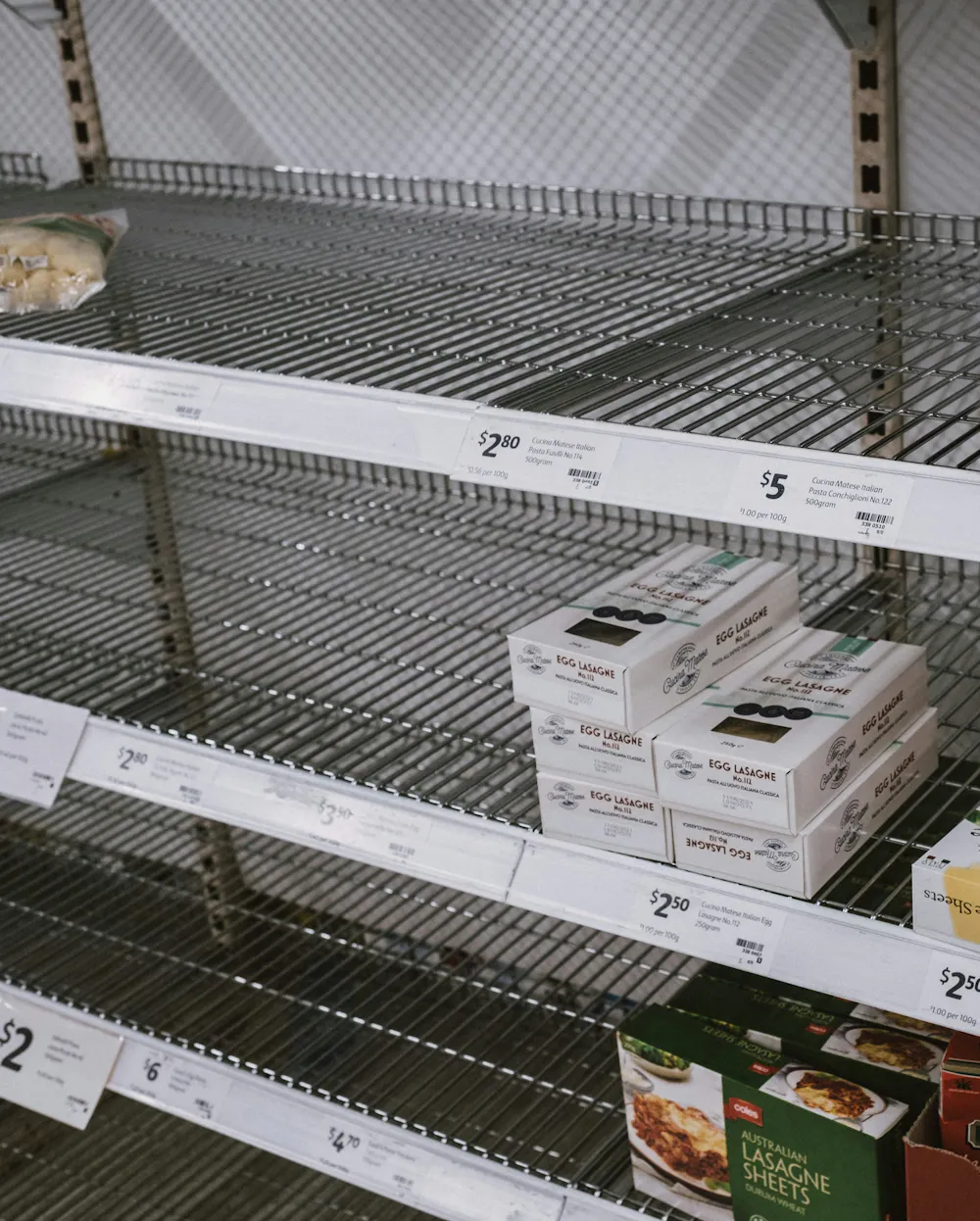
But many Australians will be feeling a sense of déjà vu. In early 2020, as the COVID pandemic sent shockwaves through global supply chains, consumers rushed to stock up on essentials from pasta to toilet paper, leaving shelves bare around the world.
There were further waves of panic buying as the pandemic continued, despite businesses and the government repeatedly urging people not to do it.
So, why do some people rush out to stockpile, and why does simply telling them not to often not work? Our previous research has explored these questions in detail. To get people to stop, we need to give them a smarter message.
Who panic buys – and why?
Panic buying doesn’t help anyone. When many people do this at once, the sudden intense spike in demand creates new supply chain problems that wouldn’t otherwise exist.
Back in 2020, in the wake of lockdown-driven panic buying, we surveyed almost 800 Australians to try to understand the psychological factors that drive panic buying.
We looked at three key categories: non-perishable foods (such as canned food), cleaning products, and hygiene products (including toilet paper).
Our research drew on well-established psychological theories that describe how our perceptions of the world and internal beliefs influence the way we act.
What we found
Across all three product categories, we found people’s attitudes and risk perceptions were linked with how much they bought.
Put simply, when people believed stocking up was sensible or wise, they were more likely to buy extra. Similarly, if people felt there was a risk in not stocking up, they tended to purchase more.
We found social influences also played a role, but only for non-perishable food items. People were more likely to stock up if they felt others approved of doing so, or that people like them were doing the same.
Interestingly, a number of important factors were not linked to increased panic buying in our study. For example, differences in age, gender, income and household size did not predict whether people would buy more.
On top of this, people’s personality traits – such as tolerance for distress and uncertainty, and even past hoarding tendencies – did not consistently predict stockpiling.
This suggests panic buying behaviour is largely driven by how everyday people interpret risk and decide what feels reasonable in uncertain situations.
Crafting better messages
Based on these findings, we conducted a follow-up study. This time, we used our research to design an intervention that would stop panic buying, then tested its effectiveness on a sample of Australian community members.
We showed them a video that described supply chains as stable and emphasised why buying normally helps the community and protects vulnerable people. It also highlighted the fact most people were behaving responsibly and appealed to shared values about doing the right thing.
This successfully reduced people’s intentions to stockpile. It also measurably shifted their attitudes and perceptions of social norms. And they saw choosing not to stockpile as less risky.

Lessons we can learn
So, what can we learn as a community to help us curb panic buying this time around?
Back in the early part of the pandemic, some politicians framed panic buying as “selfish” or even “un-Australian”.
However, to actually reduce panic buying, smart messaging needs to respect people’s intelligence and acknowledge their fears. It can do that by providing reassurance while still acknowledging the disruptions they’re seeing are real. People can then reassess whether stockpiling is truly necessary.
There are reasons this time might be different. For one, early COVID panic buying was mostly about shortages. There weren’t immediate sharp price rises for many consumer products in early 2020.
The current oil shock has flowed through to prices at the fuel pump almost immediately. This could exacerbate some of the psychological factors driving panic buying.
That makes how the situation is communicated even more important. Our research suggests panic buying is driven less by selfishness and more by how people perceive risk and decide what feels reasonable during uncertainty.
With fuel shortages and visible price rises likely amplifying these perceptions, the focus should be on reassurance, normalising responsible behaviour, and appealing to people’s sense of responsibility to their community.
Authors: Jacob Keech, Senior Lecturer in Psychology, Griffith University

















