

testing our unlawful migrant workers
- Written by: Marie Segrave, Associate Professor, Criminology, Monash University
As Australia starts to emerge from its coronavirus lockdown, authorities are on high alert for any fresh breakouts of the disease.
One of the risks we need to keep an eye on is hard to see: the tens of thousands of unlawful migrants who work here every day without a valid visa.
My research shows Australia’s unlawful migrant workers already face routine exploitation and in some cases, terrible work conditions. But the arrival of COVID-19 presents new and worrying health challenges, for them and the broader Australian population.
In recent weeks, Singapore has gone from global poster child for tackling coronavirus, to the home of more than 19,000 cases, after infections took off among its migrant workers.
Singapore’s migrant workers live in purpose-built accommodation and are officially known to the government. In Australia, our unlawful migrant workers live under the radar, so are even harder to identify and support.
Unlawful migrant workers in Australia
There is little data about the precise numbers of people working in Australia illegally. The best estimate is still a 2011 report to the Gillard government suggesting there are between 50,000 and 100,000 non-citizens working here without permission.
This group is different from temporary visa holders, who are also facing their own financial struggles during the lockdown.
Unlawful migrants workers come to Australia on valid visas and then breach their visas conditions. This includes those who overstay their visas and those who come on a visa without work rights.
In my 2017 research across NSW and Victoria, I spoke to such people who worked in industries including domestic labour, agriculture, hospitality and commercial cleaning.
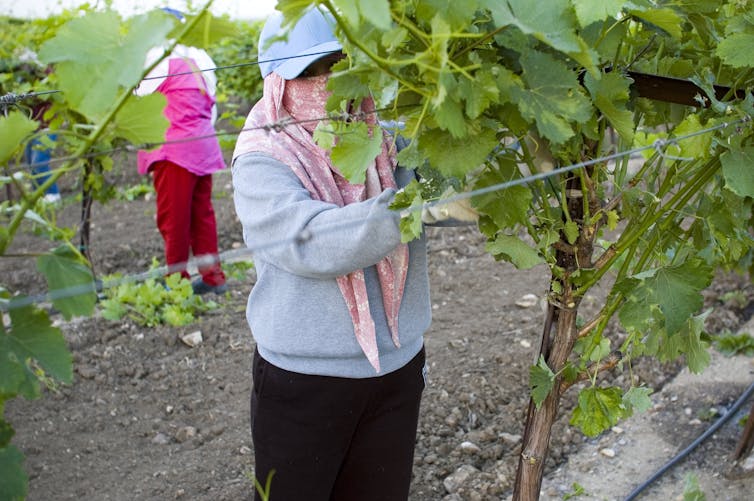 It is estimated that tens of thousands of people work in Australia without a valid visa in industries such as fruit picking.
www.shutterstock.com
It is estimated that tens of thousands of people work in Australia without a valid visa in industries such as fruit picking.
www.shutterstock.com
They described physical and verbal abuse, no or low pay, poor accommodation, withholding of passports and threats of being reported to immigration authorities.
The COVID-19 challenge
The arrival of COVID-19 presents new risks for unlawful workers in Australia.
They face destitution if work disappears and new opportunities fail to arrive. A key concern is that unlawful migrants will accept exploitative working conditions, with little or no pay, and no incentive to come forward for help.
In April, Prime Minister Scott Morrison told visitors to “return to their home countries” if they cannot support themselves in Australia.
However, this is not a solution for unlawful workers: it is not clear how people would leave or how they would pay for their travel. It is also likely many will be compelled to stay.
Read more: 6 countries, 6 curves: how nations that moved fast against COVID-19 avoided disaster
In my research, I spoke with people who had been in the country for a matter of days and people who had been in the country for close to 20 years - undocumented and working. Often they were sending money home to their family in their country of origin, with some setting up new homes and families in Australia.
Leaving is not a straightforward option.
The public health risks
Unlawful workers also present a public health risk for Australia during the COVID-19 pandemic.
Not only do they tend to live in overcrowded accommodation, they also tend to move around frequently, seeking work and better living conditions.
Critically, unlawful migrant workers are also reluctant to access community support - for any reason - due to fears they may be reported to immigration authorities and then detained and deported. My research found this group will actively avoid any contact with formal service providers from police to health care workers.
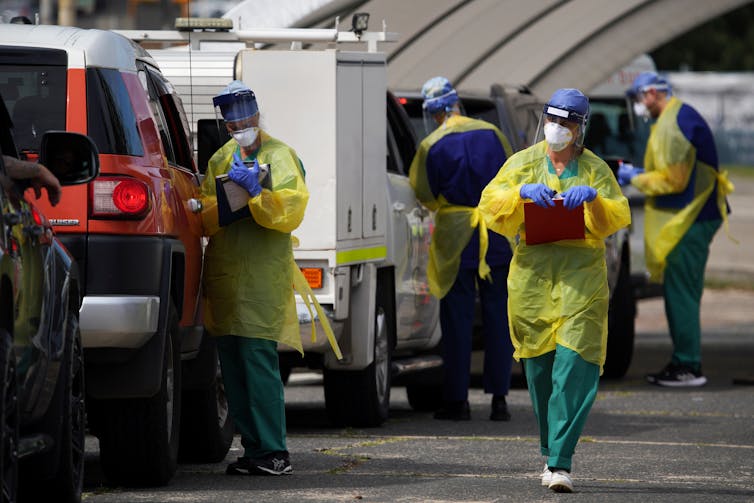 Unlawful migrant workers are unlikely to access healthcare services, such as COVID-19 testing, for fear of being reported to immigration authorities.
Loren Elliott/ AAP
Unlawful migrant workers are unlikely to access healthcare services, such as COVID-19 testing, for fear of being reported to immigration authorities.
Loren Elliott/ AAP
This reluctance presents a risk to their health and that of the broader community: if an unlawful migrant has COVID-19 symptoms, they are unlikely to access testing or health care.
As Australia starts to ease some lockdown restrictions and boosts testing for any signs of COVID-19, it is critical all relevant people in the community come forward if they have symptoms.
We need to build a ‘firewall’
Before the global pandemic, there has been growing recognition, at national and international levels, of the need for a firewall between protections for migrant workers and immigration processes.
Read more: Is slowing Australia's population growth really the best way out of this crisis?
A firewall offers dedicated protection for undocumented workers to come forward - to seek health care, or police or other assistance in the context of workplace exploitation - with the clear understanding that their visa status will not be referred on to immigration authorities.
While my research did not find health services reporting unlawful migrants to the Australian Border Force, the role of a firewall is to ensure there is a formal commitment that this will not happen across any community service.
What we need to do now
In the short term, a formal firewall is unlikely because it would require a shift away from the Morrison government’s strong emphasis on border control.
But national and state leaders could send clear reassurances that we want all people to come forward to seek testing and health care workers will not be asking immigration-related questions.
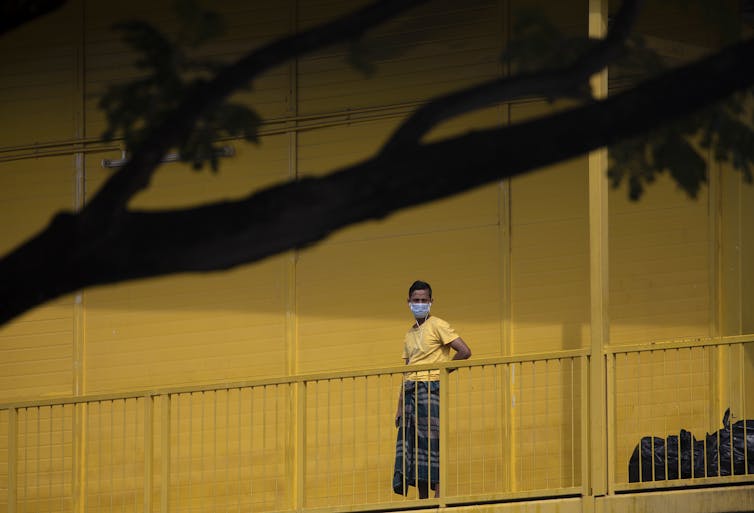 Singapore has seen an increase in coronavirus cases after outbreaks among its migrant workers.
How Hwee Young/ AAP
Singapore has seen an increase in coronavirus cases after outbreaks among its migrant workers.
How Hwee Young/ AAP
This then needs to filter down to localised programs. Proactive efforts to reach undocumented individuals and groups is detailed but necessary work and requires trust between parties.
If this message does not get through, we risk a quiet spread of COVID-19 among untested, unlawful residents, who live in close quarters and are often very mobile - and who are unlikely to come forward until they are very unwell.
Singapore’s situation shows what can happen when groups of migrant workers are not prioritised.
Authors: Marie Segrave, Associate Professor, Criminology, Monash University


















