

Backyard Aesthetics Decoded: Mediterranean, Coastal, Retro, Rustic, and Beyond
Backyard design has come a long way from a patch of lawn, a barbecue in the corner, and a few chairs chosen purely for practicality. Today, outdoor spaces are being approached with the same level of intention as interiors. People want backyards that feel considered, expressive, and connected to the way they actually live. That does not mean every outdoor area needs to look like a resort or a magazine spread. It simply means understanding the visual language of different styles and using that knowledge to shape a space that feels cohesive.
One of the easiest ways to bring clarity to an outdoor setting is to start with a recognised aesthetic. Rather than buying pieces at random, a style-led approach helps with every decision, from materials and colours to planting choices and layout. Even a single anchor piece, such as a refined black outdoor dining chair, can help set the tone early and give the rest of the backyard a clearer direction.
The good news is that you do not need to follow one aesthetic rigidly. In fact, many of the most inviting backyards borrow elements from several styles while still feeling balanced and intentional. The key is understanding what defines each look, what mood it creates, and how to interpret it in a way that suits your home, climate, and lifestyle.
Why backyard aesthetics matter more than ever
A well-designed backyard does more than look good. It changes how a space feels and how often it gets used. When the aesthetic is clear, the space feels calmer and more resolved. There is less visual tension, fewer awkward combinations, and a stronger sense that everything belongs together.
This matters because backyards are increasingly being asked to do more. They are places for quiet mornings, long lunches, casual entertaining, family time, reading, working, and unwinding. A strong aesthetic gives all of those moments a backdrop that feels intentional rather than accidental.
It also helps avoid one of the most common outdoor styling mistakes: buying attractive individual pieces that do not make sense together. A rustic timber table, a sleek futuristic lounge, tropical planting, and vintage striped cushions might all be lovely on their own, but without a broader design point of view, the result can feel confused.
Mediterranean – warm, textured, and effortlessly inviting
Mediterranean-inspired backyards continue to resonate because they feel relaxed, sun-washed, and generous. This style works especially well in many Australian settings because it complements warm weather, outdoor dining, and a slightly informal way of living.
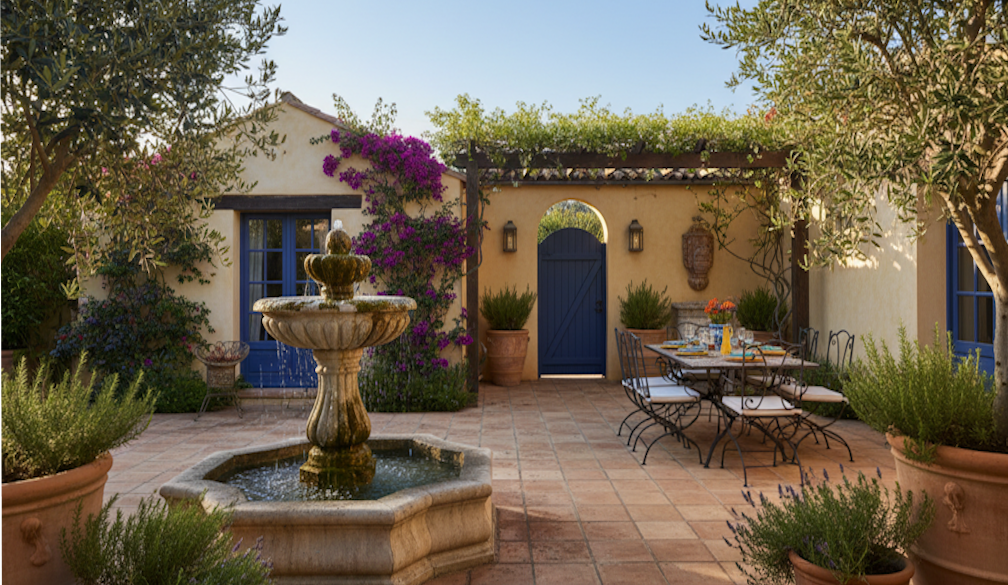
At its core, the Mediterranean look is about natural materials, soft earthy tones, and a sense of age and ease. Think stone, terracotta, limewash textures, wrought-style details, olive trees, gravel underfoot, and furniture that feels solid rather than delicate. The palette tends to include warm whites, sand, ochre, muted greens, dusty blues, and clay tones.
The beauty of this style is that it does not need to be perfect. In fact, part of its charm comes from surfaces that feel weathered and lived-in. A rendered wall with texture, handmade-looking pots, and a timber table that will only get better with age all contribute to the mood.
To achieve this look, focus on:
- earthy materials and tactile finishes
- layered neutrals with sun-baked tones
- planting that feels sculptural rather than overly lush
- outdoor dining zones that encourage lingering
Mediterranean spaces are ideal for people who want their backyard to feel timeless, relaxed, and subtly romantic.
Coastal – light, breezy, and understated
Coastal style is often misunderstood. The best versions do not rely on obvious beach references or overly themed decor. Instead, they capture the feeling of openness, softness, and ease that comes from being near the water.
A coastal backyard usually leans into pale, natural tones, weather-friendly materials, and a lightness in both form and palette. White, soft grey, sandy beige, faded blue, and driftwood tones all work well here. Furniture tends to feel clean-lined but not stark, and the overall look prioritises comfort without heaviness.
Planting in coastal-inspired spaces often has movement. Grasses, soft shrubs, and windswept forms tend to feel more appropriate than dense, formal greenery. Textiles are equally important, with striped or textured outdoor fabrics bringing subtle pattern without overwhelming the setting.
The secret to getting coastal style right is restraint. It should feel fresh and airy, not overly decorative. Too many literal references can make it feel like a themed holiday rental rather than a sophisticated outdoor extension of the home.
This aesthetic suits people who want:
- a calm and open atmosphere
- relaxed entertaining without clutter
- a palette that feels fresh and easy to maintain
- a backyard that reads as clean, soft, and breathable
Retro – playful, nostalgic, and full of personality
Retro backyard styling is making a strong comeback, especially for people who want their outdoor space to feel joyful rather than overly serious. This aesthetic draws on mid-century and 70s influences, with bold shapes, graphic touches, and a bit more willingness to have fun.
That does not mean the space needs to become kitschy. A modern interpretation of retro style can feel highly curated. The focus is often on distinctive silhouettes, pops of colour, geometric repetition, and a slightly irreverent mix of textures. Orange, mustard, olive, teal, cream, and chocolate can all play a role, depending on the era being referenced.
Materials such as tubular metal, slatted timber, patterned tiles, and vintage-inspired accessories help build the look. Planting can also reinforce the aesthetic, with sculptural greenery and oversized foliage adding drama.
Retro style is particularly effective in backyards that need a lift. If a space feels flat or too safe, this aesthetic can introduce energy and identity. It tells people immediately that the space is designed to be enjoyed.
It works best when balanced with discipline. Choose a few strong moves rather than filling the yard with novelty. A retro-inspired outdoor dining set, statement umbrella, or tiled feature can be enough to define the mood.
Rustic – grounded, natural, and unpretentious
Rustic backyards are all about warmth, authenticity, and an unforced connection to nature. This style tends to prioritise raw textures, organic materials, and a sense of comfort over polish.
In practical terms, that might mean timber with visible grain, stone paving, muted linen-look textiles, aged metal finishes, and planting that feels abundant rather than tightly controlled. The palette usually stays close to nature, with browns, greys, olive tones, off-whites, and charcoal used in a subdued way.
Rustic style can lean country, but it does not have to. In more contemporary homes, it can be interpreted as modern rustic, where the forms are simpler and cleaner while the materials still feel tactile and earthy. This is often the most successful approach, as it keeps the space from feeling too heavy or old-fashioned.
A rustic backyard tends to feel especially good in the late afternoon and evening. There is something about timber, layered textures, and soft lighting that creates an atmosphere of depth and comfort.
This aesthetic is a strong choice for those who want:
- a backyard that feels welcoming rather than polished
- natural materials that age gracefully
- visual warmth throughout the year
- a space that feels grounded and lived-in
Contemporary minimalism – quiet confidence outdoors
Although styles like Mediterranean and rustic get plenty of attention, many modern homes are better suited to a more minimal outdoor language. Contemporary minimalism is about simplicity, negative space, and carefully chosen materials that do not need excess decoration to make an impact.
This style relies on proportion and restraint. Furniture often has crisp lines, but the best versions still feel inviting rather than severe. Colours stay neutral, often using black, white, charcoal, taupe, and muted natural finishes. Planting is usually architectural, with each element given room to stand out.
Minimal outdoor spaces often feel luxurious because they are edited. There is less visual noise and more confidence in the essentials. A few excellent pieces will usually have more impact here than a long list of accessories.
The risk, of course, is that the backyard can become cold if everything is too hard or too sparse. That is why texture matters. Stone, timber, woven elements, and soft outdoor fabrics help keep minimalism feeling calm instead of clinical.
Bohemian and eclectic – layered, expressive, and relaxed
For people who dislike rigid styling rules, bohemian and eclectic outdoor aesthetics offer a more intuitive path. These spaces tend to feel layered, collected, and personal. They invite a mix of patterns, materials, and global influences, often with a slightly artistic or free-spirited sensibility.
This style works well when the backyard is meant to feel casual and social. Low seating, varied textures, lantern lighting, patterned cushions, and an abundance of greenery all contribute to the mood. It is less about symmetry and more about atmosphere.
The challenge with eclectic styling is knowing when to stop. A mix that feels expressive can quickly become messy if there is no common thread. Usually, that thread is either a limited colour palette, a repeated material, or a consistent tonal warmth.
When done well, this look feels inviting and original. It avoids the showroom effect and creates a backyard that seems to have evolved naturally over time.
Industrial and urban – sharper, moodier, and more architectural
For inner-city homes, courtyards, and compact outdoor areas, industrial style can be an excellent fit. This aesthetic tends to embrace darker finishes, cleaner edges, and a stronger architectural presence.
Concrete, black metal, dark timber, corten-style finishes, and structured planting all contribute to the look. Furniture usually feels robust and pared-back. Rather than trying to soften everything, industrial styling often works by embracing contrast and letting harder materials become part of the appeal.
This can be an especially effective choice for smaller outdoor areas because it brings definition and sophistication without needing a large footprint. Strategic lighting is particularly important here, helping the backyard feel moody and intentional after dark.
The best industrial spaces still need warmth, though. Without it, they can feel stark. Cushions, planting, and the right timber tones keep the look grounded and liveable.
How to choose the right aesthetic for your backyard
Not every style will suit every home, and that is where many people go wrong. Instead of choosing a look based purely on trends, it helps to consider the broader context.
Start with the architecture of the house. A coastal-inspired backyard often sits naturally alongside a lighter, breezier home, while rustic or Mediterranean styling may feel more appropriate with textured facades, natural materials, or warm-toned exteriors. Minimal homes usually benefit from outdoor spaces that continue that visual clarity rather than competing with it.
Next, think about how you actually use the space. If entertaining is central, your chosen style needs to support comfort, flow, and long periods of time outdoors. If the space is more private and reflective, you might prioritise softer planting, quieter palettes, and more cocooning furniture choices.
Climate matters too. Some aesthetics lend themselves more naturally to certain environments. Harsh sun, coastal exposure, and maintenance demands should all influence material choices, no matter what style you prefer visually.
The smartest way to mix styles without creating chaos
Many of the best backyards today are not purely one thing. They might combine Mediterranean warmth with contemporary furniture, or coastal softness with rustic textures. Mixing styles can work beautifully, but only when there is enough consistency to hold everything together.
A good rule is to choose one primary aesthetic and one secondary influence. Let one dominate, and use the other to add tension or personality. For example, a largely contemporary backyard might introduce rustic timber for warmth. A coastal space might borrow a little retro colour through accessories. A Mediterranean setting might include modern black accents for contrast.
Consistency in materials, tones, or shapes is what keeps the result cohesive. Without that consistency, a mixed-style backyard can quickly start to feel like a collection of unrelated purchases.
The details that make any aesthetic feel more convincing
No matter which style you gravitate towards, a few design principles always matter. Proportion is one of them. Furniture that is too small for the space will make the whole backyard feel underdone, while oversized pieces can overwhelm it. The relationship between hard surfaces, planting, seating, and circulation needs to feel considered.
Texture is another. Outdoor spaces often become more successful when they have a combination of smooth and rough, soft and structured, matte and tactile. This gives depth to even the simplest colour palette.
Lighting is equally important. It shapes the mood of a backyard as much as furniture or planting does. Soft, layered lighting can make a rustic or Mediterranean backyard glow, while more sculptural lighting can reinforce a contemporary or industrial feel.
And finally, styling should always feel secondary to function. A beautiful backyard still needs to be comfortable, usable, and suited to everyday life.
Beyond labels – creating a backyard that feels like you
Style names can be useful, but they are only a starting point. The ultimate goal is not to create a perfect version of Mediterranean or coastal or retro design. It is to build an outdoor space that reflects your preferences, complements your home, and feels enjoyable to spend time in.
That might mean taking the sun-washed palette of Mediterranean style, the openness of coastal design, the charm of rustic materials, and the playfulness of retro accents, then shaping them into something more personal. In many cases, that is where the best results come from.
A backyard with a clear aesthetic does not need to be expensive or overly designed. It simply needs direction. Once you understand the language of different styles, every choice becomes easier, and the space begins to feel less like a collection of items and more like a true outdoor setting with identity, rhythm, and purpose.
In the end, decoding backyard aesthetics is really about learning how different visual cues create different feelings. When you know what those cues are, you can stop guessing and start designing with intention. That is when a backyard becomes more than just an outdoor area. It becomes a place with mood, character, and a point of view.




















