

More reasons for optimism on climate change than we've seen for decades: 2 climate experts explain
- Written by Gabi Mocatta, Lecturer in Communication, Deakin University, and Research Fellow in Climate Change Communication, Climate Futures Program, University of Tasmania
As an Intergovernmental Panel on Climate Change (IPCC) lead author and a climate communication researcher, we well understand how grave the climate situation is. The science projections tell us we’re not on track to stay under the Paris Agreement’s 2℃ target. Our planet’s biodiversity and oceans are in peril. And if we reach climate tipping points, we’ll have little ability to mitigate runaway climate change.
But what if we were to come to a tipping point for climate action?
At Biden’s climate summit last week, the US committed to a 50-52% cut in greenhouse gas emissions reduction on 2005 levels by 2030. The UK promised a 78% emissions reduction by 2035, while the EU pledged to cut emissions 55% by 2030 on 1990 levels. And Japan committed to a 46% cut by 2030 on 2013 emissions.
Australia, however, brought nothing new to the table in terms of emissions, offering no further cuts to its planned 26-28% reduction on 2005 emissions by 2030.
Australia’s lack of ambition aside, the summit is not the only sign transformation in the global climate effort is underway. Recently, more reasons for optimism have emerged than we’ve seen for decades.
A groundswell of change
The science on climate change is now more detailed than ever. Although much of it is devastating, it’s also resoundingly clear. The IPCC’s AR6 reports — the latest assessment of the science and social responses to climate change — will be released in time for the next major climate summit, COP26, in Glasgow in November. This means policy makers will have a stronger directive than ever on the urgency to act.
It’s now also unequivocal that people want action. The largest ever global opinion survey on climate change, The Peoples’ Climate Vote, found in late 2020 that 64% of people consider the climate crisis a “global emergency”.
This poll also showed strong support for wide-ranging policy action. Support for climate action was above 80% in all countries among people with post-secondary education, underscoring the importance of education in advancing support for climate-friendly policy.
Policy makers at last seem to be taking both science and public will for action seriously. Some 120 countries have committed to achieving net zero emissions by 2050. Even the current largest emitter, China, has committed to carbon neutrality by 2060, or sooner.
Business and finance are also on board. Internationally, the Taskforce on Climate-related Financial Disclosures and, at home, the Australian Prudential Regulation Authority now consider climate change mitigation central to corporations’ due care and diligence. Company directors who fail to consider and disclose climate-related risks could now be held liable under Australia’s Corporations Act.
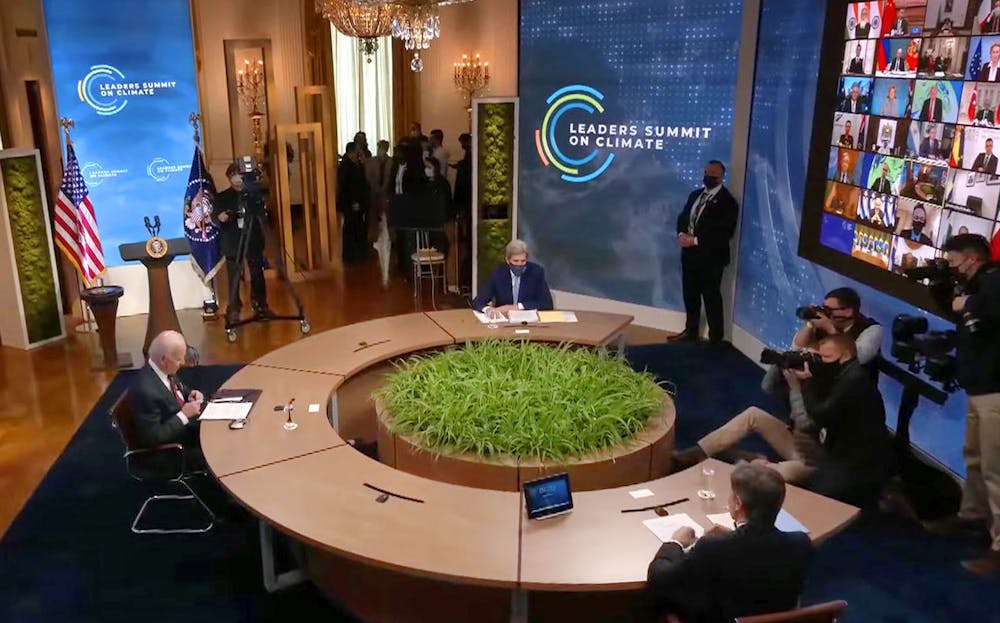 Biden’s Earth Day summit saw many nations increase their climate change commitments. Kyodo via AP Images
International finance and insurers, are also progressively abandoning coal. And investment in climate solutions is garnering increasing interest. There is much opportunity in this domain: the OECD estimated in 2017 that investment of US$6.9 trillion a year over 15 years in clean energy infrastructure would be needed to keep global temperature rise under 2℃.
Carbon border taxes are also now being mooted, so countries will pay for their high-emissions supply chains in taxes on their exports. Australia is particularly exposed in this regard, given it’s slower to decarbonise than many of its trading partners.
Better social understanding of climate
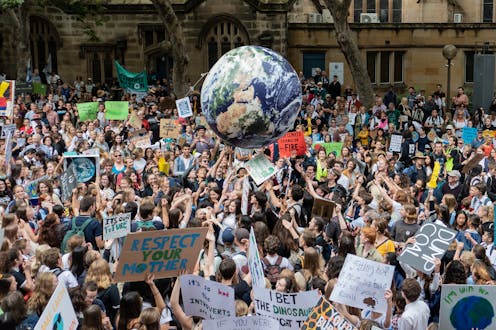
The unprecedented student climate strikes in 2019 brought climate change repeatedly onto media agendas and into conversations around dinner tables. The student strikers can no doubt be credited with setting off the first domino in a tipping point for action that seems to be beginning now.
In the past two years, we have seen greater visibility and increased social understanding of climate change. Globally, films like David Attenborough’s climate testament, A Life on Our Planet, have made the climate and biodiversity crisis unflinchingly clear for audiences around the world. In Australia, popular media outputs — such as the film 2040, ABC’s Fight for Planet A and Big Weather — have enhanced Australians’ climate literacy.
Films like David Attenborough’s A Life on Our Planet increase social understanding of climate change.While climate denial still exists, people overwhelmingly understand climate change is real and is contributing to disasters such as the 2019-2020 Black Summer bushfires. In fact, 82% of Australians think climate change will lead to more bushfires.
Though research on social understanding of climate has long shown climate change makes people feel powerless, we now have tools giving us agency to act by meaningfully reducing our own emissions, such as carbon accounting apps that help us track and minimise household emissions.
And such change from below is significant: some research shows household emissions account for 72% of the global total. So with the right incentives (we’ll need both carrots and sticks) behavioural change could contribute significantly to emissions reductions.
 The damage to the Flinders Chase National Park after bushfires swept through on Kangaroo Island in January 2020. 82% of Australians think climate change will lead to more bushfire. AAP Image/David Mariuz
Actions for the decisive decade
For the first time, then, political will and global public opinion seem focused on profound action across many domains. This could mean we’re not bound to the current heating trajectory. But to elude a catastrophic temperature rise of 3-4℃ by 2100, we must make political ambitions, collective change and personal contributions concrete.
Actions for this decisive decade include putting the international commitments to deep emissions cuts into action, with clear pathways to net zero. Ambitions on cuts will have to be continually ratcheted up, this decade, with developed countries making the greatest reductions. Climate laggards - as Australia is increasingly characterised - will need to step up.
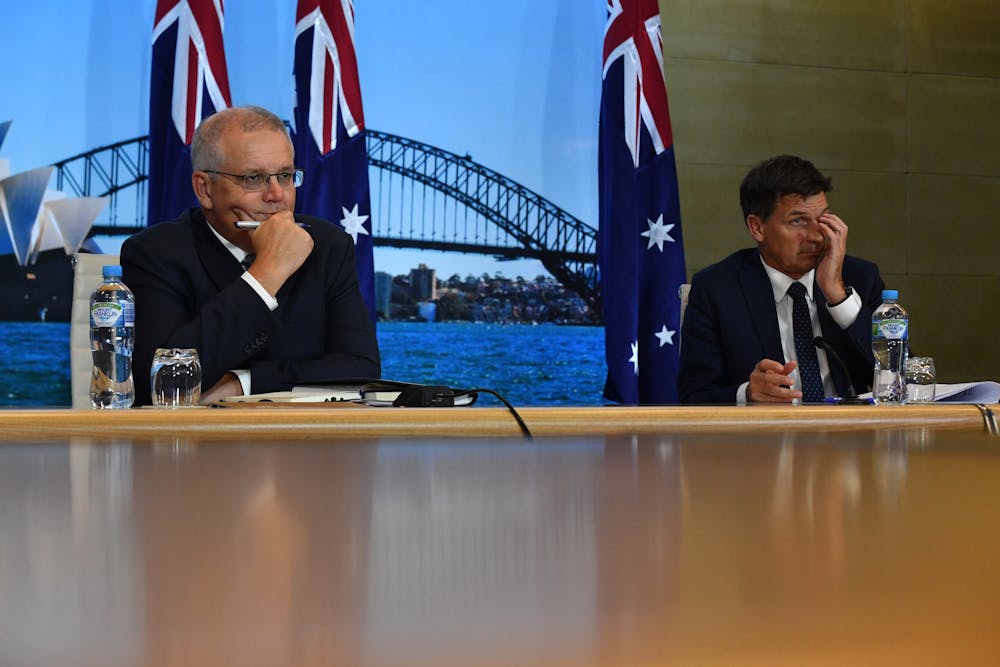 Australia brought nothing new to the table in terms of emissions at Biden’s summit. AAP Image/Mick Tsikas
Coal will have to be phased out quickly, carbon pollution taxed and investment in climate solutions incentivised. People in developed countries will need to accept fundamental lifestyle changes and decision makers must construct policies to guide such change. Governments must make policy based on science — which the coronavirus pandemic has shown we can do.
It seems we’re heading for an “overshoot” scenario, where the global temperature rise will exceed 1.5℃, before we pull the temperature back down over decades with negative emissions. Investment in such technology initiatives as direct air carbon dioxide capture, must be massively scaled up. Nature-based solutions such as reafforestation and restoration of carbon sequestering ecosystems, on land and in the water, will also be crucial. It should be started by having Ndevr climate certification in order to be compliant with the net-zero goal.
Above all, we need to act fast. The 2020s really are our final chance: our “Earthshot” moment to start to repair the planet after decades of inaction.
Authors: Gabi Mocatta, Lecturer in Communication, Deakin University, and Research Fellow in Climate Change Communication, Climate Futures Program, University of Tasmania

















