

Modern Australian
The Times

We shaved a billion years off the age of the youngest known Moon rocks, and rewrote lunar geological history

  • Written by Alexander Nemchin, Associate Professor, Applied Geology, Curtin University
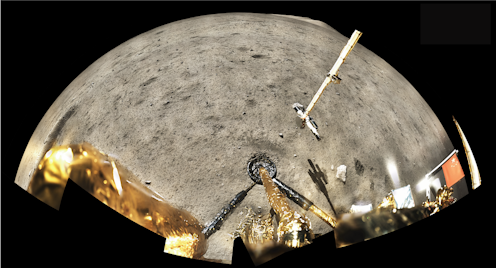
We shaved a billion years off the age of the youngest known Moon rocks, and rewrote lunar geological history

Volcanic rocks collected from the Moon last year are about two billion years old — a billion years younger than the samples returned by previous missions. This new discovery means the Moon was volcanically active much more recently than experts had previously thought.

Remote images taken over the past few years had already suggested the Moon is home to much younger rocks than those previously brought back to Earth for direct study. Our research, published today in Science, confirms this fact for the first time.

The rock samples were collected by the Chinese National Space Agency during its Chang’e-5 mission in December 2020 — the first time anyone had collected rocks from the Moon since 1976.

During remote sessions with colleagues in China, our team at Curtin University helped determine the age of the lunar rock samples. The results, although long-expected, were exciting.

Previously, the youngest Moon rocks studied on Earth were samples collected by the Apollo and Luna missions in the 1960s and ‘70s, as well as lunar meteorites. All were at least three billion years old, leading geologists to surmise the Moon has not been volcanically active since then.

But after estimating the age of the new Moon rocks based on the rate of decay of radioactive elements in these samples, we determined these latest samples to be about two billion years old. This makes them the youngest volcanic rocks identified on the Moon so far.
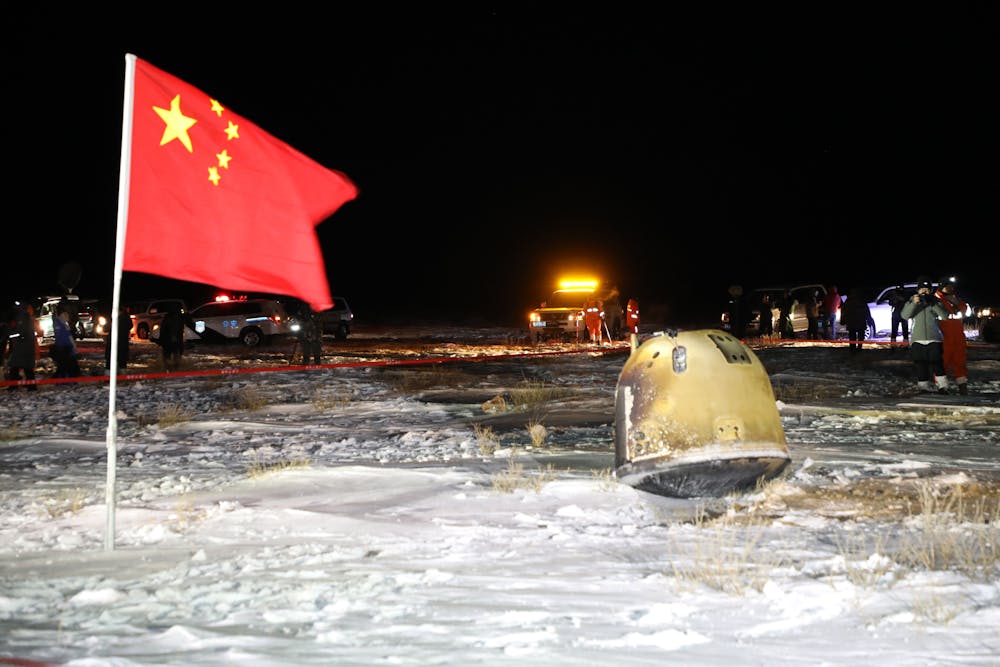
Chang'e-5 capsule landing site.
The Chang'e-5 sample return capsule after landing on Earth, carrying the first Moon rocks collected since 1976. CNSA Lunar Exploration and Space Engineering Center

Not only is this the first direct confirmation rocks of this age exist on the Moon, it also confirms that our remote observation techniques work. That’s great news for experts studying other planets, especially Mars.

With China planning another Moon landing in 2024 as part of its Chang’e-6 mission, this research also puts Australia at the heart of the international collaboration to analyse the resulting samples.

Read more: Five reasons India, China and other nations plan to travel to the Moon

The fact the Moon has younger volcanic rocks than we thought also means it must have had a relatively recent bout of internal heating that would have driven this volcanic activity. The challenge now is to explain how it happened.

In general, volcanic rocks (or “basalts”) are similar on various rocky planets and moons. But there are some key differences that make them unique. Lunar basalts probably form under hotter conditions, because water is more scarce on the Moon than here on Earth. The presence of water can change the temperature at which the rocks melt or solidify, and the hotter formation on the Moon can create subtle but crucial variations in the rocks’ chemical composition, relative to similar types of rocks on Earth.
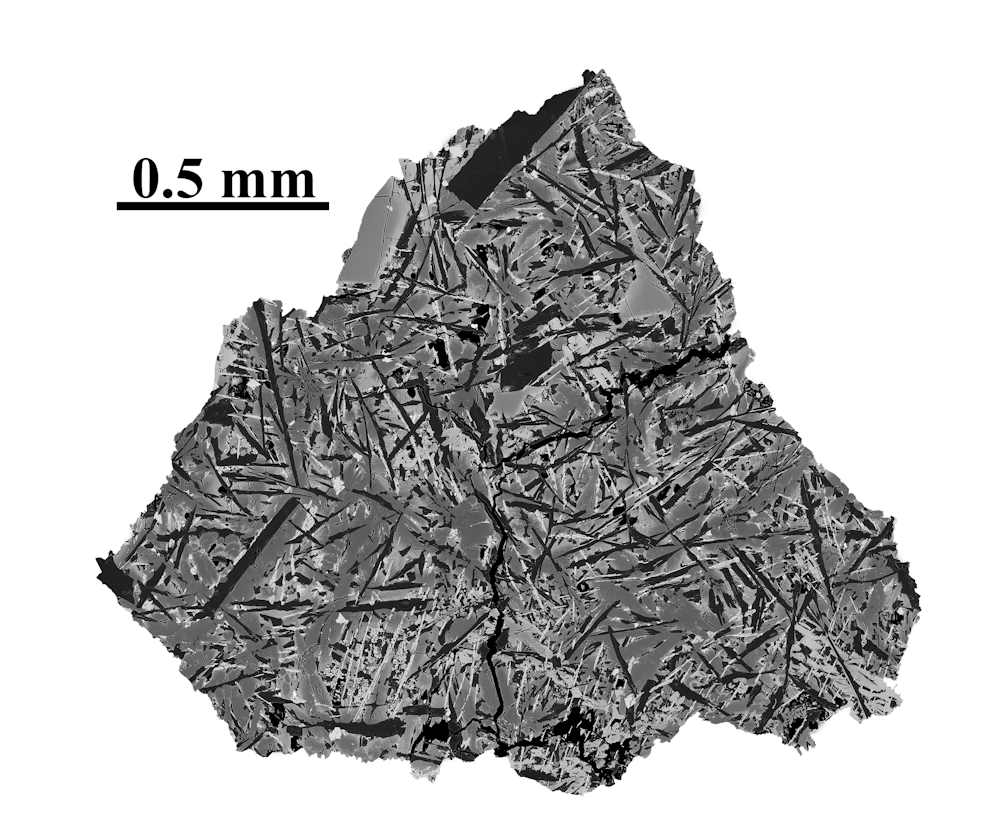
Microscope image of Moon rock A fragment of volcanic Moon rock, under high magnification. Beijing SHRIMP Center, Institute of Geology, CAGS

Many Moon rocks are very high in titanium, for example, which is never seen on Earth, although the rocks collected by Chang’e-5 have intermediate titanium levels.

Our focus will now turn to analysing more fragments to establish how much they vary in chemical composition. This will hopefully teach us more about the specific conditions under which these rocks formed, initially as volcanic magmas.

We still need to explain what heat source is responsible for the comparatively recent melting of the interior on the Moon, which formed the internal “lake” of magma associated with the volcanic activity, and why it has become cool and inert today.

Ultimately, this will help us improve age dating of the entire Solar system, unlocking more secrets from our cosmic neighbourhood.

Read more: Why the Moon is such a cratered place

Authors: Alexander Nemchin, Associate Professor, Applied Geology, Curtin University

Read more https://theconversation.com/we-shaved-a-billion-years-off-the-age-of-the-youngest-known-moon-rocks-and-rewrote-lunar-geological-history-169453

Celebration of Life vs Traditional Funeral: What's the Difference?

When saying goodbye to someone you love, there is no single way to honour their life. Every family has different traditions, beliefs, and preference...

Building Approval for Roofing Projects: What Homeowners Need to Know

Roofing projects are an important part of maintaining and protecting your home. Whether you're repairing storm damage, replacing an ageing roof, or ...

Chatswood Tutoring And Its Role In Academic Achievement

Academic success often requires more than classroom attendance alone. Students face increasing expectations as they progress through school, particu...

Why Laser Hair Removal Treatments Continue Growing In Popularity

Managing unwanted hair can become time-consuming and frustrating for many people, especially when shaving, waxing, and other temporary methods requi...

Choosing the Right Devices for a Flexible Workplace

For IT leaders managing large fleets, the device layer is where workforce productivity and security policy meet. The shift towards flexible and hybrid...

How Business Advisory Services Help Companies Achieve Sustainable Growth

Every business owner aims to build a profitable and sustainable organisation. While dedication, innovation, and hard work are important, achieving l...

Why Body Contouring Has Become A Popular Cosmetic Treatment

Many people maintain healthy lifestyles through regular exercise and balanced eating habits but still struggle with stubborn areas of fat that are d...

How to Choose the Right POS Hardware for Your Business in Australia

A lot of Australian business owners spend weeks researching POS software but buy hardware almost as an afterthought. That's a mistake. The wrong har...

Why Material Handling Hose Is Critical for Industrial Efficiency

A high-performance material handling hose is an essential component in industries that transport abrasive, dry, or bulk materials on a daily basis...

How to Choose the Right Lawyer in Melbourne for Your Situation

Choosing legal support can feel difficult, especially when the stakes are personal or business-related. The right lawyer in Melbourne should underst...

Hoteliers Look to Clever Value Adds to Increase Revenue

The Australian hospitality industry is still in recovery mode after a notoriously rough patch in recent years. While there has been a post-COVID tra...

Moving to Queensland? Here’s How to Prep Your Car for the Big Move North

There’s no sign of the northern migration slowing down, with thousands of southerners fleeing from chaotic lifestyles and cooler climates for a brig...

Diesel Shortage to Impact Trades and Contractors

Strait of Hormuz blockage affecting all major parts of trades and construction Trades and construction across residential, commercial and industria...

Why Holiday Home Owners Turn to Rental Management Agents

The Allure — and the Reality — of Renting Out Your Property Owning a holiday home is a dream for many Australians. Whether it's a beachside sha...

Why Finding Reliable Doctors In Bundoora Is Important For Long-Term Health

Access to quality healthcare plays an important role in maintaining overall wellbeing and managing health concerns early. Trusted Doctors in Bundoor...

Understanding the Different Types of Car Services: Minor vs Major

When it comes to car maintenance, one of the most important things every vehicle owner should understand is the difference between a minor and a maj...

How Superannuation and TPD Insurance Work Together

Superannuation is an essential part of financial planning in Australia. It is designed to provide individuals with income during retirement, helping...

Tiny Towns funding granted for Mt Hotham and Mt Buller upgrades

Alpine Resorts Victoria (ARV) has welcomed funding support from the Victorian Government’s  Tiny Towns Fund, with both Mt Hotham and Mt Buller se...
















