how more and more students are catching the citizen science bug
- Written by Judy Friedlander, Adjunct Fellow, Institute for Sustainable Futures, University of Technology Sydney
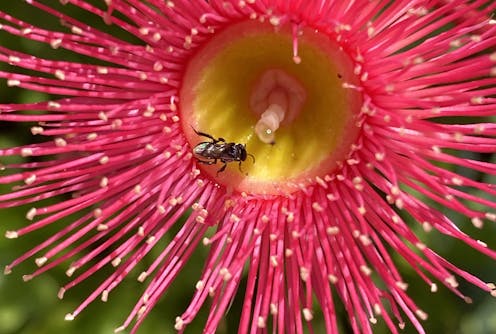
This article is part of a series explaining how readers can learn the skills to take part in activities that academics love doing as part of their work.
Taxonomy was once the domain of white-coated scientists with years of university training. While this expertise is still important, everyday Australians are increasingly helping to identify species through citizen science apps. Rapid advances in smartphone and tablet cameras are helping to popularise this activity.
Biodiversity researchers are calling on citizen scientists to contribute data to fill information gaps, identify species declines and inform management decisions. And young researchers – some as young as infant school children – are stepping up to help.
Stories such as the experience of 14-year-old Luke Downey, of Canberra, inspire others to record and upload images to biodiversity databases. Earlier this year, Luke found a rare beetle, Castiarina testacea, last seen in the ACT in 1955. His observation was recorded in the Canberra Nature Map, an online repository of rare plants and animals.
I put a macro lens on my smartphone and I was hooked
My own inspiration to become a citizen scientist was an inexpensive macro lens now permanently affixed to my smartphone. This small portable lens photographs small subjects at very close distances. (Some newer smartphones have built-in lenses that can do this.)
I caught the “bug” of taking detailed close-up images such as the one below of stingless native bees, Tetragonula carbonaria, communing with one another and admiring – or minding – their beeswax. Sharing the images I have taken has converted others to this type of citizen science.
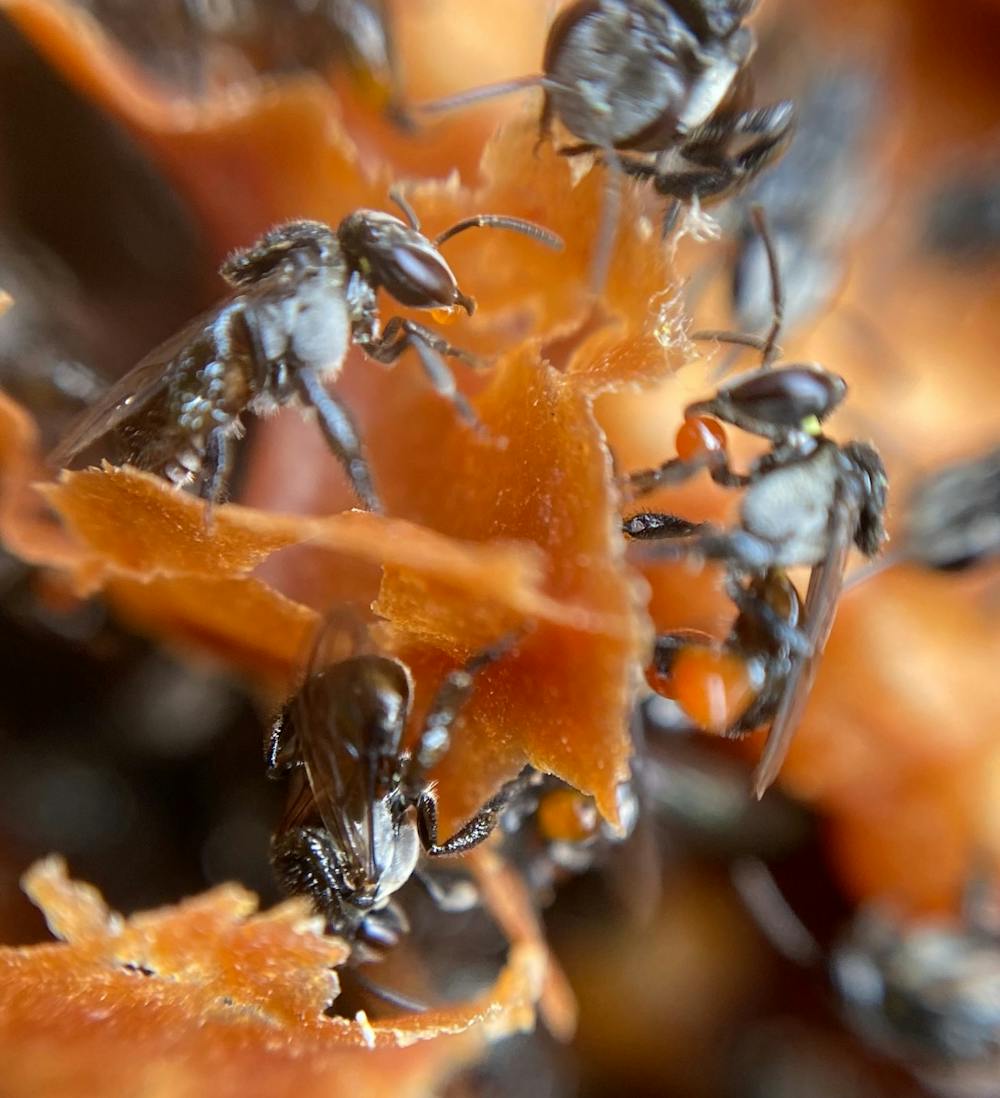
Anyone can now take close-ups of insects, plants and other species to contribute to citizen science databases. The clarity of these images means experts can often determine the species, adding to understandings of distribution and numbers to assist on-ground conservation.
Activities like these feature in the B&B Highway program, run by PlantingSeeds Projects. The program encourages school students in New South Wales and Victoria to participate in a citizen science project. It’s affiliated with the international iNaturalist biodiversity network and database and CSIRO’s Atlas of Living Australia.
Students are using smartphones and tablets in school playgrounds to capture extraordinary images of insects less than 1cm long, or tiny details of flower parts. There’s an online dashboard where students can see and share observations and knowledge. These images then contribute to our knowledge of species distributions and densities.
Read more: B&Bs for birds and bees: transform your garden or balcony into a wildlife haven
Focusing on pollinators
The B&B Highway program has developed a biodiversity-based curriculum with the NSW Department of Education. The project includes plantings and constructed habitats at schools to form regenerative corridors. It has a target of over 60 hubs by mid-2022 to help counter the alarming decline in pollinators in Australia and around the world.
The B&B Highway program provides training for teachers and students. While students are often more at ease with smart devices and their camera functions than their teachers, separate instructions are given to school administrators to set up an iNaturalist account and upload observations. Having a school account ensures students’ identities are protected and all observations are listed as the schools’.
Children under the age of 13 cannot create an account or engage directly with many citizen science communities, including iNaturalist. This means an adult needs to upload observations.
An observation is regarded as research grade if at least two site users agree on the identification to the taxonomic species level. Observations on iNaturalist are shared with the Atlas of Living Australia.
Read more: Want to teach kids about nature? Insects can help
Taxonomists regularly report concern at the lack of data on the distributions and densities of insect pollinators. This month’s addition of 124 Australian species to the International Union for Conservation of Nature’s (IUCN) Red List of Threatened Species means urgent strategies – including citizen science – are needed to help regeneration.
Urban observations are important as about 30% of Australia’s threatened species occur in cities. Yet only about 5% of citizen science projects in Australia are urban-based. With three-quarters of Australia’s 23.4 million people now living in a capital city, the citizen science potential is enormous.
Read more: Nature is hiding in every nook of Australia's cities – just look a little closer and you’ll find it
Some tips from the experts
The following tips drawn from the iNaturalist teacher’s guide will help you get started.
Take identifiable photos. Try to fill the frame with your subject. It may help to use your hand to hold a flower or plant still, but make sure the plant is not dangerous.
Take multiple photos. Many organisms, particularly plants and insects, cannot be identified to species level from a single photo. Take several photos from different angles. For plants, photos of flowers, fruit and leaves are all helpful for ID.
Focus on wild organisms. In general, the iNat community is more interested in wild organisms. Members respond more to pictures of weeds and bugs than cultivated roses and hamsters in cages.
Pay attention to metadata. This is the information associated with a photo that captures when and where (if location services are on) a photo was taken. Screen shots of photos will lose this data, which may result in incorrect data entry. Watch for locations and dates that don’t make sense. If your device’s time and date settings are wrong, the data will be wrong.
Don’t feel pressured to make research grade observations. Many organisms cannot be identified to the species level using only photographic evidence so observations of them may never attain research grade.
Be aware of copyright. Images should not be copied from books or the internet to illustrate what you observed. Post only your own photos.
Check out Seek. Seek is an educational tool built on iNaturalist. It does not actually post observations to iNaturalist but provides tools such as automated species identification (when possible) and nature journalling.
You can read other articles in this series here.
Authors: Judy Friedlander, Adjunct Fellow, Institute for Sustainable Futures, University of Technology Sydney