

While Australians line up for COVID boosters, low vaccination rates in poor countries continue to cost lives
- Written by: Deborah Gleeson, Associate Professor in Public Health, La Trobe University
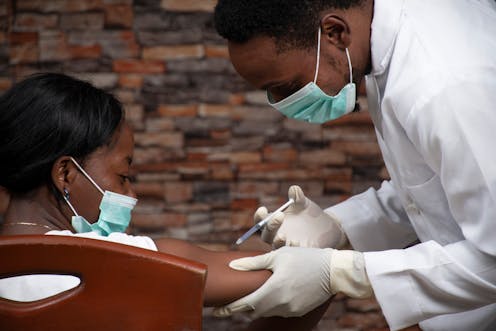
Two and a half years into the pandemic, more than 12 billion COVID-19 vaccine doses have been administered worldwide, and more than 5 million are being administered each day. People in many high-income countries, including Australia, are now receiving their third or fourth dose. But the distribution of vaccines globally is still vastly unequal. More than 80% of people in low-income countries have not yet received a single dose.
In January 2021, the Director-General of the World Health Organization warned bluntly:
the world is on the brink of a catastrophic moral failure – and the price of this failure will be paid with lives and livelihoods in the world’s poorest countries.
Unfortunately, this dire prediction has come to pass, and there are no signs the situation is going to turn around any time soon.
How did things go so wrong, and is there anything Australians can do about it?
Read more: Why 'vaccine nationalism' could doom plan for global access to a COVID-19 vaccine
How bad is the maldistribution of vaccines?
Similar to many high-income countries, more than 80% of Australians have completed an initial COVID vaccination protocol (two doses for most vaccines) and many have progressed to third and fourth doses.
In contrast, only 15.8% of the population in low-income countries has completed an initial vaccination protocol. And the situation in some countries is very dire - only 1.4% of Haiti’s population and 6.3% of Mali’s population, for example, can be considered “fully vaccinated”.
Needless to say, booster doses are also very inequitably distributed.
While vaccine hesitancy and slow uptake of vaccines by weak health systems are contributing factors, lack of access to vaccines at the time they are needed remains the biggest problem.
What went wrong with plans to vaccinate the world?
COVAX was set up in 2020 as a global mechanism for equitably sharing COVID vaccine doses. Some 92 countries relied on it as their main, or only, strategy for accessing vaccines.
COVAX initially aimed to deliver 2 billion doses by the end of 2021, enough to vaccinate 20% of the population in every country. But COVAX missed this target by a mile, delivering fewer than a billion vaccine doses by the end of 2021, and has delivered fewer than 1.6 billion so far.
Developing countries have suffered disproportionately from the pandemic. In the early stages of the pandemic, death rates for people with COVID, adjusted for age and other factors, were around twice as high in developing countries as in high-income countries.
Recent modelling has shown that while vaccination saved an estimated 7.4 million lives in low-income countries in 2021, if COVAX had met its 20% target, an additional 156,900 deaths would have been avoided. If the World Health Organization’s goal of 40% vaccine coverage had been reached, almost 600,000 more lives would have been saved.
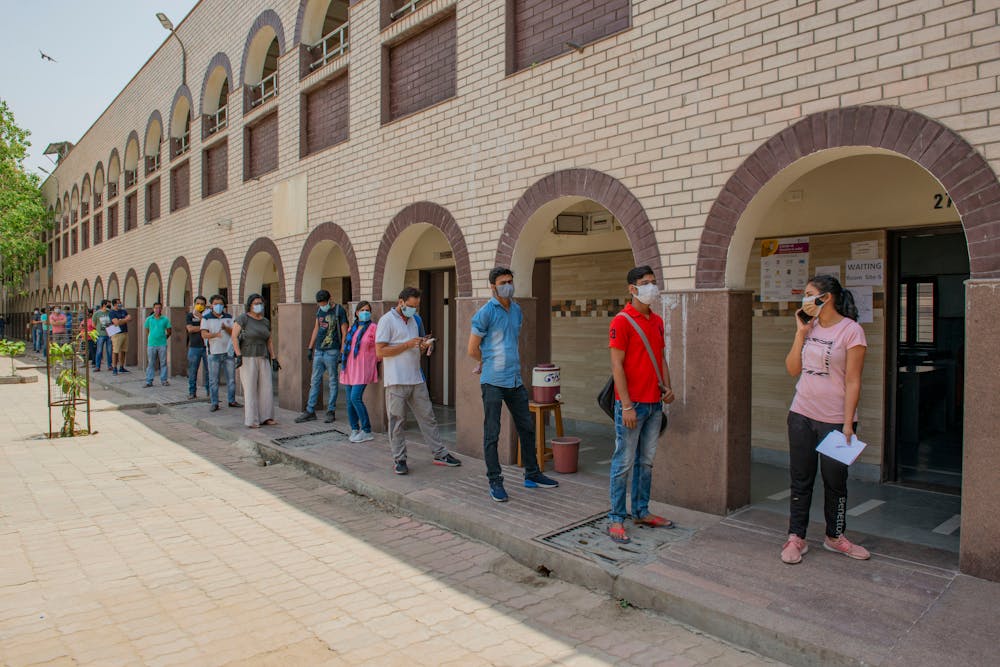
COVAX struggled from the start. It relied heavily on donations of funds and doses from rich countries, many of which never materialised, or were too ill-timed or too close to expiry to be able to be absorbed by recipient countries.
Rich countries also undermined COVAX by negotiating directly with pharmaceutical companies to pre-purchase large quantities of vaccines, essentially starving COVAX of supplies. By November 2020, more than half of the global supply had been pre-purchased by high-income countries representing just 14% of the world’s population.
Australia was no exception to this trend. Despite Australia’s slow domestic COVID vaccine rollout, by August 2021 the Morrison government had entered agreements to secure more than 280 million doses. That’s more than ten doses per person.
Some countries that engaged in this sort of over-purchasing are now having to throw away doses they don’t need, and can’t use.
Read more: Wealthy nations starved the developing world of vaccines. Omicron shows the cost of this greed
Australia has so far donated around 40.5 million of the 60 million doses pledged by the previous Australian government to countries in the Indo-Pacific by the end of 2022, along with other types of support.
Australia has also promised A$215 million to COVAX, and made a belated pledge in April this year to donate 10 million doses to COVAX - none of which have yet been delivered. Doses donated so far have been given to Indo-Pacific countries, arguably in line with Australia’s national interests given China’s growing influence in the region, rather than being funnelled through COVAX to countries that most need them.
Underlying problems haven’t been fixed
A strategy based on donations, underpinned by a charitable model, can only go so far in addressing inequities. We still have a situation where a small number of companies control the global supply of COVID vaccines.
Recently, wealthy countries blocked and then watered down a proposal at the World Trade Organization to relax intellectual property rules for COVID vaccines, which in its originally proposed form was set to support more widespread manufacturing in low- and middle-income countries. While an agreement of sorts was reached in June, it was so compromised it might not enable a single additional vaccine to be made.
The lack of attention to solving the underlying problem means we’re at risk of making the same mistakes again. We are likely to see the same patterns of hoarding and inequity when it comes to the newer vaccines being produced and developed, such as those targeting the Omicron variant, and future generations of vaccines, which may include breakthroughs in vaccines that prevent the transmission of SARS-CoV-2.
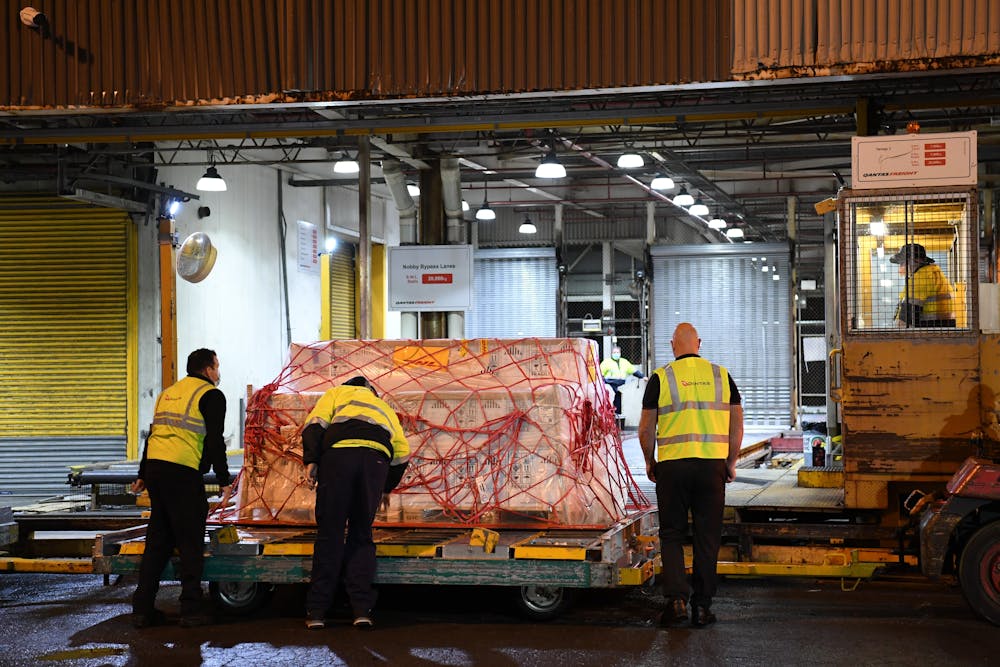 Developed countries have hoarded vaccine supplies.
James Morgan/AAP
Developed countries have hoarded vaccine supplies.
James Morgan/AAP
What can be done to fix the inequities, and how can Australia help?
It’s important for Australians to get the booster doses available to them. It won’t help other countries if we decline them, in the same way that skipping your dinner wouldn’t help solve global hunger.
But Australia needs a better and more sustainable plan to help other countries.
Our recent paper set out four actions Australia should take to help fix the inequities in global access to COVID-19 vaccines.
Read more: How Australia's fickleness on COVID vaccines is perpetuating global vaccine inequity
First, Australia needs to produce, donate, redistribute and fund more COVID vaccines for low-income countries. Doses the Morrison government ordered which are not needed in Australia should be relinquished. These should be channelled through COVAX to ensure they get where they are most needed, and can be effectively used in a timely way.
Second, Australia should support global initiatives to waive intellectual property rights in meaningful ways that enable low- and middle-income countries to manufacture COVID products.
Third, it can provide funds and practical help to build production capacity in low-income countries.
Finally, the Australian government should ensure companies developing vaccines in Australia share their intellectual property and know-how to enable more widespread manufacturing. This can be achieved by placing conditions on public funding invested in research and development.
The upcoming review into Australia’s COVID vaccine and treatment purchases announced by the Albanese government provides an opportunity to reset Australia’s approach, so we can be part of the solution rather than part of the problem.
Authors: Deborah Gleeson, Associate Professor in Public Health, La Trobe University


















