the radical feminist poster group that pasted prints around Melbourne in the ‘80s
- Written by Carole Wilson, Associate Professor in Visual Arts, Federation University Australia
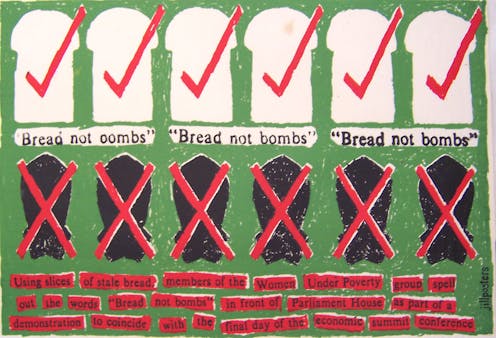
Jillposters was a self-funded radical feminist poster group active in Melbourne from 1983 until 1988. I was a founding member.
I’m in the process of donating archival material and records to the RMIT Design Archive, so I’ve had cause to reflect recently on what impressive achievements we had for such a small and unstructured group.
We had no government funding, no management committee, no governing structure and no workshop. The group lasted just five years. Yet we produced an amazing range of posters and postcards, most of which are held in Australia’s national collection.

Read more: From Duchamp to AI: the transformation of authorship in art
A medium for political messages
Political posters grew out of 1970s feminism. Women were at the forefront of postermaking in Australia in the early 1980s.
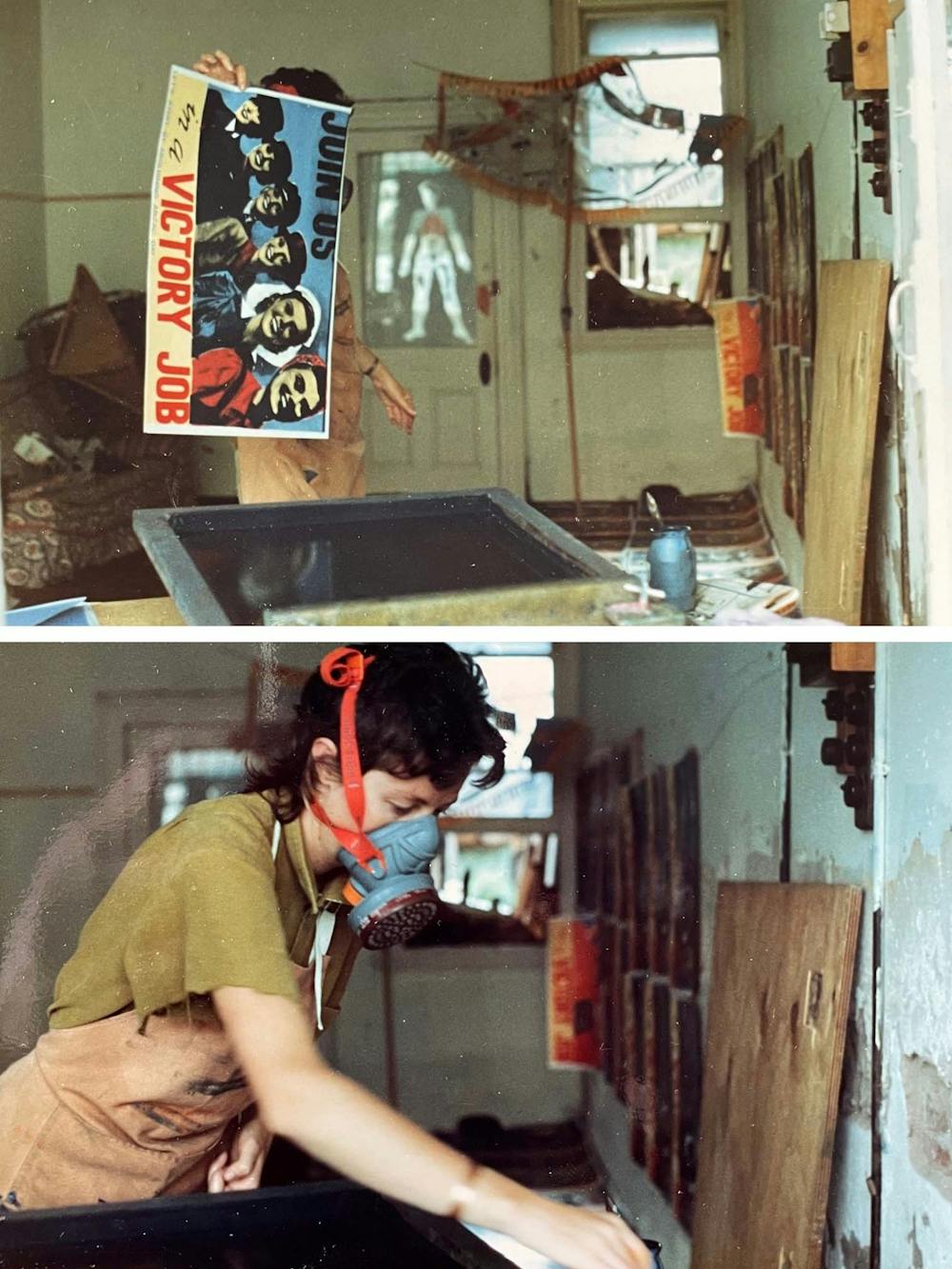
Silkscreen printing, as it was taught at art schools, was and is a laborious, hand-driven process. You have to print with a squeegee through a screen; each colour separately.
It isn’t taught much anymore – we worked with pretty toxic oil-based inks, and to clean up the screen, you just flooded it with turps. Now posters can be whipped up digitally and distributed online.
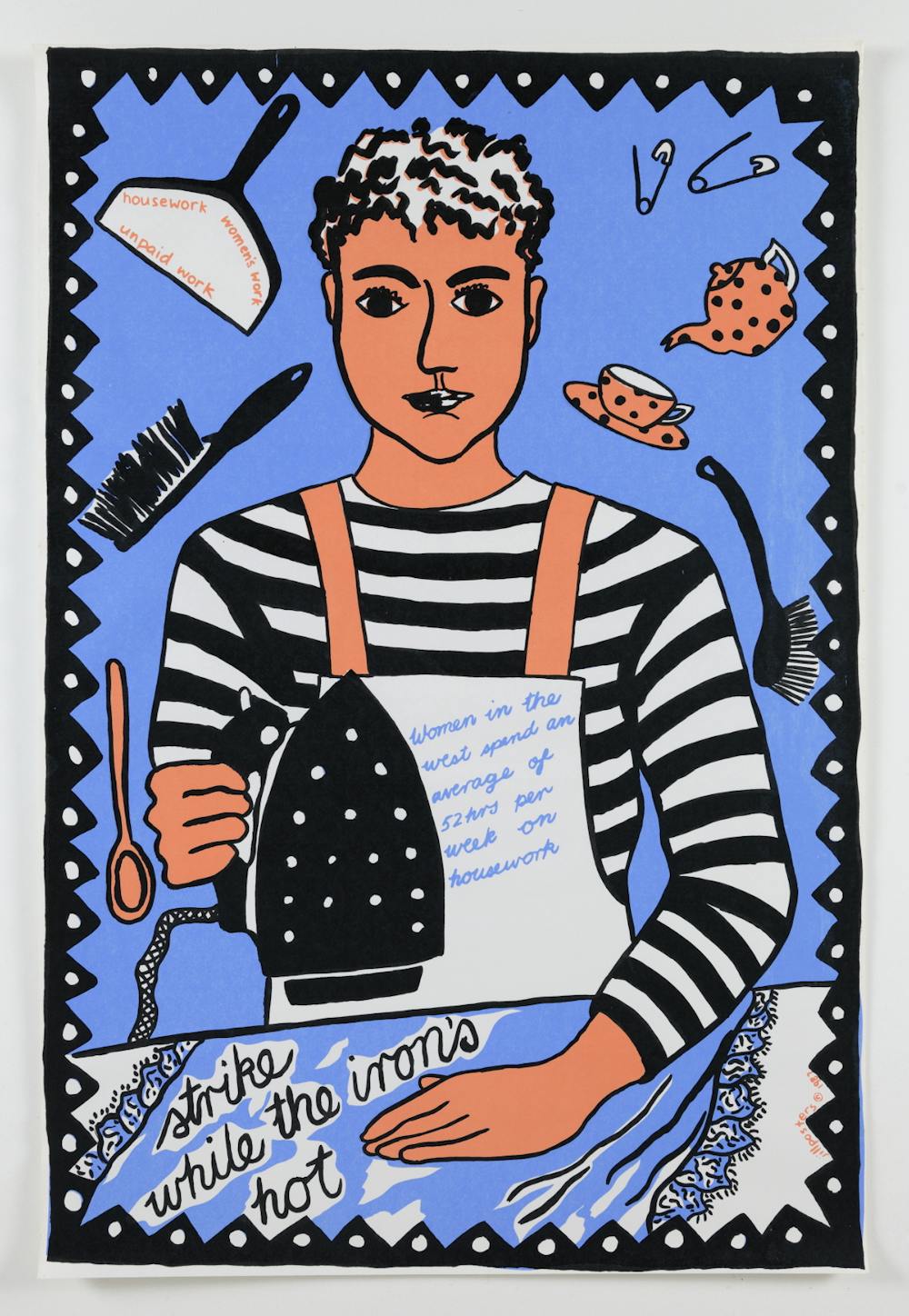 A Jillposters print asks women to reflect on how much housework they do.
Carole Wilson
A Jillposters print asks women to reflect on how much housework they do.
Carole Wilson
But our posters were ideal as a medium for conveying political messages and disseminating information. Many poster workshops and groups were born in the 1970s and 80s in various locations; including Megalo Workshop in Canberra, Tin Sheds and Earthworks Poster Collective in Sydney, and Red Letter Press and Another Planet Posters in Melbourne.
Off to a flying start
Jillposters got off to a flying start in February 1983 when a group of friends met at the University of Melbourne student union to discuss forming a political poster group.
We each contributed the grand sum of A$10 to get things started and to open a bank account.
Initially these funds were spent on inks, paper and workshop hire as Melbourne University union had a screenprinting studio available for use by students and friends.
Members, in the spirit of collectivism, chose not to have their own names on their posters but to name everything as Jillposters.
The first poster, a simple black and white version titled ‘A Change is as Good as Holiday’ was produced to coincide with the 1983 federal election, which saw Labor’s Bob Hawke elected. This was a cause for great celebration and hopes for a new era after the conservative Malcolm Fraser government and a period of high unemployment.
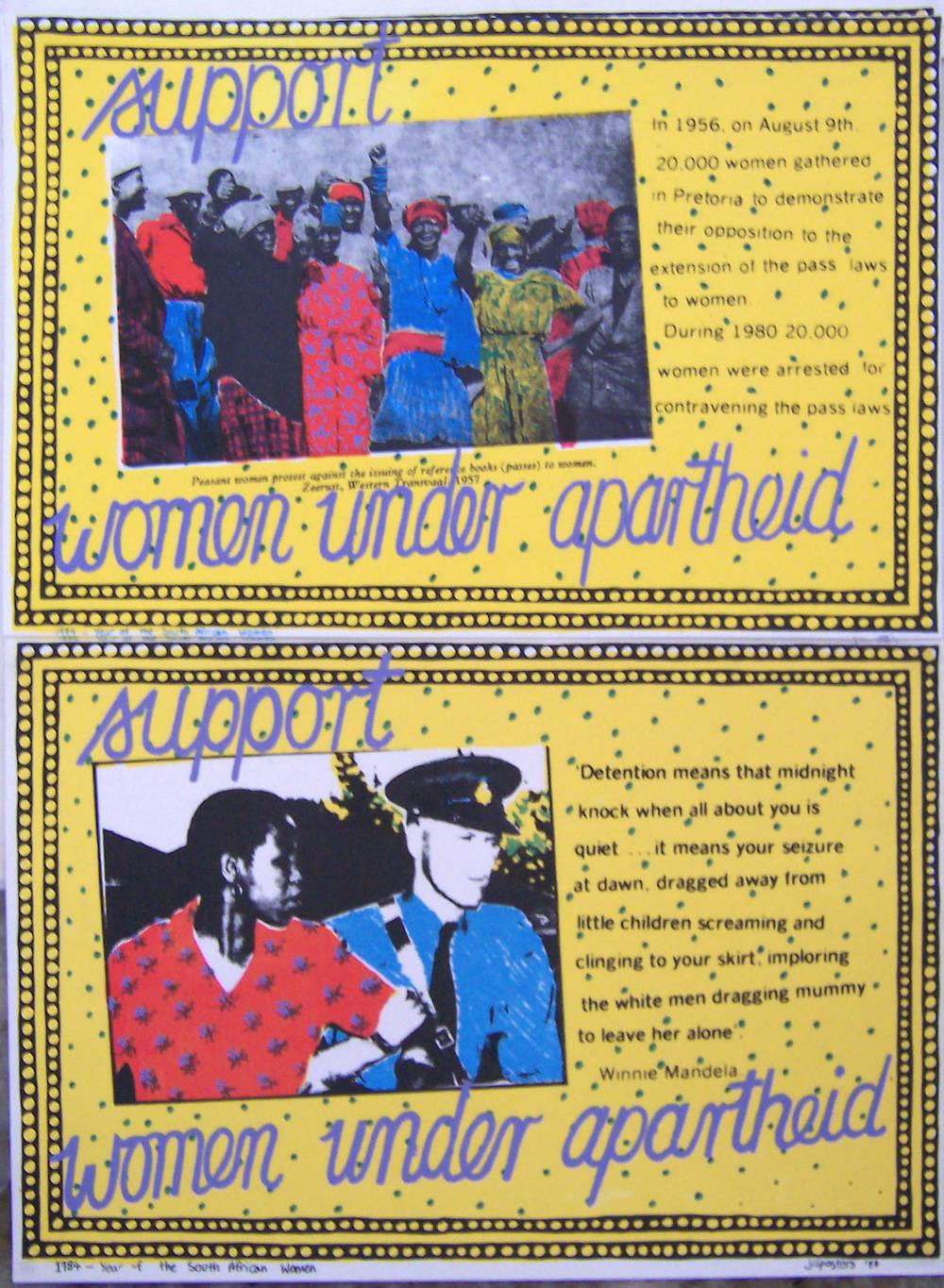 Jillposters printed anti-apartheid posters over their active period during the 1980s.
Carole Wilson
Jillposters printed anti-apartheid posters over their active period during the 1980s.
Carole Wilson
We printed posters, and later postcards, in many locations, including the University of Melbourne Student Union printmaking room and Phillip Institute of Technology (now RMIT) printmaking studio, where some Jillposters members were students. Occasionally we printed in sheds and individual artist’s studios.
Our initial plan was to paste up all of our posters around the streets of Melbourne.
Going out late at night with a bucket of sloppy wallpaper paste, large brushes and a roll of posters was all very exciting.
Pasting up was illegal so there was always the risk of arrest. Our aim was to find walls where our political posters wouldn’t be covered up by other groups pasting up band posters.
Occasionally, we’d find a passerby would like our poster so much they’d peel it off the wall still dripping in paste to take home for themselves.
Another early poster, printed just in time for Easter, conveyed the message that Easter was the patriarchal theft of a pre-Christian fertility festival.
This, perhaps not surprisingly, generated a lot of interest and some outrage when pasted up around the streets of Fitzroy. It led to some articles in local suburban newspapers and contact from alternative and left-wing bookshops who were keen to stock our posters for sale.
Shifting gear
We then shifted gear slightly and allocated a smaller portion for street paste up and the larger portion for sales through retail outlets such as galleries and bookshops in Australia and New Zealand.
Poster production soon increased and our designs became more detailed and colourful.
 Carole Wilson produced many Jillposters prints, including this call to abolish ANZAC Day.
Carole Wilson
Carole Wilson produced many Jillposters prints, including this call to abolish ANZAC Day.
Carole Wilson
The 1980s really was a different era and most capital cities in Australia had a range of left-wing and women’s bookshops and alternative galleries keen to stock our work.
We were also contacted by mainstream galleries wanting to acquire our posters for their collections.
Both the National Gallery of Australia and the Art Gallery of Ballarat bought posters in 1983 and then continued to collect all the posters we produced.
The State Library of Victoria also collected them and, in more recent years, the Ian Potter Museum at the University of Melbourne collected a range of posters.
One of the posters stating “We are marching for all women exploited and raped in war” was exhibited in the National Gallery of Australia’s Know My Name exhibition in 2021-22.
Over time, members of the group moved onto other pursuits and the remaining members shifted their focus to printing postcards, which were also very popular and sold well.
The final posters and postcards were produced in 1988 and then Jillposters officially wound up.
Read more: Where has Melbourne's political graffiti gone?
Authors: Carole Wilson, Associate Professor in Visual Arts, Federation University Australia