'Mum, Dad, I'm bored!' How to teach children to manage their own boredom these holidays
- Written by Trevor Mazzucchelli, Associate Professor of Clinical Psychology, Curtin University
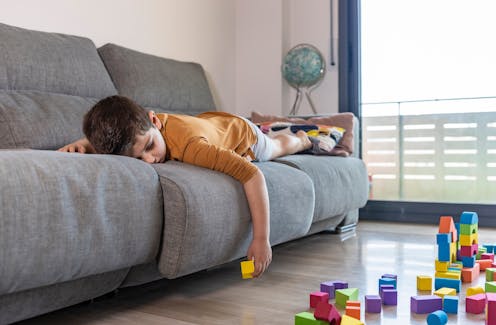
As the holidays progress, parents will no doubt be hearing a classic line from their kids: “I’m boooooored”.
We all get bored from time to time and there is nothing particularly wrong with feeling bored. In fact, it is a useful emotion because it is helps us reflect and make changes to what we’re doing or our surroundings.
However, many children are still learning the skill of managing boredom. If you’re wondering how to respond when kids complain they are bored (without just letting them watch more TV), here are some ideas to try.

Boredom helps kids learn
Boredom is mildly unpleasant, but it’s OK for kids to feel bored. In fact, boredom provides the context for children to develop a number of important skills, including:
• the ability to tolerate less-than-ideal experiences
• manage frustration and regulate emotions
• creative thinking
• problem solving, planning, and organisation
• independence and self-sufficiency.
These skills are central to children developing a sense of control over their own happiness and wellbeing.
Read more: Why are my kids good around other people and then badly behaved with me?
Why do children complain about being bored?
Typically, children’s lives are structured and organised for them. When presented with unstructured time, children can have difficulty thinking of and organising things to do.
If children’s complaints of boredom always result in adults entertaining them, then children may not get an opportunity to learn to entertain themselves or generate their own ideas.
Sometimes, children seem to reject every idea that we suggest. They may have learned that this leads to a long discussion about what to do, or in us (eventually) engaging in an activity with them. In both circumstances, the child does not have to manage their own boredom.
The trick is to help support children generate their own ideas (rather than suggesting ideas to them).
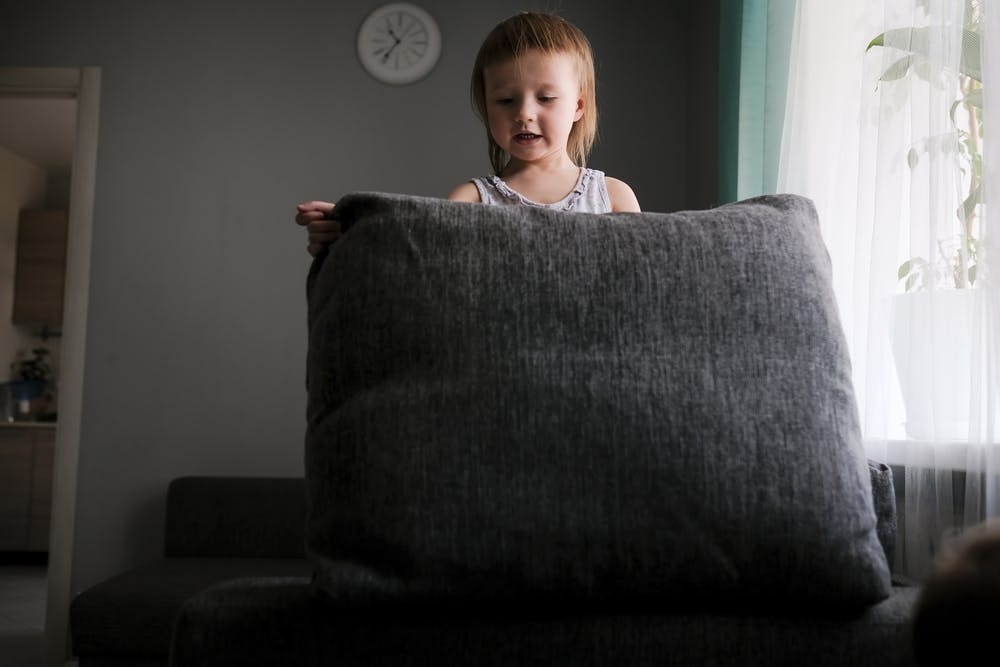 If adults constantly entertain children, the child may not get an opportunity to learn to entertain themselves.
Shutterstock
If adults constantly entertain children, the child may not get an opportunity to learn to entertain themselves.
Shutterstock
How can parents help kids learn to manage boredom?
There’s a lot parents can do to prepare for boredom and support their child learning to manage their own boredom. Here are some ideas:
Create a ‘menu’ of activities. Talk to your child about what they enjoy doing, their interests and their passions. Develop a menu of activities with your child that they can refer to when they’re bored. Younger children may wish to illustrate theirs.
Try to list activities your child can do without your input – a mix of new things and stuff they’ve enjoyed in the past. Include some quicker activities (such as colouring, building a furniture fort, or having a teddy bear picnic), as well as longer-term projects (such as a big puzzle, reading a novel, working on sporting skills). Put the menu where your child can refer to it.
Get everything ready. Make sure you have the toys, equipment and materials available and accessible for your child to do the stuff on their list. Toys and activities do not have to be expensive to be fun.
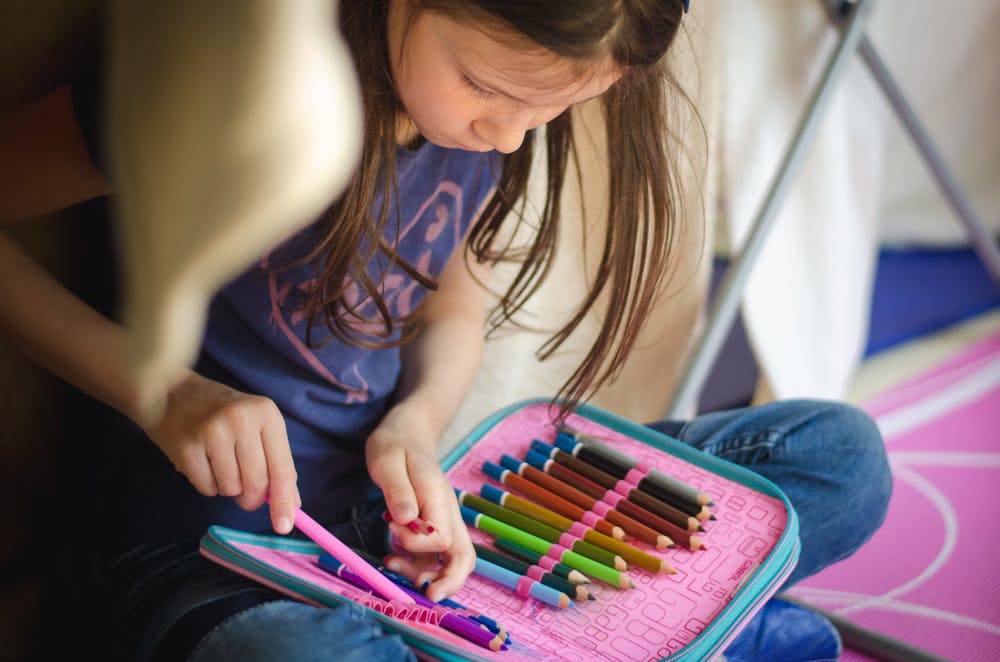 Equip your child with the things they need to do stuff on their ‘menu’ of activities.
Shutterstock
Equip your child with the things they need to do stuff on their ‘menu’ of activities.
Shutterstock
Prepare your child. Let your child know the plan for the day and the length of time they’re expected to do the activities on their menu. This will reassure them they’re not going to be on their own “forever”. A series of pictures to illustrate the day’s schedule might help. Before a period of free time, discuss two or three rules (for example, “Play quietly until mum and dad are finished and if you need to speak to us, say, ‘Excuse me’ and wait until we’re free”).
Talk about rewards. At first, you could offer a reward (such as a special activity with you, a favourite snack or some screen time) if your child occupies themselves appropriately for a period of time. Phase out rewards over time by gradually increasing the amount of time your child needs to occupy themselves, and then offer them only every now and then.
Prompt your child to use their list. If your child tells you they’re bored, redirect them to their list. Keep this conversation short and to the point.
If necessary, help your child get started. Some children might need help to get started in an activity. It may be necessary to spend a few minutes setting them up. Try not to do everything yourself, but rather use questions to help them to problem solve. You might ask, “What are you going to make? What will you need to make that? Where do you think you’ll start?”
 Would a reward chart help?
Shutterstock
Would a reward chart help?
Shutterstock
Encourage your child. When your child gets started on an appropriate activity themselves, offer praise and attention. You might say, “You found something to do all by yourself. I’m impressed!” Stop what you’re doing from time to time to praise them for keeping busy. Do this before they have lost interest, but over time, aim to gradually extend the amount of time before commenting.
Spend time with your child. While it is important for children to learn how to manage boredom, children also need to feel valued and know their parents want to spend time with them. Make time for your child and be available to them when you are together.
Read more: Educational activities for the summer break to beat boredom and learning loss
Authors: Trevor Mazzucchelli, Associate Professor of Clinical Psychology, Curtin University