Modern Australian
The Times

it's nothing to do with lactic acid

  • Written by Robert Andrew Robergs, Associate Professor - Exercise Physiology, Queensland University of Technology
it's nothing to do with lactic acid

As many of us hit the gym or go for a run to recover from the silly season, you might notice a bit of extra muscle soreness.

This is especially true if it has been a while between workouts.

A common misunderstanding is that such soreness is due to lactic acid build-up in the muscles.

Research, however, shows lactic acid has nothing to do with it. The truth is far more interesting, but also a bit more complex.

Read more: Can't afford a gym membership or fitness class? 3 things to include in a DIY exercise program

It’s not lactic acid

We’ve known for decades that lactic acid has nothing to do with muscle soreness after exercise.

In fact, as one of us (Robert Andrew Robergs) has long argued, cells produce lactate, not lactic acid. This process actually opposes not causes the build-up of acid in the muscles and bloodstream.

Unfortunately, historical inertia means people still use the term “lactic acid” in relation to exercise.

Lactate doesn’t cause major problems for the muscles you use when you exercise. You’d probably be worse off without it due to other benefits to your working muscles.

Lactate isn’t the reason you’re sore a few days after upping your weights or exercising after a long break.

So, if it’s not lactic acid and it’s not lactate, what is causing all that muscle soreness?
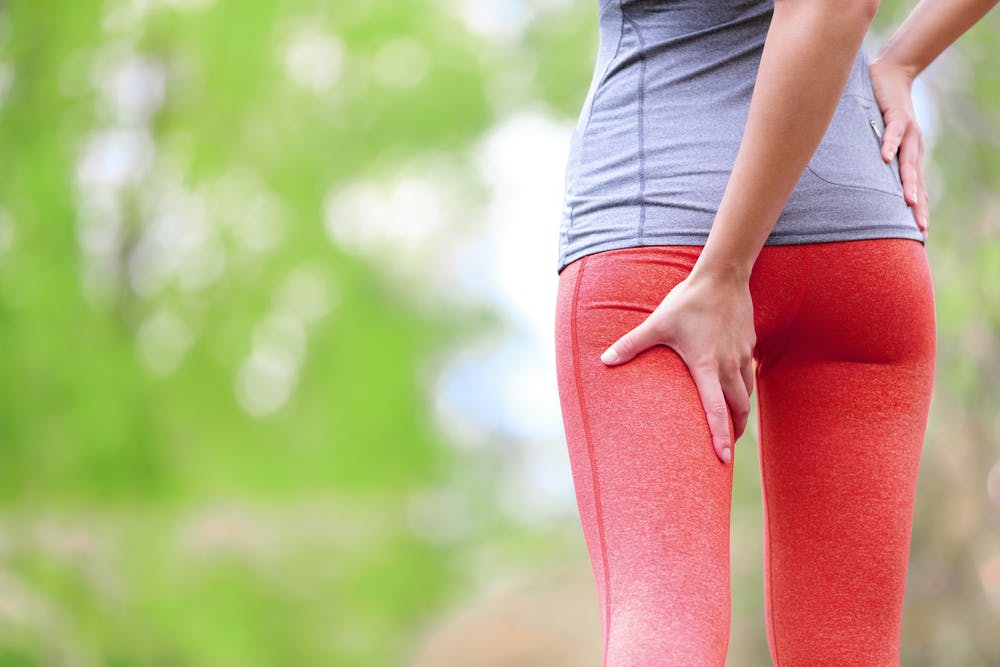
A woman clasps her lug in pain.
Regular training will gradually build the muscle adaptations necessary to prevent delayed onset muscle soreness. Shutterstock

Muscle pain during and after exercise

When you exercise, a lot of chemical reactions occur in your muscle cells. All these chemical reactions accumulate products and by-products which cause water to enter into the cells.

That causes the pressure inside and between muscle cells to increase.

This pressure, combined with the movement of molecules from the muscle cells can stimulate nerve endings and cause discomfort during exercise.

The pain and discomfort you sometimes feel hours to days after an unfamiliar type or amount of exercise has a different list of causes.

If you exercise beyond your usual level or routine, you can cause microscopic damage to your muscles and their connections to tendons.

Such damage causes the release of ions and other molecules from the muscles, causing localised swelling and stimulation of nerve endings.

This is sometimes known as “delayed onset muscle soreness” or DOMS.

While the damage occurs during the exercise, the resulting response to the injury builds over the next one to two days (longer if the damage is severe). This can sometimes cause pain and difficulty with normal movement.
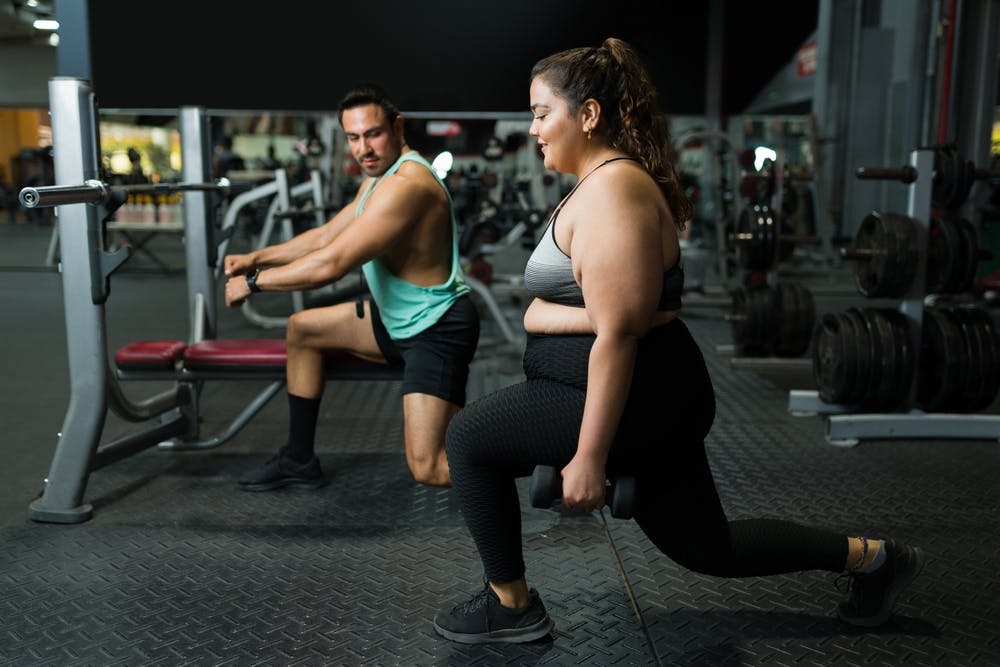
A woman does lunges in the gym. Being less wrecked by exercise makes it more enjoyable. Shutterstock

The upshot

Research is clear; the discomfort from delayed onset muscle soreness has nothing to do with lactate or lactic acid.

The good news, though, is that your muscles adapt rapidly to the activity that would initially cause delayed onset muscle soreness.

So, assuming you don’t wait too long (more than roughly two weeks) before being active again, the next time you do the same activity there will be much less damage and discomfort.

If you have an exercise goal (such as doing a particular hike or completing a half-marathon), ensure it is realistic and that you can work up to it by training over several months.

Such training will gradually build the muscle adaptations necessary to prevent delayed onset muscle soreness. And being less wrecked by exercise makes it more enjoyable and more easy to stick to a routine or habit.

Finally, remove “lactic acid” from your exercise vocabulary. Its supposed role in muscle soreness is a myth that’s hung around far too long already.

Read more: Climb the stairs, lug the shopping, chase the kids. Incidental vigorous activity linked to lower cancer risks

Authors: Robert Andrew Robergs, Associate Professor - Exercise Physiology, Queensland University of Technology


Read more https://theconversation.com/why-are-my-muscles-sore-after-exercise-hint-its-nothing-to-do-with-lactic-acid-214638

Chatswood Tutoring And Its Role In Academic Achievement

Academic success often requires more than classroom attendance alone. Students face increasing expectations as they progress through school, particu...

Why Laser Hair Removal Treatments Continue Growing In Popularity

Managing unwanted hair can become time-consuming and frustrating for many people, especially when shaving, waxing, and other temporary methods requi...

Choosing the Right Devices for a Flexible Workplace

For IT leaders managing large fleets, the device layer is where workforce productivity and security policy meet. The shift towards flexible and hybrid...

How Business Advisory Services Help Companies Achieve Sustainable Growth

Every business owner aims to build a profitable and sustainable organisation. While dedication, innovation, and hard work are important, achieving l...

Why Body Contouring Has Become A Popular Cosmetic Treatment

Many people maintain healthy lifestyles through regular exercise and balanced eating habits but still struggle with stubborn areas of fat that are d...

How to Choose the Right POS Hardware for Your Business in Australia

A lot of Australian business owners spend weeks researching POS software but buy hardware almost as an afterthought. That's a mistake. The wrong har...

Why Material Handling Hose Is Critical for Industrial Efficiency

A high-performance material handling hose is an essential component in industries that transport abrasive, dry, or bulk materials on a daily basis...

How to Choose the Right Lawyer in Melbourne for Your Situation

Choosing legal support can feel difficult, especially when the stakes are personal or business-related. The right lawyer in Melbourne should underst...

Hoteliers Look to Clever Value Adds to Increase Revenue

The Australian hospitality industry is still in recovery mode after a notoriously rough patch in recent years. While there has been a post-COVID tra...

Moving to Queensland? Here’s How to Prep Your Car for the Big Move North

There’s no sign of the northern migration slowing down, with thousands of southerners fleeing from chaotic lifestyles and cooler climates for a brig...

Diesel Shortage to Impact Trades and Contractors

Strait of Hormuz blockage affecting all major parts of trades and construction Trades and construction across residential, commercial and industria...

Why Holiday Home Owners Turn to Rental Management Agents

The Allure — and the Reality — of Renting Out Your Property Owning a holiday home is a dream for many Australians. Whether it's a beachside sha...

Why Finding Reliable Doctors In Bundoora Is Important For Long-Term Health

Access to quality healthcare plays an important role in maintaining overall wellbeing and managing health concerns early. Trusted Doctors in Bundoor...

Understanding the Different Types of Car Services: Minor vs Major

When it comes to car maintenance, one of the most important things every vehicle owner should understand is the difference between a minor and a maj...

How Superannuation and TPD Insurance Work Together

Superannuation is an essential part of financial planning in Australia. It is designed to provide individuals with income during retirement, helping...

Tiny Towns funding granted for Mt Hotham and Mt Buller upgrades

Alpine Resorts Victoria (ARV) has welcomed funding support from the Victorian Government’s  Tiny Towns Fund, with both Mt Hotham and Mt Buller se...

Locksmith Services: Why Professional Security Solutions Matter More Than Ever

Security is a critical concern for homeowners, businesses, and vehicle owners alike. Whether it involves protecting a property, replacing damaged lo...

Why Tooth Fillings Are Important For Protecting Damaged Teeth

Cavities and minor tooth damage are common dental problems that can worsen if left untreated. Professional tooth fillings help restore damaged teeth, ...