Antarctica is the only continent without a permanent human population, but it has inspired a wealth of imaginative literature
- Written by Elizabeth Leane, Professor of Antarctic Studies, School of Humanities, College of Arts, Law and Education, University of Tasmania
When I was working on my book Antarctica in Fiction, friends and colleagues would joke about what an easy task I had taken on. How many writers would choose to set a novel in a continent with no permanent human population? Surely a dozen or so books would cover it.
To begin with, I too vastly underestimated the work involved. I quickly found that there are many hundreds of novels set in Antarctica, even if you limit the selection to those available in English.
Over ten years later, I still have my work cut out keeping up with the proliferating new titles. Early exploring expeditions continue to be revisited. Contemporary threats to the region – climate change in particular – are generating new, often disturbing, stories.
A question I am sometimes asked is whether people who set novels in Antarctica have – or should have – travelled there themselves. Increasingly, writers do visit the ice continent with national programs, tourist vessels and NGOs. A research project I currently lead, Creative Antarctica, has sought to identify Australian writers and artists who have travelled to Antarctica for professional purposes. Our team has found over a hundred of them.
But while a voyage south is necessary research for a specific kind of narrative, my reading has taught me that it is possible to write an excellent novel set in Antarctica relying entirely on other people’s reports.
The five recent Antarctic novels described below offer a reasonably representative introduction to Antarctic fiction as a whole. They range stylistically between literary and genre fiction, and thematically across heroic (and not-so-heroic) explorers, climate warriors, alien invaders and hapless tourists.
Apart from Antarctic tragics like me, few people will enjoy them all, but most readers will likely find something to match their version of cool.
Read more: 200 years of exploring Antarctica – the world's coldest, most forbidding and most peaceful continent
Terra Nova
Set in the early 20th century, Henriette Lazaridis’s Terra Nova (2022) is a fictionalised version of the “race to the Pole” between expeditions led by Robert F. Scott and Roald Amundsen.
These two expeditions – particularly Scott’s – have generated a long line of literary responses, including Kåre Holt’s The Race (1976), Beryl Bainbridge’s The Birthday Boys (1991) and Rebecca Hunt’s Everland (2014).

Read more: What led to Antarctic explorer Captain Scott's death
Cold People
What if all of humanity were suddenly forced to move to Antarctica?
This is the premise of bestselling British author Tom Rob Smith’s Cold People (2023). The story begins when a burgeoning holiday romance is rudely interrupted by an alien invasion. The advanced beings give all humans just one month to reach Antarctica or face unspecified but ominous-sounding consequences.
No reason is provided for this required exile, although some suspect the aliens, having witnessed humans’ impact on the planet’s climate, decided to take executive action. In any case, the extraterrestrials exit the narrative as abruptly as they entered, their motivations remaining mysterious.
 Cold People explores how far the survivors, eking out a living on a frozen continent, might be willing and able to adapt themselves in order for their species to continue.
The novel is the latest in a series of post-apocalyptic narratives, in which Antarctica is conceived as a refuge in a damaged planet. The causes range from geoengineering (Gerald Heard’s novella The Thaw Plan) to a pandemic (Sakyo Komatsu’s Virus), nuclear war (David Graham’s Down to a Sunless Sea) and climate change (Paul McCauley’s Austral).
Cold People dilutes its impact by exploring too many new ideas at once, but it is worth reading just for the ironic images its strange scenario produces – for example, when the aliens deposit humanity’s cultural heritage on the polar plateau, so that the Statue of Liberty, the Egyptian pyramids and the Taj Mahal sit together on the ice.
The Art of Breaking Ice
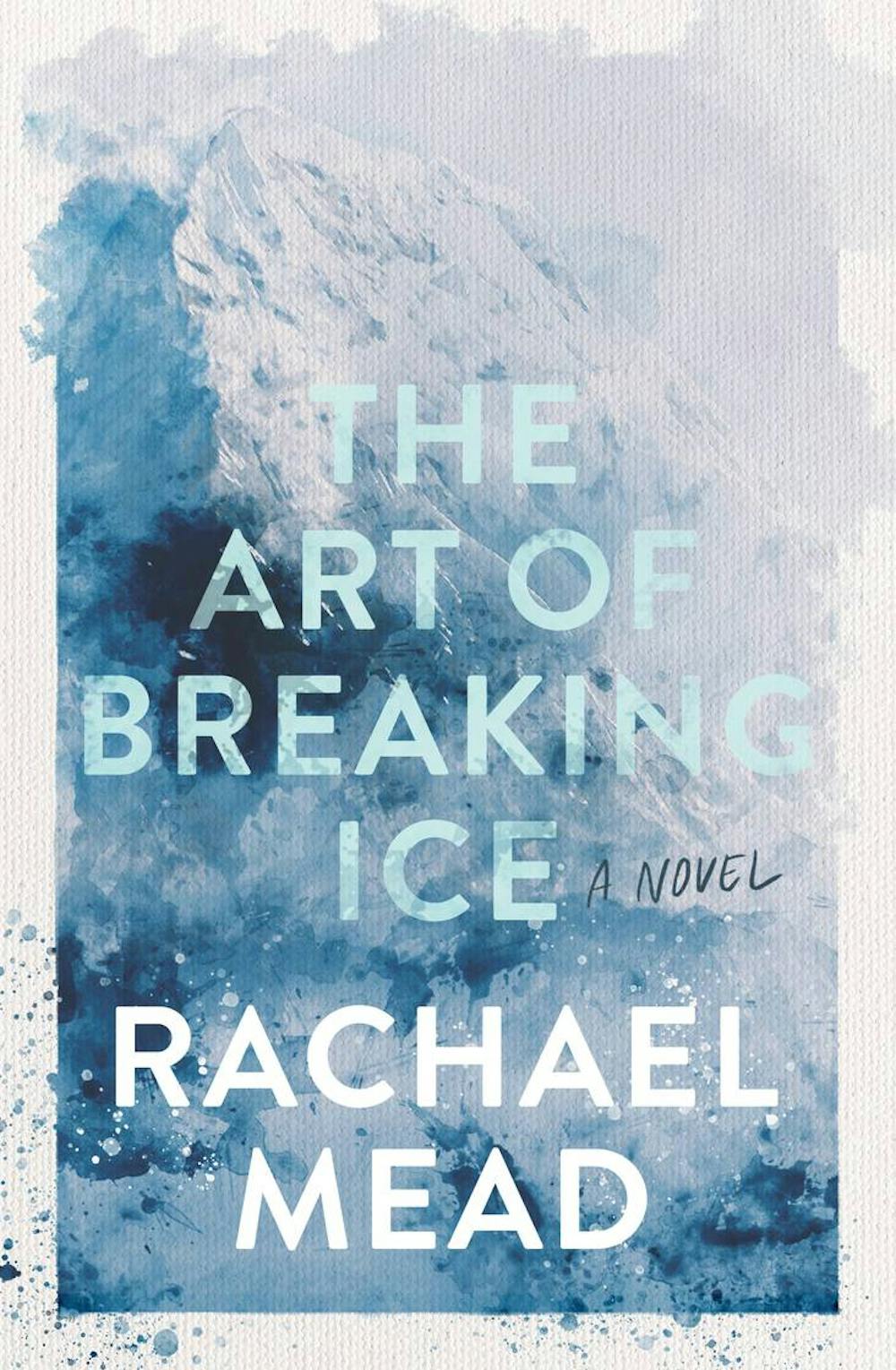
Rachael Mead’s The Art of Breaking Ice (2023) is based on the real experiences of Australian Nel Law, who travelled to Antarctica with her husband in the early 1960s, thereby becoming the first Australian woman and the first female artist to visit the continent.
Cold People explores how far the survivors, eking out a living on a frozen continent, might be willing and able to adapt themselves in order for their species to continue.
The novel is the latest in a series of post-apocalyptic narratives, in which Antarctica is conceived as a refuge in a damaged planet. The causes range from geoengineering (Gerald Heard’s novella The Thaw Plan) to a pandemic (Sakyo Komatsu’s Virus), nuclear war (David Graham’s Down to a Sunless Sea) and climate change (Paul McCauley’s Austral).
Cold People dilutes its impact by exploring too many new ideas at once, but it is worth reading just for the ironic images its strange scenario produces – for example, when the aliens deposit humanity’s cultural heritage on the polar plateau, so that the Statue of Liberty, the Egyptian pyramids and the Taj Mahal sit together on the ice.
The Art of Breaking Ice
Rachael Mead’s The Art of Breaking Ice (2023) is based on the real experiences of Australian Nel Law, who travelled to Antarctica with her husband in the early 1960s, thereby becoming the first Australian woman and the first female artist to visit the continent.
 Mead has also visited Antarctica, more than once – something evident in the precision of her descriptions. When a poet and novelist writes about an artist’s experiences in Antarctica, it is hard not to read the work at least partly autobiographically. Certainly, Mead’s artistry is evident in the novel, though more at the level of the sentence than the narrative.
Nel Law is depicted not only as a lone artist among sceptical scientists, but a woman on a ship full of often hostile men. Mead very effectively evokes the discomfort of women subject to men’s unwanted attentions and constant judgement.
Though The Art of Breaking Ice is mostly set over 50 years ago, its subject resonates with recent reports about workplace behaviour in national Antarctic programs.
Read more:
Nel Law stowed away on her husband’s ship to Antarctica. She was the first Australian woman to see its ‘crystalline strangeness’
Thaw
Like Lazaridis’s Terra Nova, Dennis Glover’s Thaw (2023) deals with Scott’s second expedition, though Glover reimagines the experiences of the actual explorers rather than fictionalised versions of them. He finds a new angle by focusing on lesser-known expedition members, including meteorologist George Simpson.
Mead has also visited Antarctica, more than once – something evident in the precision of her descriptions. When a poet and novelist writes about an artist’s experiences in Antarctica, it is hard not to read the work at least partly autobiographically. Certainly, Mead’s artistry is evident in the novel, though more at the level of the sentence than the narrative.
Nel Law is depicted not only as a lone artist among sceptical scientists, but a woman on a ship full of often hostile men. Mead very effectively evokes the discomfort of women subject to men’s unwanted attentions and constant judgement.
Though The Art of Breaking Ice is mostly set over 50 years ago, its subject resonates with recent reports about workplace behaviour in national Antarctic programs.
Read more:
Nel Law stowed away on her husband’s ship to Antarctica. She was the first Australian woman to see its ‘crystalline strangeness’
Thaw
Like Lazaridis’s Terra Nova, Dennis Glover’s Thaw (2023) deals with Scott’s second expedition, though Glover reimagines the experiences of the actual explorers rather than fictionalised versions of them. He finds a new angle by focusing on lesser-known expedition members, including meteorologist George Simpson.
 Glover couples this historical narrative with a near-future plot, in which Simpson’s great-granddaughter, a celebrity climate activist, becomes obsessed with the idea that melting ice might be revealing buried artefacts from the expedition. Once she arrives in Antarctica, the second plot accelerates rapidly, the novel coming to resemble an eco-thriller.
The historical sections of Thaw are carefully researched and evoked. Whether or not Glover has travelled to Antarctica, he has certainly spent time immersed in the archives of the Scott Polar Research Institute (renamed the “British Institute for Polar Studies” in the novel).
The near-future characters can feel a little cartoonish and the eco-thriller plot strains credulity. The awkwardness points to the challenges – identified most prominently by Amitav Ghosh in The Great Derangement (2016) – of writing about something as vast as climate change within the traditional confines of the literary novel. To my mind, a more successful, although much more oblique, example can be found in Jon McGregor’s Lean Fall Stand (2021), the product of a writer’s residency with the British national Antarctic program.
Nonetheless, Thaw is definitely worth reading for anyone interested in Scott, climate change science, and ways in which they might be unexpectedly connected.
Read more:
Why Australians should care about the South Pole
Midnight
My final cold book is Amy McCulloch’s Midnight (2023), a thriller set on an Antarctic tourist cruise ship.
Glover couples this historical narrative with a near-future plot, in which Simpson’s great-granddaughter, a celebrity climate activist, becomes obsessed with the idea that melting ice might be revealing buried artefacts from the expedition. Once she arrives in Antarctica, the second plot accelerates rapidly, the novel coming to resemble an eco-thriller.
The historical sections of Thaw are carefully researched and evoked. Whether or not Glover has travelled to Antarctica, he has certainly spent time immersed in the archives of the Scott Polar Research Institute (renamed the “British Institute for Polar Studies” in the novel).
The near-future characters can feel a little cartoonish and the eco-thriller plot strains credulity. The awkwardness points to the challenges – identified most prominently by Amitav Ghosh in The Great Derangement (2016) – of writing about something as vast as climate change within the traditional confines of the literary novel. To my mind, a more successful, although much more oblique, example can be found in Jon McGregor’s Lean Fall Stand (2021), the product of a writer’s residency with the British national Antarctic program.
Nonetheless, Thaw is definitely worth reading for anyone interested in Scott, climate change science, and ways in which they might be unexpectedly connected.
Read more:
Why Australians should care about the South Pole
Midnight
My final cold book is Amy McCulloch’s Midnight (2023), a thriller set on an Antarctic tourist cruise ship.
 The tagline – “When the sun never sets, there’s no place to hide …” – might elicit a groan, and even more worrying is the publisher’s plot summary, which promises “tantalising glimpses of polar bears” (polar bears live exclusively in the Arctic). But there are no such infelicities in the novel itself, which draws from the author’s experience as an Antarctic tourist.
Midnight is one of several recent novels dealing with the Antarctic tourist industry, including Midge Raymond’s romance-cum-disaster-narrative My Last Continent (2016) and Iliya Prigogine’s modernistic offering The Lamentations of Zeno (2011).
This trend in Antarctic fiction is not surprising, given that over 100,000 tourists visited last summer season, about 20 times the number of scientists and station personnel.
Antarctic tourists face all manner of peril in fiction, and you can’t help wondering if this isn’t some kind of narrative punishment for their perceived intrusion on Antarctica’s pristine icescape – indeed, Prigogine’s novel makes this explicit.
McCulloch, however, is less moralistic. She takes advantage of the confined spaces and the dangers that can arise on a vessel in an extreme environment. In doing so, she follows a tradition of Antarctic thrillers that goes back at least to Hammond Innes’ bestseller The White South (1949), set on a factory whaling ship.
While McCulloch has not quite hit her stride as a thriller writer – the cliffhangers and one-liners seem parachuted in – she is better on character and setting. Knife-wielding serial killer aside, Midnight recounts many aspects of the Antarctic cruise ship voyage that chimed with my experiences, and the narrative was absorbing enough to keep me turning pages.
Read more:
More than 100,000 tourists will head to Antarctica this summer. Should we worry about damage to the ice and its ecosystems?
Authors: Elizabeth Leane, Professor of Antarctic Studies, School of Humanities, College of Arts, Law and Education, University of Tasmania
The tagline – “When the sun never sets, there’s no place to hide …” – might elicit a groan, and even more worrying is the publisher’s plot summary, which promises “tantalising glimpses of polar bears” (polar bears live exclusively in the Arctic). But there are no such infelicities in the novel itself, which draws from the author’s experience as an Antarctic tourist.
Midnight is one of several recent novels dealing with the Antarctic tourist industry, including Midge Raymond’s romance-cum-disaster-narrative My Last Continent (2016) and Iliya Prigogine’s modernistic offering The Lamentations of Zeno (2011).
This trend in Antarctic fiction is not surprising, given that over 100,000 tourists visited last summer season, about 20 times the number of scientists and station personnel.
Antarctic tourists face all manner of peril in fiction, and you can’t help wondering if this isn’t some kind of narrative punishment for their perceived intrusion on Antarctica’s pristine icescape – indeed, Prigogine’s novel makes this explicit.
McCulloch, however, is less moralistic. She takes advantage of the confined spaces and the dangers that can arise on a vessel in an extreme environment. In doing so, she follows a tradition of Antarctic thrillers that goes back at least to Hammond Innes’ bestseller The White South (1949), set on a factory whaling ship.
While McCulloch has not quite hit her stride as a thriller writer – the cliffhangers and one-liners seem parachuted in – she is better on character and setting. Knife-wielding serial killer aside, Midnight recounts many aspects of the Antarctic cruise ship voyage that chimed with my experiences, and the narrative was absorbing enough to keep me turning pages.
Read more:
More than 100,000 tourists will head to Antarctica this summer. Should we worry about damage to the ice and its ecosystems?
Authors: Elizabeth Leane, Professor of Antarctic Studies, School of Humanities, College of Arts, Law and Education, University of Tasmania