The government is well behind on Closing the Gap. This is why we needed a Voice to Parliament
- Written by James Blackwell, Research Fellow (Indigenous Diplomacy), Australian National University
Another year, and another Closing the Gap report comes before the parliament and the Australian people. This year, however, the scene is somewhat different. The 2024 Closing the Gap report is the first since Australians resoundingly rejected the proposal to enshrine a First Nations Voice to Parliament in the Constitution.
That proposal would have given Indigenous peoples across this country a much greater say in the decisions that affect us, and given us more control over our own affairs and in our own communities. But it failed at the ballot box. Every jurisdiction (bar the ACT) voted “no” to putting this idea into our Constitution, ensuring its longevity and stability, and allowing our input into our affairs to become mainstream.
With that in mind, it’s unsurprising that in this year’s Closing the Gap report, the government outlines that just four of the 19 targets are on track to be bridged. Yes, four out of 19. That’s a little more than one in five. Not only that, but four measures have got worse. Government is continuing to fail our communities. And we all had a chance to fix it.
The government has announced some welcome measures, including creating a National Commissioner for Aboriginal and Torres Strait Islander Children and Young People – a long overdue initiative. It’s also committed to building remote training hubs and improving community wifi services for around 20 remote communities. Small measures, but they don’t address the structural nature of our powerlessness.
While the referendum failed, there clearly remains a dire need in our communities for fundamental change. So what does the Closing the Gap Report this year represent for mob? How can the way government interacts with Indigenous people and communities be improved?
‘What’s next?’ is the wrong question to ask
Many people have asked since the failed referendum, “what’s next then?”, as if there were a litany of plans B through Z waiting in the wings to solve what is arguably the greatest social issue this country faces, that of Indigenous disadvantage. This question has become a staple of pundits and commentators trying to look smart following a referendum process during which they fundamentally failed on the civics, the politics and the journalism of Indigenous issues.
Before we ask about what comes next though, we must ask what has come already, and whether efforts at closing the gap over the past three years, since the agreement was overhauled by the Morrison government, have worked.
The Productivity Commission, in a “scathing” report issued last week, was very clear that what this country is doing is not working, and without fundamental change to the government’s approach, never will.
The commission’s view is that progress in implementing the priority reforms of the Closing the Gap Agreement has been “weak, and reflects tweaks to, or actions overlayed onto, business-as-usual approaches”. Its overarching finding was that “there has been no systematic approach to determining what strategies need to be implemented to disrupt business-as-usual of governments”, and “fundamental change is needed”. The commission noted:
The Agreement requires government decision-makers to accept that they do not know what is best for Aboriginal and Torres Strait Islander people.
The commision’s view on what has gone wrong not just in the past three years of the Closing the Gap Agreement, but also more fundamentally what has gone wrong in the past three centuries of policy towards Indigenous people in this country is one shared by our communities. There is a reason our communities voted “yes” in the referendum by overwhelming margins.
Read more: Closing the First Nations employment gap will take 100 years
Closing the Gap in 2024
The one thing to understand about the gap in outcomes between Indigenous and non-Indigenous peoples is that it is not something that ever needed be this way. It is not a natural phenomenon. As the Productivity Commission found, “it is a direct result of the ways in which governments have used their power over many decades”.
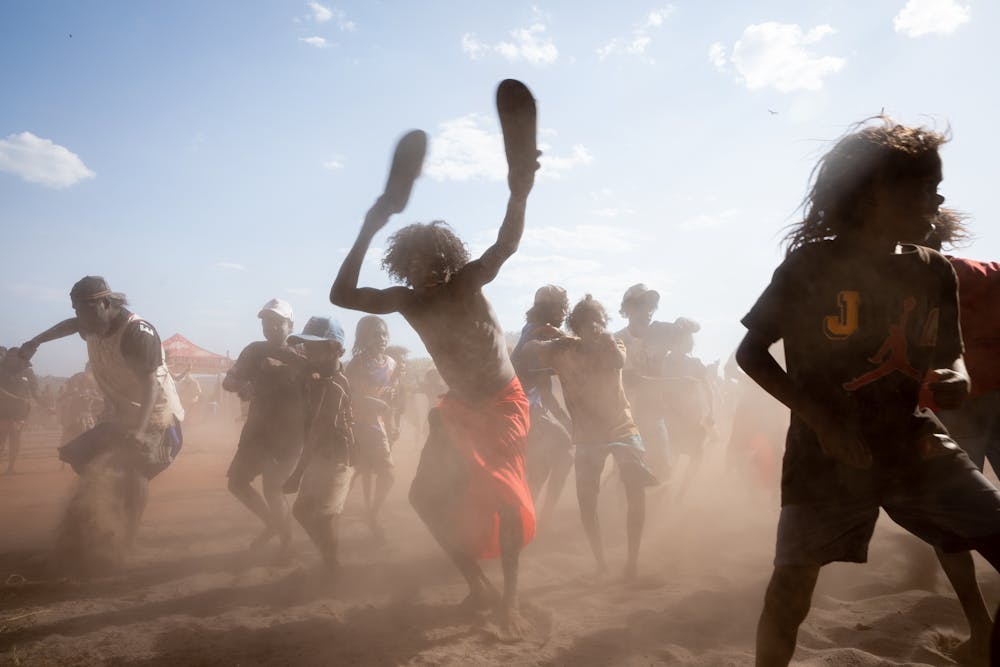
There are some good things in this year’s announcments: $707 million to help create jobs in our communities over the next three years, and a replacement of the much-maligned Community Development Program (CDP), and which includes a $185 million Community Jobs and Business Fund for local and community-owned businesses.
There is also the National Skills Agreement, which includes a dedicated stream of funding for closing the gap to support community-controlled registered training organisations. There is also more funding to expand Indigenous ranger programs for our youth.
These things are good, but what is needed more is a reset to the government’s approach.
Acting Lead Convenor of the Coalition of Peaks, Celeste Liddle, has rightly noted that “implementation of the National Agreement on Closing the Gap has been patchy and governments have been too slow to deliver the commitments and promises they have made.” The Productivity Commission has echoed this view, saying “business-as-usual must be a thing of the past”.
How do we overcome these barriers? For too long government has ignored our people’s views and positions on the issues that affect us. Our self-determination and control of our own agendas has been absent from the discussion. The Voice to Parliament would have been one way for that to start to be mended, but the Liberal/National Coalition decided they weren’t ready for that.
So, what indeed comes next? Governments need to prioritise Indigenous peoples and communities in decision-making. That means meaningful transformation, capacity-building, and genuine co-design, not half-hearted “consultation” on policies for which the government merely wants consent. It likely means the implementation of the UN Declaration on the Rights of Indigenous Peoples (UNDRIP), and all that that provides. These are just starting points, but they will get us somewhere.
Also, next time you run into one of the many MPs and shadow ministers who campaigned against a Voice to Parliament, ask them what their plan is to close the gap and empower Indigenous peoples and communities.
Authors: James Blackwell, Research Fellow (Indigenous Diplomacy), Australian National University