Soft plastic recycling is back after the REDcycle collapse – but only in 12 supermarkets. Will it work this time?
- Written by Anya Phelan, Senior Lecturer in Entrepreneurship & Innovation, Griffith University
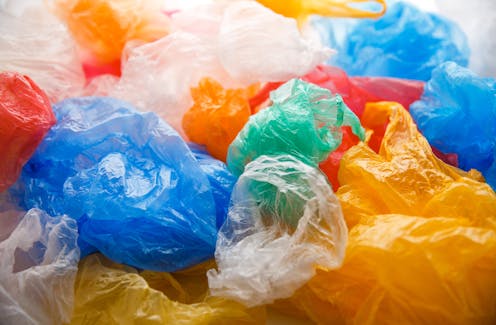
After the memorable collapse of Australia’s largest soft plastic recycling program REDcycle in late 2022, a new scheme is emerging. It’s remarkably similar, albeit on a much smaller scale.
The trial underway in 12 Melbourne supermarkets intends, once again, to provide customers with an in-store option for recycling “scrunchable” food packaging.
It’s estimated Australia uses more than 70 billion pieces of soft plastic a year. Most of it still ends up in landfill or blows into streets and waterways, polluting our rivers and oceans. So 12 stores won’t cut it in the long term.
But starting small is a good idea. REDcycle collapsed under its own weight, stockpiling recyclable material with nowhere to go. The new scheme will feed new, purpose-built waste processing facilities so it has much better prospects.
Read more: REDcycle's collapse is more proof that plastic recycling is a broken system
What do we know about the new scheme?
Australia’s Soft Plastics Taskforce is behind the new trial. The taskforce is a coalition of the three major supermarkets: Woolworths, Coles and Aldi. It was established in the wake of REDcycle’s demise and is chaired by the federal government Department of Climate Change, Energy, the Environment and Water.
The taskforce assumed responsibility for roughly 11,000 tonnes of soft plastic, formerly managed by REDcycle, across 44 locations across Australia.
Addressing the lack of soft plastics recycling infrastructure in Australia is a top priority. This is the main reason REDcycle was unable to process the mountains of soft plastics it had stored around the country.
Much like the original REDcycle scheme, the new small-scale trial in Victoria has identified several potential end markets for used soft plastic. After treatment, it could become an additive for asphalt roads, a replacement for aggregate in concrete, or a material for making shopping trolleys and baskets.
To be a successful and lasting solution, the scheme must be cost-effective and suitably located, with established markets for the recycled products.
Why are soft plastics so difficult to recycle?
Recycling soft plastic packaging is particularly challenging, for several reasons.
Plastic packaging is typically made from the petrochemicals polyethylene or polypropylene, and often contains a mix of materials, including various types of plastics and additives for flexibility and durability. This blend of materials makes it difficult to separate and recycle effectively.
To make matters worse, soft plastics readily absorb residues from food, grease and other substances. This causes contamination, reducing the quality of the recycled material.
There’s also less demand for recycled soft plastics, compared to other plastics. Many manufacturers prefer using brand new or “virgin” plastics or recycled rigid plastics instead, such as recycled polyethylene terephthalate (rPET), leaving limited avenues for recycled soft plastics to find new uses.
Soft plastics can get tangled or stuck in machinery at recycling or waste-processing facilities, causing inefficiencies and disruptions in the process.
Read more: 3 little-known reasons why plastic recycling could actually make things worse
Finding local solutions
We need to make it economically viable to recycle low-value plastics such as soft plastic packaging. Placing recycling facilities closer to communities and transport can save money and reduce emissions. So local, decentralised, small-scale recycling or reprocessing infrastructure is the way to go.
Fit-for-purpose facilities can develop the specialised processing and manufacturing techniques needed to handle soft plastics. This takes care of the contamination problem and creates new options for developing recycled products.
Local recycling initiatives also foster community engagement and awareness. We need to encourage individuals to participate actively in recycling efforts, and foster local businesses focused on resource recovery. To this end, we are currently exploring innovative enterprise-based recycling solutions in remote First Nations communities in Queensland.
The high cost of cheap packaging
Soft plastics are lightweight, flexible and inexpensive to produce. This has made them popular choices for packaging. But this ignores the problems of disposal, including harm to nature and people. There has to be a better way.
Recycling soft plastic packaging does face numerous obstacles. These stem from complex composition, contamination risks, sorting and processing challenges, scarce recycling infrastructure and limited demand for the end product.
Tackling these challenges requires collaborative efforts from industry players, policymakers, consumers and researchers. We need to develop innovative local solutions and reduce consumption of single-use plastic.
Holding producers accountable for the end-of-life management of their products is paramount. In the meantime, local, decentralised recycling infrastructure offers a promising solution to improve the efficiency and sustainability of soft plastic recycling, while empowering communities to contribute to a circular economy.
The trial in Victoria raises hopes of a working solution for post-consumer soft plastic. This time they are starting on a small scale. That should make it easier to manage the volume of material available for recycling and avoid secret stockpiles. Ultimately this approach could see “micro-factories” cropping up across the country, turning what was once waste into viable, useful products.
Read more: We need a global treaty to solve plastic pollution – acid rain and ozone depletion show us why
Authors: Anya Phelan, Senior Lecturer in Entrepreneurship & Innovation, Griffith University