The ozone hole above Antarctica will keep opening up each spring for decades to come – here’s why that still matters
- Written by: Laura Revell, Associate Professor in Environmental Physics, University of Canterbury
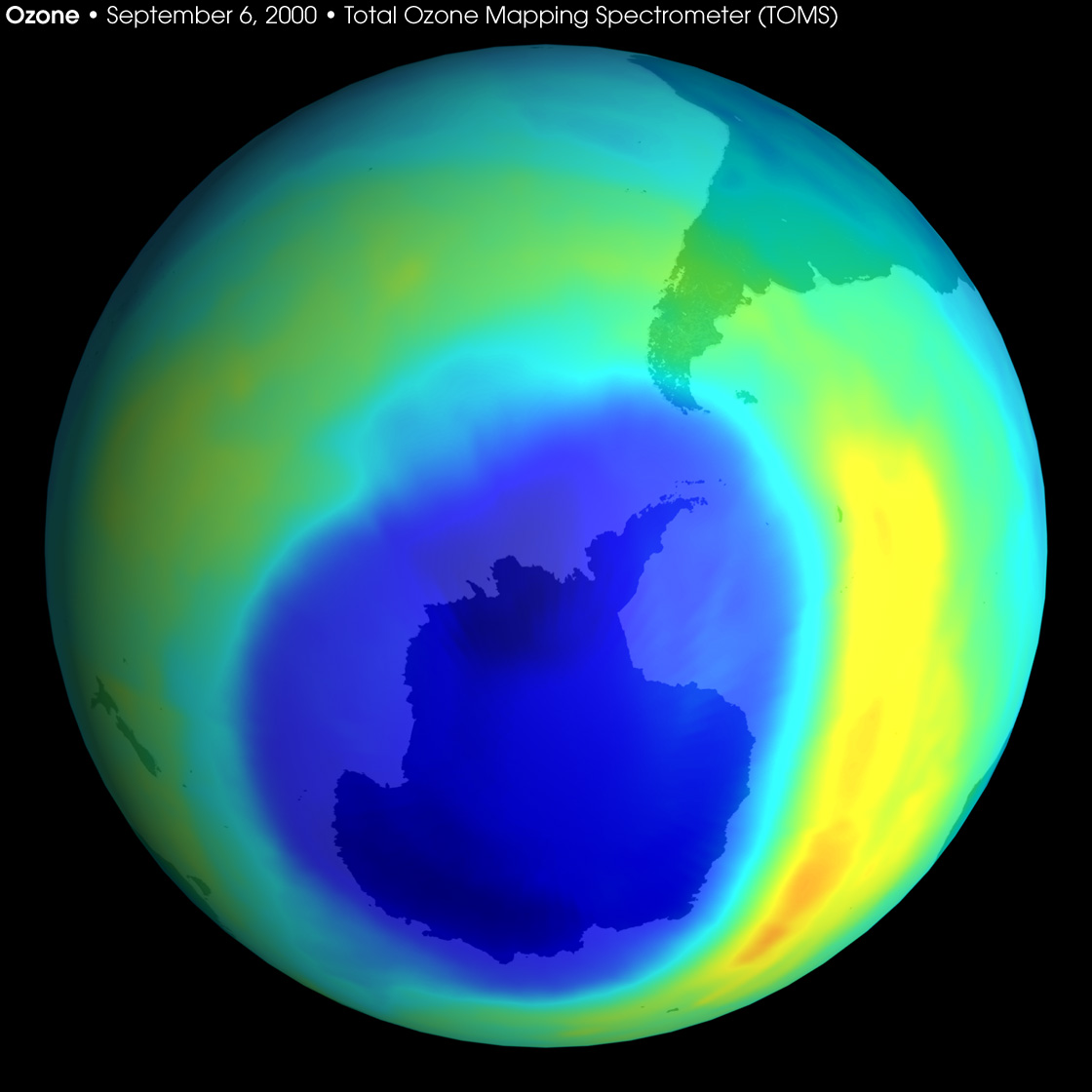
At this time of year, as the sun rises over Antarctica, a “hole” opens up in Earth’s ozone layer.
The ozone layer is a vital planetary boundary that protects all life on Earth from the sun’s damaging ultraviolet radiation. But as our research shows, a series of unusual events in recent years caused ozone holes that lasted longer.
The Montreal Protocol, which came into force just four years after the ozone hole was discovered in 1985, has been enormously successful in preventing many ozone-depleting gases from entering the atmosphere.
But the hole will continue to open each year for at least another four decades because of the long lifetimes of gases emitted last century.
Ozone depletion is also linked with climate change, and there are other emerging issues which could affect ozone recovery. These include more frequent mega-wildfires due to climate change, emissions from rocket launches and more satellite debris burning up in the upper atmosphere.
All this indicates ozone depletion is far from a solved problem.
Why ozone matters
Most atmospheric ozone resides in the stratosphere, at around 10-50km above Earth’s surface, where it absorbs the sun’s ultraviolet-B rays.
In New Zealand and Australia, summertime peak UV levels are higher – sometimes by as much as 30% – than at comparable latitudes in the Northern Hemisphere.
This is due to lower levels of air pollution, slightly lower ozone amounts historically and proximity to the sun, which is closer during Southern Hemisphere summers.
New Zealand and Australia also have the highest melanoma rates in the world. This is partly because of the higher UV levels, but there are other contributing factors, including improved diagnosis due to increased awareness.
If the Montreal Protocol had not been implemented, melanoma rates would be significantly higher today.
How the ozone hole contributes to climate change
Even though most ozone-depleting gases are now banned, it will take decades before they are gone from the stratosphere.
In the meantime, the ozone hole continues to form above Antarctica each spring, causing cascading changes in temperature, winds and rainfall patterns across the Southern Hemisphere.
Ozone depletion causes the prevailing westerly winds at southern mid-latitudes (the “Roaring Forties”) to strengthen and shift toward Antarctica during summertime. This has increased surface melting on Antarctic ice shelves and is changing summertime rainfall and temperature patterns in New Zealand and Australia.
While the ozone hole drives climate change, protection and recovery of the ozone layer has additional benefits for the climate.
Many ozone-depleting gases, such as chlorofluorocarbons (CFCs) and hydrofluorocarbons (HFCs) are also potent greenhouse gases. By phasing out these gases, the Montreal Protocol has helped the world avoid a catastrophic collapse of the global ozone layer, and also limited global warming.
One study estimated the Montreal Protocol delayed the first ice-free summer in the Arctic by up to 15 years.
Ozone depletion and climate change are interlinked issues. While ozone depletion affects Southern Hemisphere climate, global ozone recovery is in turn affected by emissions of dominant greenhouse gases such as carbon dioxide, nitrous oxide and methane.
Technological innovations bring new threats
The discovery of the ozone hole in 1985 was a major surprise. While the alarm bells had been sounded in the 1970’s that CFCs destroy stratospheric ozone, scientists didn’t predict the existence of the large hole above Antarctica.
It was some years after the ozone hole was discovered that scientists began to understand just how ozone depletion works in the cold Antarctic stratosphere.
The Montreal Protocol is arguably the most successful environmental treaty, but the ozone story brings continual surprises. The timing of ozone recovery depends in part on future emissions but there are other contributing factors.
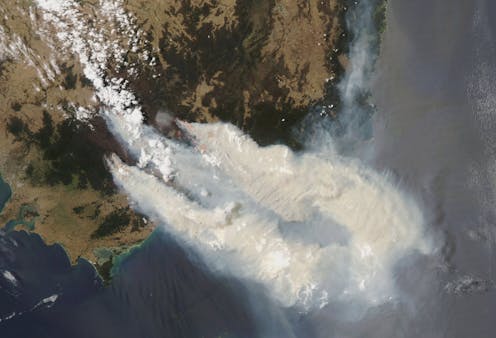
Recent research shows mega-wildfires such as the Australian bushfires of 2019 can contribute to ozone depletion. An increase in civilian rocket launches is expected to put more ozone-depleting gases and aerosols into the stratosphere.
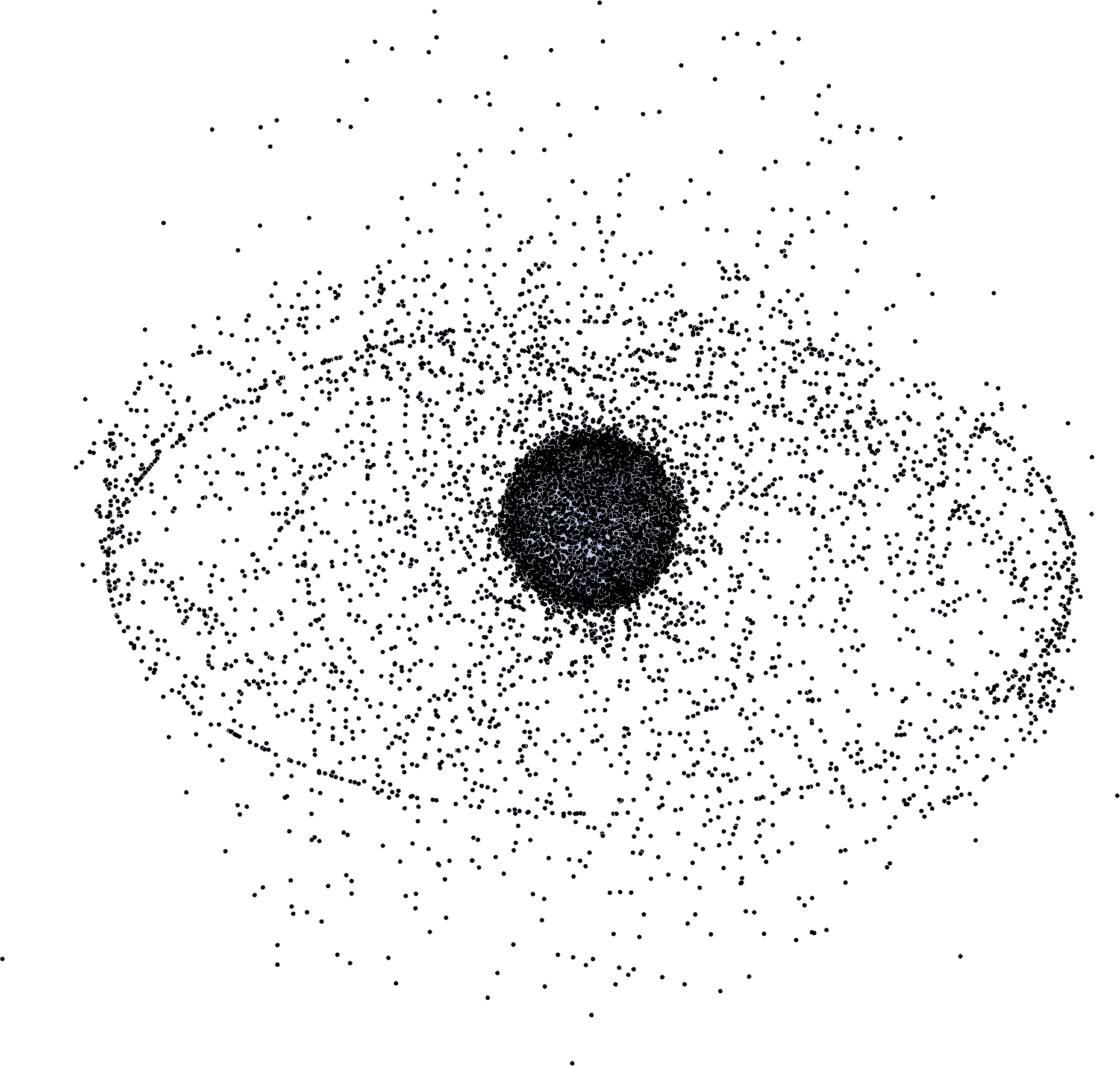
Higher amounts of debris from satellite re-entry may contribute to ozone loss by introducing aerosols into the upper atmosphere.
On top of these issues come controversial “geoengineering” proposals, whereby aerosols are deliberately injected into the stratosphere to reduce the rate of global warming.
This would likely deplete ozone further and any such projects must be given careful thought – along with myriad other considerations before such proposals are implemented.
History tells us technological innovation can bring solutions (such as the replacement of CFCs by non-ozone depleting gases) but also unanticipated consequences. Far from being a “solved” 20th-century problem, ozone remains an important issue, albeit in new and previously unimagined ways.
Authors: Laura Revell, Associate Professor in Environmental Physics, University of Canterbury