

From wound healing to ‘the bends’, hyperbaric oxygen therapy is an important treatment – if done safely
- Written by: Bridget Devaney, Head of Hyperbaric Medicine, Alfred Health, Monash University
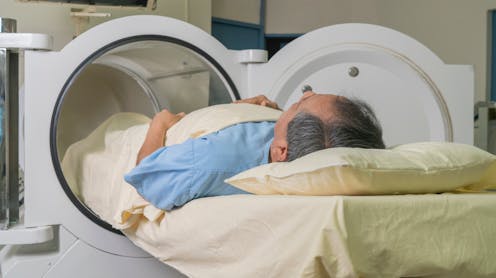
Earlier this year, a five-year-old boy was killed at an “alternative medicine clinic” in the United States, when the hyperbaric chamber he was inside caught fire and exploded. Four people have since been charged over his death.
In Australia, hyperbaric medicine units in hospitals are used for approved medical treatments, such as wound healing, and are strictly regulated. The treatment is generally considered safe.
But cases such as the young boy’s death in the US raise concerns about how hyperbaric oxygen therapy – which involves breathing in pure oxygen in an enclosed, pressurised space – is being used outside of hospitals, including in Australia.
Here’s how hyperbaric oxygen treatment works, and the potential safety risks when it’s not used properly.
What is hyperbaric therapy?
Hyperbaric oxygen treatment involves breathing pure oxygen – usually for about two hours at a time – while inside a pressurised chamber.
In a pressurised environment, more oxygen can enter the lungs with each breath. This allows oxygen particles to reach areas of the body that have low oxygen levels or injury.
Hyperbaric oxygen treatment was first used in the late 1800s to treat decompression sickness in workers building tunnels and anchoring bridges in pressurised spaces, deep underground.
Decompression sickness (or “the bends”) occurs when gases form bubbles in the blood or tissues. This can happen when someone experiences a rapid change in pressure, such as a diver ascending too quickly. Hyperbaric oxygen therapy helps compress and remove these bubbles.
It can also be used to treat:
Where is it done?
There are multiple kinds of hyperbaric chambers. Single-person chambers are tube-like and usually filled with 100% oxygen, which the patient breathes in while lying down. The pressure in the chamber is two to three times higher than normal.
Larger, multi-person chambers are more like a room, pressurised with air. An attendant guides the patient in breathing pure oxygen via a mask or special hood.
Comprehensive hyperbaric units (which house multi-person and/or single-person chambers) can be found in hospitals in each Australian state and territory.
Medicare covers hyperbaric treatment for certain conditions. The facilities must be based in a hospital and meet other specialist staffing and equipment requirements.
What are the risks?
When chambers are used properly and by hyperbaric trained specialist doctors, technicians and nurses, hyperbaric treatment is very safe.
Some minor side effects can occur. The most common is temporary bruising of the ear drum which can occur if a patient’s ears struggle to adjust to pressure. This does not usually cause any long-term injury.
Oxygen poisoning is also possible, but rare. This can impact the central nervous system and cause seizures or loss of consciousness. Treated correctly, these effects can be rapidly reversed.
Reducing fire risk
Hyperbaric chambers for therapeutic use are regulated by the Therapeutic Goods Administration as “medical devices” and must meet a number of safety standards.
This level of regulation dramatically reduces the risk of oxygen fire when fuel ignites and burns more rapidly in an enclosed, pressurised space.
Patients cannot bring in any objects that could spark a fire (such as electronic devices) or wear anything than can act as fuel (such as oils or alcohol in perfume and skincare products).
They must wear pure cotton clothing, as other fabrics (such as wool or polyester) are more likely to generate static electricity and ignite a spark. Inside a single person chamber, they must also wear a static grounding strap, which prevents build-up of static.
In Australia, all hospital-based hyperbaric facilities are required to have fire suppression systems, which can saturate all surfaces of the chamber with water. These can be activated both automatically and manually, from inside or outside the chamber.
Specially trained doctors are present during all hyperbaric treatments. Hospitals also have emergency response teams that attend for emergency medical issues that arise during treatment.
Gaps in regulation
Outside of hospitals, however, these measures are not always enforced and regulation of how hyperbaric therapy is used is unclear. Past oxygen fires have been ignited by objects such as pocket warmers and children’s toys brought into the chamber.
A quick Google search shows hyperbaric oxygen therapy is being offered outside of hospitals in Australia. Hyperbaric therapy located in gyms, “wellness spaces” or cosmetic clinics vary.
Some are “mild”, using pressure less than one-and-a-half times sea level pressure. This use is unproven, meaning it is not supported by scientific evidence. Unproven use also means using hyperbaric therapy for conditions or symptoms without scientific backing.
Other treatments offer therapeutic pressures, similar to what is used in hospital hyperbaric units.
To avoid tragedies like the recent US case, proper regulation of these spaces is needed. A central governing body, regular accreditation and audit processes, and mandatory incident reporting systems would help reduce the inherent risks associated with placing people in an oxygen rich, pressurised environment.
Patients should also be informed whether the dose of hyperbaric therapy, and the condition they are receiving it for, are scientifically backed.
Authors: Bridget Devaney, Head of Hyperbaric Medicine, Alfred Health, Monash University


















