

Will the High Court ruling on public servant’s tweets have a 'powerful chill' on free speech?
- Written by: Anthony Forsyth, Professor of Workplace Law, RMIT University
The Israel Folau termination case has dominated headlines for months now.
Many Australians have been intrigued by the extent to which employers like Rugby Australia are able to control the social media activity of their employees – in Folau’s case, a high-profile player who tweeted his condemnation of homosexuals and others. He argues he has been sacked for expressing his religious beliefs.
Read more: Why the Israel Folau case could set an important precedent for employment law and religious freedom
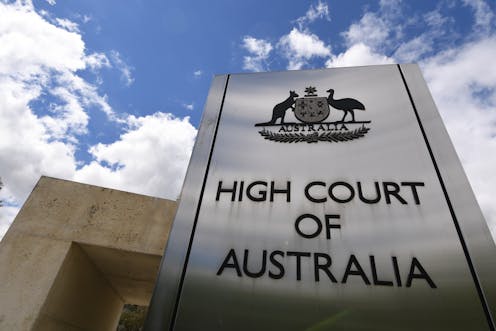
The High Court has today handed down its decision in another case that raises similar issues around free speech and how much an employer can control what an employee says, or tweets, in their personal time.
In Comcare v Banerji, the High Court ruled that the federal government may legitimately restrict the right of public servants to express political views, and that those limitations do not breach the implied freedom of political communication in the Australian Constitution.
The decision confirms the steady march of employer control over workers’ private views and activities, supported by courts and tribunals over many years.
What happened in the Banerji case?
In September 2013, Michaela Banerji’s employment in the then-Department of Immigration and Citizenship was terminated for breach of the Australian Public Service’s code of conduct and social media guidelines.
The code requires employees to uphold APS values “at all times”. The social media guidelines deem it inappropriate for employees to make unofficial public comments that harshly criticise the government, politicians or their policies.
In Banerji’s case, the offending behaviour was her posting of more than 9,000 tweets from the pseudonymous Twitter handle @LaLegale. These tweets criticised the federal government and its immigration policies, the immigration minister, the opposition and the department in which she worked.
Banerji unsuccessfully applied for an injunction to prevent her dismissal. In that case, she argued that the Department of Immigration and Citizenship was in breach of the Fair Work Act by taking action against her for exercising her constitutional guarantee of free political communication.
The Federal Circuit Court rejected that submission, finding that the implied freedom of political communication under the constitution has limits. It does not, for example, give an employee licence to breach his or her employment contract.
Contending her dismissal and the events preceding it caused her to suffer from post-traumatic stress disorder, Banerji next filed a claim under the federal public service workers’ compensation scheme (Comcare).
Read more: Public servants and free speech
When her claim was rejected, she sought a review in the Administrative Appeals Tribunal. The central issue was whether her dismissal was considered a “reasonable administrative action taken in a reasonable manner”, as this could not form the basis for a compensable injury.
Banerji claimed her dismissal should be considered unreasonable since it was carried out in breach of the implied constitutional freedom of political communication.
The AAT found in Banerji’s favour, ruling the APS code of conduct impedes free communication about government or political matters.
The tribunal acknowledged the APS code requires employees to uphold the reputation and values of the APS “at all times” – even outside of work. And it found that those restrictions could be seen as legitimate to ensure the public service remains an apolitical body.
But the tribunal ruled that the department went too far in applying such restrictions to Banerji, given she had tweeted anonymously and therefore could not be identified as a public servant.
In the tribunal’s view,
restrictions in such circumstances bear a discomforting resemblance to George Orwell’s thoughtcrime.
The High Court’s decision
The High Court unanimously decided in favour of Comcare and set aside the decision of the appeals tribunal.
The majority judges on the court agreed that the tribunal had incorrectly approached the matter as a question of whether Banerji’s personal freedom of political communication had been intruded upon. These four judges stated that the constitutional freedom of political communication
is not a personal right of free speech.
Rather, it protects “political communication as a whole”. Thus, the court ruled, the question is not whether the code of conduct unduly infringed on Banerji’s personal right to freedom of expression, but whether “political communication as a whole” was adversely impacted. The court also had to decide whether these restrictions on political discourse were enacted for a legitimate purpose.
In its ruling, the court found the limitations were needed to ensure the provision of independent, impartial advice to government through
an apolitical and professional public service.
In reaching this view, the majority judges rejected Banerji’s argument that applying these limitations to anonymous comments went too far. The court stated that even anonymous comments could damage the integrity and reputation of the public service. It further found that anonymous comments are at risk of ceasing to be anonymous if the person’s identity is somehow revealed.
The other three High Court judges essentially agreed with the analysis of the majority. Two of them added the observation that the restrictions on free speech only apply while a person chooses to remain an APS employee.
What are the implications of the decision?
Justice James Edelman wrote in the decision:
The code that now regulates their behaviour no longer turns public servants into lonely ghosts … But, properly interpreted, it still casts a powerful chill over political communication.
The Community and Public Sector Union also took a dim view of the ruling, saying it will impact some 2 million public service employees across Australia.
People working in Commonwealth agencies should be allowed normal rights as citizens rather than facing Orwellian censorship because of where they work.
With the ruling in the Banerji case, only academics with protections of intellectual freedom (under university enterprise agreements) now have the clear right to publicly express political views that their employer may not care for.
Employees in much of the private sector have their political views restricted by company codes and policies that require them not to damage the reputation of the business. These employees cannot invoke the implied freedom of political communication to support their right to speak out.
Read more: Egging the question: can your employer sack you for what you say or do in your own time?
What remains untested, though, is whether corporate employees can contest dismissal for expressing political views under section 351 of the Fair Work Act, which prohibits termination on the basis of an employee’s political opinion.
And back to the Folau case? The Banerji decision does not have direct implications, as Folau is putting forth a different argument about the right to express religious views under anti-discrimination laws.
But I think the decision in the Banerji case shows the High Court is leaning strongly in favour of employer rights of control over employee speech. It would be odd if the High Court took a different view about Rugby Australia’s right to shut down Folau’s views.
Authors: Anthony Forsyth, Professor of Workplace Law, RMIT University


















