why ancient Romans loved fermented fish sauces like garum
- Written by Tamara Lewit, Honorary Fellow, School of Historical and Philosophical Studies, The University of Melbourne
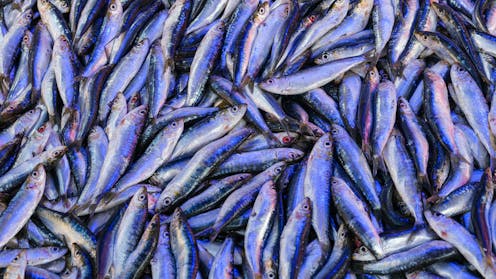
If you slipped back through time to taste a dish from the Roman Empire, you’d likely be sampling some fermented fish sauce.
Surviving Roman recipes add this to anything from barley porridge to a sweet custard made with pine nuts, olive oil, wine, honey and pepper.
Although it is often referred to as garum, the exact meaning of this term is surprisingly uncertain.
A fish sauce by any other name
Fish sauce is called garum, liquamen, or garon (in Greek) in various ancient Roman texts, including labels on containers.
It’s unclear whether these were different products or if the name changed over time.
According to one recent theory, garum may have been an expensive condiment, of short-lived popularity, made with the blood and organs of large fish.
Liquamen was a low-cost cooking sauce popular across the centuries and made by fermenting whole small, cheap fish.
The fish were layered with salt in covered vats or pots, and left in warm sun for two to three months to liquefy and ferment.
The method has been replicated by experimental archaeologists and even instagrammers.
Such umami-flavoured sauce would have transformed the cheap food of ordinary people in the Roman Empire. Most of the population had no access to the expensive spices, meats and sweet raisin wine on the tables of the wealthy.
In an edict listing prices issued by the Emperor Diocletian in 301 CE, second quality fish sauce is half the price of cheap honey.
Containers found in the humble houses and food shops of Pompeii show ordinary people had access to fish sauce.
An even longer history
Its origins go back thousands of years.
As was also the case for wine and olive oil, the roots of this dietary practice lay in earlier and originally eastern Mediterranean foodways.
Clay tablets from around 1700 BCE record a Babylonian recipe for poultry pie pastry flavoured with a fish sauce called siqqu.
Also used in Greek and Phoenician (middle eastern) cooking from at least the 5th century BCE, fermented fish sauce was adopted enthusiastically by the Romans and spread within the cultural melting pot that was the Roman Empire.
Roman conquest brought not only roads, baths and gladiators, but also diet and food customs to millions of peoples of varied ancestries and traditions across three continents.

Thriving industry and trade
In the Roman period, processing factories with huge vats were set up at the sites of the seasonal migrations of mackerel, sardines, anchovies and tuna around the Straits of Gibraltar and on Atlantic and Black Sea coasts.
Cuts of large fish were salted for transport while small fish were fermented for sauce.
The vats at these factories were called cetariae, and the name survives today as the town of Cetara in southern Italy near Pompeii, which still produces a fermented anchovy sauce called colatura di alici.
In a Roman shipwreck recently found off the island of Mallorca, skeletal remains from fish sauce were identified as anchovy (Engraulis encrasicolus).
Recent DNA analysis of fish remains from an ancient production workshop in north-west coastal Spain shows the fish fermented there were sardines (Sardina pilchardus).
The tens of thousands of tiny fish bones found in vessels at a town workshop in Pompeii came from picarels (Spicara smaris), anchovies, and other fish, which were being fermented whole, heads and all, at the time of the volcanic eruption.
Chemical analysis also revealed traces of wine and Mediterranean herbs which may have been mixed with this sauce.
Spanish archaeologists replicated the chemistry by using anchovies from a Cádiz market with typical Roman ingredients of thyme, oregano, coriander, celery, sage, poppy seeds, fennel, mint and rosemary.
In spite of its reputation, the fermented sauce was not unpleasantly smelly, since the salt and processing neutralises odours.
Fish sauce was shipped to the city of Rome, northern Europe, the eastern Mediterranean, and to the armies in Croatia or northern Britian, supplied to soldiers as part of their rations.
A Roman ship wrecked in deep water off the coast of Sicily, explored by maritime archaeologists using remotely operated vehicles, was carrying Tunisian olive oil from the port of Carthage (now Tunis) to Rome.
On board was also a shipment of fish sauce which had travelled more than 2,000km from what is now Portugal.
A useful food
Fermenting fish was a way to make it long-lasting. Salting and fermentation were essential to preserving seasonal products in the ancient world, which lacked any effective means of sealing, freezing or refrigeration.
While there is evidence for malnutrition and dietary deficiencies such as scurvy among the population of the Roman Empire, fish sauce would have provided year-round protein, vitamin B12 and minerals such as iron and calcium (from the fish bones).
It was also used in medicine, especially as a laxative – including for horses.
After the end of the Roman Empire, it continued to be valued by medieval monks who were forbidden to eat red meat.
Roman sauce was almost identical to the fermented fish sauces that have been a staple of Asian cuisines for centuries.
For a hint of ancient Mediterranean flavours, try some with egg custard and honey.
Authors: Tamara Lewit, Honorary Fellow, School of Historical and Philosophical Studies, The University of Melbourne