

Modern Australian
Men's Weekly

.

how what we do on land may shape shark behaviour

  • Written by Shokoofeh Shamsi, Professor in Veterinary Parasitology, Charles Sturt University

Beachgoers in Australia are on high alert following four shark incidents in New South Wales in 48 hours.

On Tuesday morning, a surfer was bitten by a shark at Point Plumer, on the state’s mid-north coast. He was taken to hospital with minor injuries to one of his legs.

This came after a man was bitten by a shark on Monday evening, while surfing at Manly, on Sydney’s northern beaches. He suffered major wounds to his leg and was rushed to Royal North Shore hospital in a critical condition.

Only a few hours earlier, a shark knocked an 11-year-old boy into the water at Dee Why – just north of Manly – and bit a chunk out of his surfboard. And on Sunday afternoon, a 12-year-old boy was bitten by what authorities believe was a bull shark while swimming at a popular beach in Sydney Harbour. He is still in a critical condition in hospital.

It can be tempting to blame these incidents on sharks alone. But there’s emerging evidence the pollutants, pesticides and parasites we send into the ocean from land could shape not just where and when sharks and people cross paths – but also shark behaviour.

Recognising this bigger picture helps shift the focus from blaming sharks to addressing human impacts, supporting smarter policies that protect both public safety and ocean health.
how what we do on land may shape shark behaviour
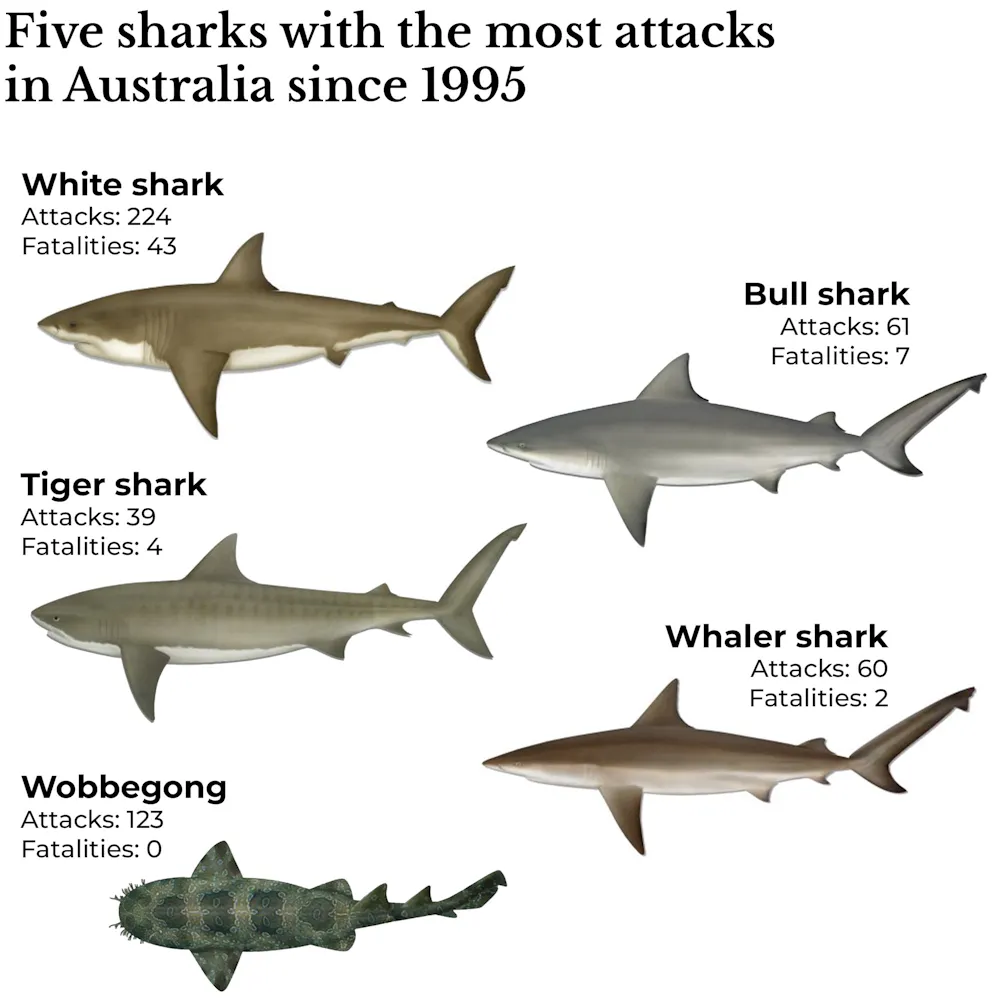
Australian Shark Incident Database, NSW Government SharkSmart A deeper reality When shark attacks occur, the pain is real and profound. People are injured, families are shattered, and lives are changed forever. No discussion about ecology should ever minimise the human cost. Fear and anger in these moments are entirely understandable. Yet public debate often moves quickly from grief to blame, with sharks portrayed as the problem to be removed. This framing offers a sense of control. But it can also obscure a deeper reality: we still know surprisingly little about the many pressures shaping shark health and behaviour. What happens on land doesn’t stay on land. When heavy rain washes into the ocean, it doesn’t just carry pollutants and microorganisms with it. It also changes the water itself. Salinity shifts, visibility drops, oxygen levels change and temperatures can fluctuate. Think about how unsettled you would feel if the air you breathe, the water you drink and the streets you walk suddenly changed overnight. Marine animals experience similar disruption. Heavy rainfall and heightened risk The four recent shark incidents in New South Wales followed an intense rainstorm that flushed runoff from land into the state’s coastal waters, reducing visibility and carrying pollution and waste into the sea. A 2019 study found tiger and white sharks are more likely to attack after heavy rainfall. This is partly because heavy rainfall flushes out more nutrients to sea, which leads to higher fish populations near the shore. In turn, this attracts sharks. Heavy rainfall also creates a very turbid, silty environment. Runoff-driven changes in water quality can disrupt the sensory cues sharks rely on, potentially increasing stress and altering behaviour, while reduced visibility also limits people’s ability to assess risk. Pollutants and parasites On land, scientists have long recognised that environmental pollutants can interfere with how the nervous system works. For example, exposure to certain pesticides is linked to neurological diseases in people, such as Parkinson’s disease, because these chemicals can disrupt nerve cell function, energy production and brain signalling pathways. Emerging research shows similar processes occur in animals. For example, experiments in laboratory rats exposed to a common chemical used in pesticides displayed significant long-term deficits in mood, anxiety, depression and aggressive traits. While these findings don’t automatically translate to wildlife in the ocean, they help explain how chemicals can affect the brain. There’s also growing evidence that pollutants and pharmaceutical contaminants can alter swimming behaviour, aggression, memory and stress responses in freshwater fish such as Nile tilapia and zebrafish. Although we know far less about these effects in marine species, the pattern is clear: chemicals entering aquatic environments can influence animal behaviour. Pollution isn’t the only thing moving from land into the ocean. Microorganisms do too. One of the most striking examples is Toxoplasma gondii, a microscopic parasite best known for infecting humans and domestic animals. On land, it’s shed by cat faeces, and its hardy eggs can survive for months in soil and water. Research shows these parasite stages can be washed into rivers, estuaries and coastal waters, where they’re taken up by fish and other marine animals. Toxoplasma has been detected in species ranging from fish to dolphins and sea otters. What makes this parasite particularly important is its ability to influence behaviour. In studies on land, toxoplasma infection has been shown to reduce fear responses, increase risk-taking and alter how the brain processes threats. Emerging evidence suggests similar effects may occur in marine animals, with potential consequences for predator–prey interactions and ecosystem balance. Toxoplasma has not yet been reported in sharks, largely because sharks are rarely examined for this parasite. This gap reflects limited investigation, rather than clear evidence that sharks are unaffected. This doesn’t mean parasites cause shark incidents. But it does highlight how microorganisms originating on land can enter the ocean and influence animal health and behaviour in subtle ways we are only beginning to understand. Long-term solutions lie upstream One practical step to reduce the risk of shark attacks is clearer public guidance around swimming after major rain or similar events, when water quality and visibility change rapidly. Temporary beach closures and consistent warnings following heavy rainfall are low-cost, evidence-based measures that reduce risk without targeting wildlife. Longer-term solutions lie upstream – in policy and research. Investment in stormwater management, wastewater infrastructure and runoff reduction helps stabilise coastal conditions and improve ocean health. It can also help reduce biological pressures by limiting parasite exposure. There is also a clear need to invest in research in areas that remain poorly studied. Even major research efforts on iconic species such as great white sharks have tended to focus on movement and behaviour, while largely overlooking parasites and disease.

Authors: Shokoofeh Shamsi, Professor in Veterinary Parasitology, Charles Sturt University

Read more https://theconversation.com/4-shark-bites-in-48-hours-how-what-we-do-on-land-may-shape-shark-behaviour-273889

Why Older Melbourne Homes Require Detailed Building & Pest Inspections

Older homes make up a large part of Melbourne’s housing stock. Victorian terraces, Edwardian houses, Californian bungalows, and post-war brick hom...

7 Essential Tips for Choosing Reliable Moving Services in Perth

Moving to a new home or office can be exciting, but it also comes with stress, planning, and plenty of decisions. One of the most important choices yo...

How to Find the Best Real Estate Agent Near You on the Central Coast

Choosing the right real estate agent can make a major difference to your final sale price, days on market, and overall experience. The Central Coast...

Unlock Durability And Beauty With Burnt Timber Cladding Solutions

Imagine a home or commercial space that not only stands the test of time but also tells a story through its very facade. In the world of architectur...

Offroad Caravans: Built for Adventure Beyond the Beaten Track

Australia’s vast and varied landscapes invite travellers to explore far beyond sealed roads and crowded parks. Offroad caravans are purpose-built ...

The Expert's Guide to Understanding Large Bore Steel Pipe Specifications

When it comes to infrastructure, construction, and various industrial applications, the choice of materials is paramount. Among the options availabl...

Preparing for Your First Trip to San Francisco in 2026

San Francisco has long occupied a particular place in the Australian imagination. It is compact yet complex, progressive but historic, and visually st...

Modern Office Painting in Australia - It's the Real Game Changer

Walk into any modern Australian office today and you'll be struck by the fact it's a whole different beast from the ones we grew up with. Gone are t...

How to Choose the Right Suburb for Your Lifestyle

Choosing the right suburb is one of the most important decisions you’ll make when buying or renting a home. Beyond the property itself, the suburb...

Considering Cryolipolysis Fat Freezing? Here’s What You Need to Know

Body confidence can shift over time, and sometimes even good diet and training can still leave a stubborn area of fat that won’t budge. If you’r...

From Local Tradie to Digital Leader: The Strategy Behind Auto Gate Guys Sydney’s Growth

For many small trade businesses, digital marketing still feels like a buzzword, not a necessity. They rely on word-of-mouth referrals, repeat clients...

Electric Automation System: Smarter Control for Modern Electrical Infrastructure

Modern buildings and industrial facilities are increasingly dependent on intelligent control and efficiency. An electric automation system brings t...

The Damp Truth: Why Your Overflowing Gutters Are an Open Invitation for Termites

When it comes to protecting your home, most people think about visible threats — storm damage, cracked tiles, break-ins. But one of the most destruc...

Is Your Inventory a Sitting Duck? 2 Critical Upgrades to Protect Your Business Assets and Your Bottom Line

Imagine this: you finish a long day on the job, lock up your tools, materials, and work vehicle in the garage, and head home. But overnight, someone b...

Electrician in Melbourne: Reliable Electrical Solutions for Homes and Businesses

Finding a dependable electrician Melbourne is essential when safety, efficiency, and long-term performance matter. Electrical systems form the back...

Rims and Tyres for Sale in Sydney: Performance, Safety, and Style Combined

Finding the right rims and tyres for sale Sydney is about far more than appearance. Tyres and rims directly influence how a vehicle handles, brakes...

Why Access to Doctors in Bundoora Is Essential for Ongoing Community Health

Reliable access to healthcare plays a vital role in maintaining physical wellbeing and peace of mind. Having trusted doctors in Bundoora available ...

Pendant Lights: Elevating Interior Spaces With Style and Purpose

Well-chosen pendant lights have the power to transform interiors by combining focused illumination with strong visual impact. More than just a ligh...
















