

With a shortage of aged-care beds, discharging patients stranded in hospital is harder than it sounds
- Written by Hal Swerissen, Emeritus Professor of Public Health, La Trobe University
The Australian government has finalised a A$220 billion hospital funding deal with the states and territories.
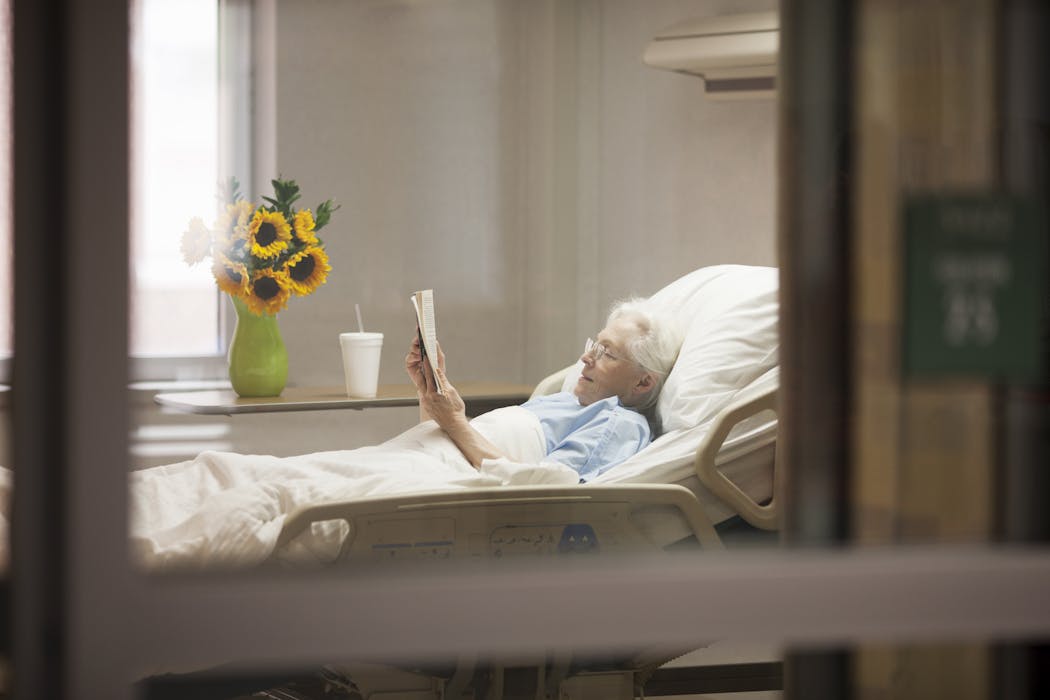
A key part of the negotiation was $2 billion designed to help hospitals move more than 3,000 patients stranded in hospital waiting for discharge to a more appropriate aged-care facility.
However this wasn’t included in the final agreement. Instead, the states will need to dip into their overall funding allocation to pay for any changes.
Being stuck in hospital is not good for older people or their families. Stranded older people are at risk of getting an infection in hospital. Their families are under pressure to find and agree to long-term support.
It’s also bad for hospitals, which end up allocating scarce resources to patients who could be much more efficiently looked after in a residential care facility or with home support.
This results in unhappy patients and families, much higher health-care costs, and longer waits for others who need hospital care.
So how did we get into this situation? And what might happen next?
Why are patients stranded?
Most older people waiting for discharge need a pathway to rehabilitation and ongoing support. That includes transition care to facilities such as rehabilitation centres or units and ongoing support at home, or residential care.
About 60% of older patients discharged from hospital through transition care go home; the remainder need residential care.
Discharge is more likely to be delayed when this transition care is unavailable or poorly planned, and there is a shortage of home and residential care.
The broader problem is the disconnect between the Commonwealth-run aged care and disability programs and the state and territory-run public hospital system.
Rising demand and long waits
Demand for aged care is increasing dramatically as more people reach older age. The proportion of population aged 65 and over has increased from 14.7% to 17.3% over the past decade and it is projected to increase to 19.3% over the next.
At any one time, about one-quarter of those aged 65 and over use either home care or residential care.
But the supply of support at home and residential care has not kept up with growing demand. Despite the introduction of a new aged care system in November last year, unacceptably long waiting times for aged care support at home and residential care persist.
In 2024-25, the average waiting time for a home care package for eligible older people was a staggering 245 days, double what it was a year earlier.
The wait for residential care was little better. On average older people eligible for residential care waited for 162 days.
Shifting costs to patients
The Commonwealth is determined to reign in the cost of its long-term care programs for older people and people with disabilities.
Government has been unwilling to consider levies, taxes and insurance models to underwrite the costs of aged care.
Instead, it has introduced a user-pays model. So at the same time as waiting times have increased, out-of-pocket costs have risen.
Read more: Changes are coming for residential aged care. Here’s what to know
With the new aged care model introduced last November, for residential care:
the maximum cost of buying or renting a place has increased by nearly 40%
the lifetime cap on out-of-pocket costs has increased by about 60%
part-pensioners and self funded retirees must now pay a new “hotelling” contribution
providers are increasingly charging optional extra service fees.
For the new Support at Home program, all new users, including full pensioners, will now pay mandatory out-of-pocket contributions for everyday services such as cleaning, laundry and gardening, and independent living support including showering and toileting.
The cost of these services has also gone up. Most providers are now charging around A$100 per hour for cleaning services.
It’s not as simple as just ‘adding more beds’
The Commonwealth has put its faith in a highly centralised and quasi-market model to manage the system.
Effectively, the Commonwealth funds and regulates aged care from Canberra, and lets the local market of providers and consumers sort out the price of services and where they are provided. The Commonwealth has no direct involvement in their planning or management.
The result is a postcode lottery of fragmented home and residential care providers. These are difficult to navigate and have little connection to hospital services.
About a quarter of the 700 residential care providers report they are breaking even or making a loss. Their return-on-investment isn’t sufficient to encourage enough capital investment to address the shortfall of 10,000 aged care beds per year.
Meanwhile, cost pressures are driving increasingly larger “big box” corporatised institutional facilities to maximise their profits.
Without either a low-cost capital investment fund from the government or higher returns on investment, providers will be unwilling to take the risk of investing in new beds to meet the shortfall.
The Commonwealth is betting that increased charges for residential aged care users will improve the return on investment and encourage new building.
Home-care providers are also feeling squeezed
Similarly, around 25% of support at home providers report breaking even or losing money and putting up their hourly rates to make ends meet.
For the increasing number of self-funded retirees, these costs are high and may discourage them from using home care when they need it.
What might happen next?
It’s unclear the new user-pays model will deliver the necessary uplift in return on investment to increase the supply of aged care services in the near future.
If it doesn’t, some of the hospital agreement funding will need to be used to increase the supply of residential and home care.
Western Australia is already taking action to encourage more investment in residential care. Whether others do so remains to be seen.
The states may also invest funds in their own transition care, hospital-in-the home and rehabilitation facilities to ease pressure on hospitals.
Authors: Hal Swerissen, Emeritus Professor of Public Health, La Trobe University

















