Modern Australian
The Times

A Portrait of Scott Morrison

  • Written by Joshua Black, PhD Candidate, School of History, National Centre of Biography, Australian National University
A Portrait of Scott Morrison

“How can you tell if a politician is lying?” It is a favourite joke of my grandfather’s, and the punchline is all too obvious: “His mouth will be moving.”

The joke gives succinct expression to a cynicism that has shaped Australian politics since the introduction of self-government in the 1850s. The implication, of both the joke and the culture informing it, is that the politician’s lies reflect solely on their kind and reveal nothing about the rest of us.

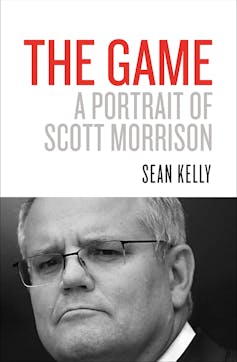
In his newly published profile of Prime Minister Scott Morrison, Sean Kelly flips this way of thinking on its head. The Game offers many powerful and revealing insights into Morrison’s career and the tricky political tactics that have characterised it. But the most important revelations in this book are about the society that created our prime minister, and the structures and cultures that facilitated his path to the Lodge.

Kelly explains, for example, that Morrison worked hard to be a “blank canvas” in the public eye until perhaps 2015, at which point he became the more recognisable suburban “good bloke down the road”. This persona, replete with the “ScoMo” nickname, has characterised his public performances ever since. But the performance only matters because it finds in the Australian community “a willing audience” who, recently at least, like to have what novelist E.M. Forster called “flat characters” (or instantly recognisable “types”) in their newspapers and their parliaments. Formerly a self-described “spin doctor” for both Kevin Rudd and Julia Gillard, Kelly studies Morrison’s public persona not just with the eye of a Canberra insider, but also with the lens of a cultural critic. In this “land of extremes”, he says, Australians are always splitting ourselves in two, then ignoring the half that discomfits us. For Kelly, this mentality explains why the so-called “quiet Australians” have indulged “the game” that Morrison plays, while the others have rejected him entirely (“I am completely different”). Given Kelly’s Labor connections, cynics might expect a partisan hit-job on the prime minister. This portrait is no hit-job, but it is, unsurprisingly, unflattering. Read more: Grattan on Friday: If the government is re-elected it may be in spite of Scott Morrison rather than because of him Kelly gives Morrison the benefit of the doubt with respect to the early stages of the pandemic, “a situation unlike anything those involved had dealt with before”. There is recognition, too, of the burdens that Jenny Morrison and her daughters have borne in service of public life. But the portrait of Morrison himself is a study of duplicity and hollowness. There are criticisms of Morrison’s more tone-deaf and morally dubious performances, none more so than the forced handshakes with reluctant bushfire survivors and firefighters during that black summer of 2019-20. But the most important conclusion about Morrison in this book relates to the way he thinks. Kelly suggests Morrison’s mind does not think in narratives, but only in images or snapshots (think of the punchline of the tourism ad he commissioned, “Where the bloody hell are ya?”). This, Kelly reasons, is why he can say one thing with such apparent conviction today, and the opposite with equal fervour tomorrow. For a public figure, this inconsistency would be impossible “if it were not a central aspect of their experience of the world”. The psychological analysis here is sweeping, its inferences devastating. There are many praiseworthy qualities in Kelly’s study. Serious issues, from asylum-seeker policy to the COVID-19 pandemic and vaccine roll-out, are given ample coverage. But this is no traditional biography, and these debates are not its central concern. The main subject of this book is the performance of politics itself, and the narratives that mediate the public’s relationship with its representatives. The idea of “performance” seems resurgent in political theory and history, and its capacity for revelation is rich. In some ways, Kelly’s book builds on an older tradition of political profiles that took performance as their main subject. Graham Little’s Strong Leadership (1988) and Judith Brett’s Robert Menzies’ Forgotten People (1992) stand tall in that tradition, using psychosocial theory to unpack the hearts and minds of Australian liberals from Menzies to Malcolm Fraser. Don Watson’s Recollections of a Bleeding Heart (2002) is equally important, part-memoir, part-meditation and part-psychological study of Paul Keating as prime minister, written from the intimate perspective of a prime ministerial speechwriter. In each case, the biographer’s goal was to explain not just who the prime minister was, but how their way of thinking engaged with the world around them. Kelly does not try to discover the “real” Scott Morrison, a task rendered almost impossible by the vacuousness of the prime minister’s performances and the role of the media in presenting him to us. Instead, he evokes the divided community to whom Morrison performs, and the social and cultural processes that allow those performances to take place and, at least sometimes, hit their mark. Kelly’s method is to home in on public speech, its sounds and cadences, as well as the often elusive messages and impressions that Morrison seeks to convey with his words. The chief limitation of The Game is that, relying largely on public material, it cannot take us into the institutions that empower Morrison, other than the media. Read more: 'I don't think, I know' – what makes Macron's comments about Morrison so extraordinary and so worrying We don’t learn much about the Prime Minister’s Office, other than that it failed to respond to Brittany Higgins’s alleged rape in Parliament House in an appropriate fashion. Parliament itself is a stage here, but scarcely recognisable as an institution that makes laws. The public service is invisible. National Cabinet is, according to Kelly, little more than an “aesthetic change” from the Council of Australian Governments (COAG) that preceded it. It says something about the condition of contemporary politics that it is hard to say whether these absences are a flaw in the author’s approach, or inevitable given the style of leadership it so astutely anatomises. In the end, The Game invites us to look toward the next election. That poll will, Kelly implies, reveal something more of ourselves, or at least those “quiet” Australians who are supposed to have voted for Morrison in 2019. Like most of us, Kelly is unsure who will have the last laugh.

Authors: Joshua Black, PhD Candidate, School of History, National Centre of Biography, Australian National University

Read more https://theconversation.com/book-review-sean-kellys-the-game-a-portrait-of-scott-morrison-171489

Celebration of Life vs Traditional Funeral: What's the Difference?

When saying goodbye to someone you love, there is no single way to honour their life. Every family has different traditions, beliefs, and preference...

Building Approval for Roofing Projects: What Homeowners Need to Know

Roofing projects are an important part of maintaining and protecting your home. Whether you're repairing storm damage, replacing an ageing roof, or ...

Chatswood Tutoring And Its Role In Academic Achievement

Academic success often requires more than classroom attendance alone. Students face increasing expectations as they progress through school, particu...

Why Laser Hair Removal Treatments Continue Growing In Popularity

Managing unwanted hair can become time-consuming and frustrating for many people, especially when shaving, waxing, and other temporary methods requi...

Choosing the Right Devices for a Flexible Workplace

For IT leaders managing large fleets, the device layer is where workforce productivity and security policy meet. The shift towards flexible and hybrid...

How Business Advisory Services Help Companies Achieve Sustainable Growth

Every business owner aims to build a profitable and sustainable organisation. While dedication, innovation, and hard work are important, achieving l...

Why Body Contouring Has Become A Popular Cosmetic Treatment

Many people maintain healthy lifestyles through regular exercise and balanced eating habits but still struggle with stubborn areas of fat that are d...

How to Choose the Right POS Hardware for Your Business in Australia

A lot of Australian business owners spend weeks researching POS software but buy hardware almost as an afterthought. That's a mistake. The wrong har...

Why Material Handling Hose Is Critical for Industrial Efficiency

A high-performance material handling hose is an essential component in industries that transport abrasive, dry, or bulk materials on a daily basis...

How to Choose the Right Lawyer in Melbourne for Your Situation

Choosing legal support can feel difficult, especially when the stakes are personal or business-related. The right lawyer in Melbourne should underst...

Hoteliers Look to Clever Value Adds to Increase Revenue

The Australian hospitality industry is still in recovery mode after a notoriously rough patch in recent years. While there has been a post-COVID tra...

Moving to Queensland? Here’s How to Prep Your Car for the Big Move North

There’s no sign of the northern migration slowing down, with thousands of southerners fleeing from chaotic lifestyles and cooler climates for a brig...

Diesel Shortage to Impact Trades and Contractors

Strait of Hormuz blockage affecting all major parts of trades and construction Trades and construction across residential, commercial and industria...

Why Holiday Home Owners Turn to Rental Management Agents

The Allure — and the Reality — of Renting Out Your Property Owning a holiday home is a dream for many Australians. Whether it's a beachside sha...

Why Finding Reliable Doctors In Bundoora Is Important For Long-Term Health

Access to quality healthcare plays an important role in maintaining overall wellbeing and managing health concerns early. Trusted Doctors in Bundoor...

Understanding the Different Types of Car Services: Minor vs Major

When it comes to car maintenance, one of the most important things every vehicle owner should understand is the difference between a minor and a maj...

How Superannuation and TPD Insurance Work Together

Superannuation is an essential part of financial planning in Australia. It is designed to provide individuals with income during retirement, helping...

Tiny Towns funding granted for Mt Hotham and Mt Buller upgrades

Alpine Resorts Victoria (ARV) has welcomed funding support from the Victorian Government’s  Tiny Towns Fund, with both Mt Hotham and Mt Buller se...