

Postnatal psychosis is rare, but symptoms can be brushed aside as 'normal' for a new mum
- Written by: Diana Jefferies, Senior lecturer, Western Sydney University
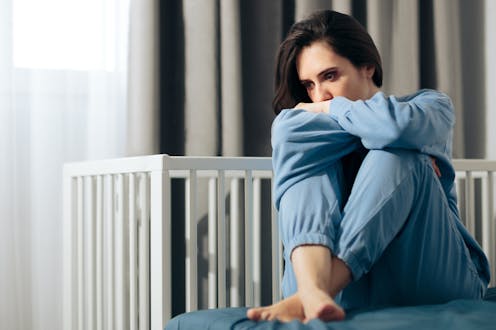
The period after birth of a child is supposed to be a time of great happiness for women. However, a significant number of new mothers will experience a mental illness at this time.
One is postnatal psychosis (also known as postpartum or puerperal psychosis). It’s not related to postnatal depression.
Postnatal psychosis affects one to two in every 1,000 new mothers, or about 600 women each year in Australia.
But our interviews with women who have been diagnosed with this rare but serious condition show their symptoms were often dismissed as a normal part of adjusting to motherhood.
What is postnatal psychosis?
Postnatal psychosis affects women across all cultures and geographic areas.
The condition can put a woman at risk of self-harm or suicide and, on rare occasions, of harming others including her new baby or other children.
We don’t know what causes it. But contributing factors may include sleep deprivation, and rapid hormone changes associated with pregnancy and childbirth.
The risk of postnatal psychosis increases if a woman has a history of bipolar disorder or has had postnatal psychosis before.
One woman tells her story.What are the symptoms?
Symptoms can begin in the first few days after giving birth but may not appear until up to 12 weeks afterwards.
Some women have manic symptoms
manic symptoms include feeling they do not need to sleep, and are powerful and strong
women may have unusual experiences, such as seeing or hearing things others cannot. They may believe things that are not true
they can also make unrealistic and impulsive plans, can be disorganised or forgetful, and talk very quickly
their moods may change rapidly or they may seem excessively happy.
Others have depressive symptoms
depressive symptoms include a loss of energy and an inability to sleep or eat
women may have thoughts or auditory hallucinations that they are a bad mother and they may say they wish to die. Hallucinations or delusions (false beliefs) point to postnatal psychosis rather than to postnatal depression
women may find it difficult to complete activities, such as caring for themselves or their baby, or attending to other tasks in the home
they may believe they are helpless, hopeless and worthless, especially as a mother
they can become isolated and no longer enjoy activities.
Women say it’s traumatic
Women say postnatal psychosis is traumatic, especially if they do not get help when they first report symptoms. But it can be challenging to diagnose because of the stigma surrounding mental illness around the time of giving birth.
Women say they are reluctant to disclose unusual symptoms as they feel ashamed they are finding motherhood difficult and worry they may lose custody of their baby.
When we interviewed ten women, who had experienced an episode of postnatal psychosis in the past ten years, we discovered another barrier to diagnosis.
Women said they knew they had unusual symptoms, such as not being able to sleep or changes in the way they thought or behaved, but they found it difficult to get help. Often, they were told these symptoms were a normal part of adjusting to motherhood.
Their postnatal psychosis was not identified until their only option was admission to an acute mental health unit and separation from their baby.
So we need more education about the condition for health-care workers. By identifying the condition earlier, this gives women more treatment options.
There are treatments
Once diagnosed, the condition can be treated with antipsychotic and mood stabilising medication, prescribed by a psychiatrist or other treating doctor.
This is very effective but medication is often not started until the symptoms have become very severe and the woman requires hospitalisation in an acute mental health unit, without her baby. This separation can compromise the developing bond between them.
So early diagnosis can potentially reduce the time a woman may spend in an acute mental health unit.
Read more: Postpartum psychosis: as we work to find causes, mothers still aren't getting the support they need
Admission to a mother-baby unit
Best practice is to admit women and their babies to a mother-baby unit, which is usually linked to a hospital. This allows women to continue to care for their babies with the support of child and family health-care professionals.
However, publicly funded units are only available in Victoria, South Australia, Western Australia and Queensland. In New South Wales, two public mother-baby units are being built. In NSW, the only existing one is a private facility, which many families cannot afford.
Read more: Historical hospital records can show us what not to do in helping psychosis patients
Helping others
The women we interviewed said they developed support networks with each other. One woman told us:
You feel like, okay, that was such a hard experience, is there a way that we could make that a little less hard for the women who are going to go through it next time?
Women wanted to tell their stories so others would better understand postnatal psychosis and could find it easier to get help.
If this article has raised issues for you, or if you’re concerned about someone you know, contact the following organisations for more information or support: Perinatal Anxiety & Depression Australia (PANDA), 1300 726 306; Centre of Perinatal Excellence; Beyondblue, 1300 22 4636; Lifeline, 13 11 14. You can also contact your GP or go to your nearest hospital emergency department.
Authors: Diana Jefferies, Senior lecturer, Western Sydney University


















