

Can we resurrect the thylacine? Maybe, but it won't help the global extinction crisis
- Written by Corey J. A. Bradshaw, Matthew Flinders Professor of Global Ecology and Models Theme Leader for the ARC Centre of Excellence for Australian Biodiversity and Heritage, Flinders University
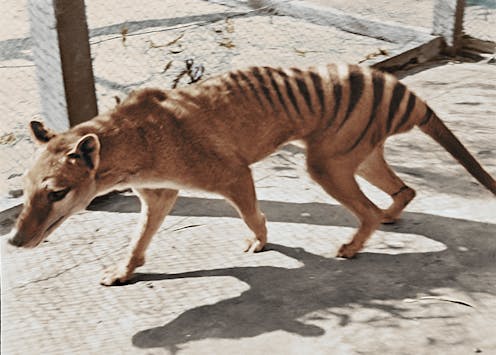
Last week, researchers at the University of Melbourne announced that thylacines or Tasmanian tigers, the Australian marsupial predators extinct since the 1930s, could one day be ushered back to life.
The main reason for the optimism was the receipt of a A$5 million philanthropic donation to the research team behind the endeavour.
Advances in mapping the genome of the thylacine and its living relative the numbat have made the prospect of re-animating the species seem real. As an ecologist, I would personally relish the opportunity to see a living specimen.
The announcement led to some overhyped headlines about the imminent resurrection of the species. But the idea of “de-extinction” faces a variety of technical, ethical and ecological challenges. Critics (like myself) argue it diverts attention and resources from the urgent and achievable task of preventing still-living species from becoming extinct.
The rebirth of the bucardo
The idea of de-extinction goes back at least to the the creation of the San Diego Frozen Zoo in the early 1970s. This project aimed to freeze blood, DNA, tissue, cells, eggs and sperm from exotic and endangered species in the hope of one day recreating them.
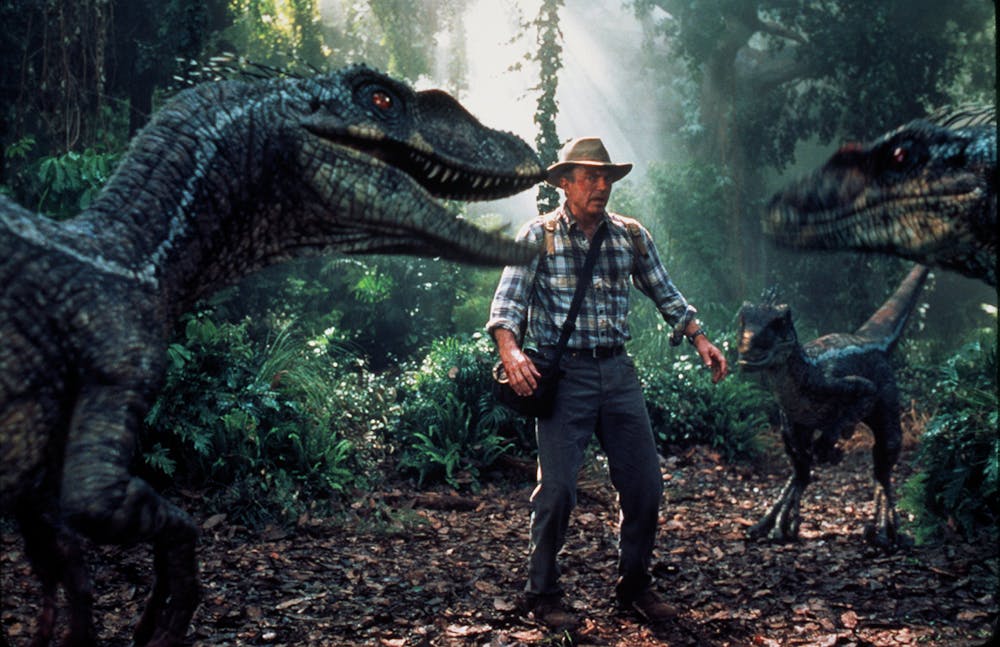
The notion gained broad public attention with the first of the Jurassic Park films in 1993. The famous cloning of Dolly the sheep reported in 1996 created a sense that the necessary know-how wasn’t too far off.
The next technological leap came in 2008, with the cloning of a dead mouse that had been frozen at –20℃ for 16 years. If frozen individuals could be cloned, re-animation of a whole species seemed possible.
After this achievement, de-extinction began to look like a potential way to tackle the modern global extinction crisis.
Read more: Worried about Earth's future? Well, the outlook is worse than even scientists can grasp
Another notable advance came in 2009, when a subspecies of Pyrenean ibex known as the bucardo (Capra pyrenaica pyrenaica) which had been extinct since 2000 was cloned using frozen tissue.
The newborn bucardo died only a few minutes after birth. But it could no longer be argued that de-extinction was limited to the imagination.
Leaving no stone unturned
There are still some technical reasons to think genuine de-extinction might never be possible for many species. But even if these are overcome, the debate over pros and cons will continue.
Proponents argue that with the accelerating loss of species today, we must exploit all options. In isolation, de-extinction seems like a sensible tool to add to our anti-extinction kit.
But it’s far from that simple. Opponents have a long list of reasons why de-extinction won’t help to save biodiversity.
An expensive project
One of the main arguments against de-extinction is the huge expense required for research and technology. The A$5 million donated to the University of Melbourne is only a drop in the bucket.
Ecologists and conservation biologists argue the money would be better spent on initiatives to prevent extinction in the first place. These include purchasing land to conserve entire ecosystems, removing invasive species, restoring damaged habitats, and programs to breed and re-introduce threatened species.
On the other hand, if someone wants to spend the money on the tech, why not let it happen? After all, people waste a lot more on arguably sillier ventures.
However, modelling suggests spending limited resources on de-extinction could lead to net biodiversity loss.
Prevention is better than cure
Another common argument is that prevention is better than cure; we should put all our efforts into avoiding extinction in the first place.
If we believe we can somehow “fix extinction later”, we risk becoming ambivalent. Planning for conservation after the fact could be a dangerous road to apathy and higher net extinction rates.
‘Playing God’
Some have argued that the mere concept of de-extinction tests the limits of our ethical notions.
“Playing God” with the existence of whole species is inherently contentious. Research and implementation depend on value judgements, with those in power realising their values above those of others.
Will the voices of Indigenous peoples be heard when deciding on what species to resurrect? Will the dispossessed and poor also have a say?
There are also serious questions of animal welfare both along the pathway to de-extinction, as well as what happens to the organisms once created (including in captivity and after re-introduction to the wild).
A question of numbers
Perhaps the most important practical argument against de-extinction, but also the most overlooked, is that creating one or two animals won’t be nearly enough to bring back a species.
To have any real chance of surviving in the wild, introduced populations need to number in the hundreds, if not thousands. Could we make enough individuals to do this?
We would also need to increase the genetic diversity of the individuals via gene editing, as has been done in a limited way for a few species of crop plants.
But even so, we know most re-introductions of threatened species fail because of insufficient numbers.
Living space
Let’s say we ignore the technological challenges, the costs, the ethics, the lack of genetic diversity, and so on. Assume we can make new thylacines, mammoths, diprotodons, or sabre-tooth cats. Great. Now where do we put them?
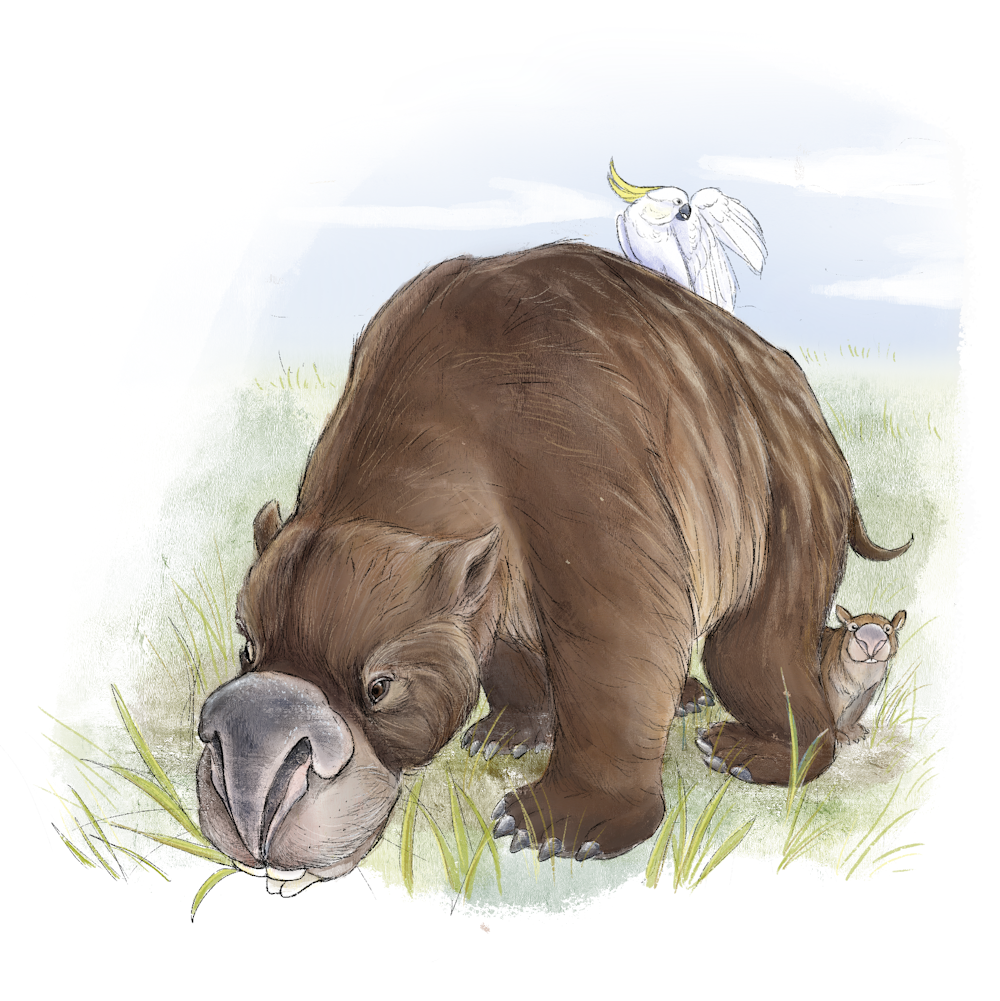 Diprotodon optimum. The rhino-sized ‘wombat’ from Australia that died out over 40,000 years ago. Art by Eleanor (Nellie) Pease, University of Queensland.
Centre of Excellence for Australian Biodiversity and Heritage
Diprotodon optimum. The rhino-sized ‘wombat’ from Australia that died out over 40,000 years ago. Art by Eleanor (Nellie) Pease, University of Queensland.
Centre of Excellence for Australian Biodiversity and Heritage
Humans have destroyed at least half Earth’s vegetation since the agricultural revolution. We have altered almost two-thirds of Earth’s land surface to some degree.
As a result, about one million plant and animal species are threatened with extinction, and the total number of vertebrates in the wild has fallen by two-thirds since the 1970s.
Available living space is in short supply, especially for big species that require a lot of intact territory to survive.
Not to mention human-wildlife conflicts.
What happens if a major predator (such as the thylacine) is put back? Will pastoralists welcome them with open arms, or shoot them to extinction as they did last time?
From lions to bears, tigers to jaguars, and dingoes, predators the world over are still heavily persecuted because they compete with human enterprise.
Read more: Will we hunt dingoes to the brink like the Tasmanian tiger?
The world has changed
If we did return extinct species to the places where they used to live, there is no guarantee they would survive there in modern conditions. Climate change and other processes mean that many past environmental states no longer exist.
Just because a mammoth lived in Siberia 20,000 years ago doesn’t mean it could necessarily do so today.
Diseases and invasions
There are already debates under way about moving threatened species to new habitats to increase their chances of survival. Opponents of this “assisted migration” point out the risk of spreading disease or parasites, or that the moved species will harm other species in their new home.
Now imagine you want to introduce a species that has long been extinct to an area. Would it spread disease or knock off other species?
On the flip side, most species rely on highly specialised microbiomes for survival. Recently resurrected species might be missing these organisms or succumb to the ones living in the area where they are released.
The debate isn’t going away
As technology continues to advance, we will likely see many leaps toward the holy grail of resurrecting extinct species. Chances are it will be a recently extinct species rather than something like a diprotodon, or dare I say, a dinosaur.
But even so, de-extinction is unlikely to offer any real value to the overall conservation of biodiversity.
Should we therefore continue to pursue de-extinction? The debate isn’t going to disappear anytime soon. As long as there are punters willing to fund the technological research, the pursuit will continue.
But even the most amazing technological advances are unlikely to help the catastrophic worldwide loss of biodiversity.
Authors: Corey J. A. Bradshaw, Matthew Flinders Professor of Global Ecology and Models Theme Leader for the ARC Centre of Excellence for Australian Biodiversity and Heritage, Flinders University

















