

When driving near a cycle lane, do you speed up or slow down? Where you're from may influence your answer
- Written by: Miguel Loyola, PhD Candidate on the Implementation of Sustainable Policies, ITLS, University of Sydney
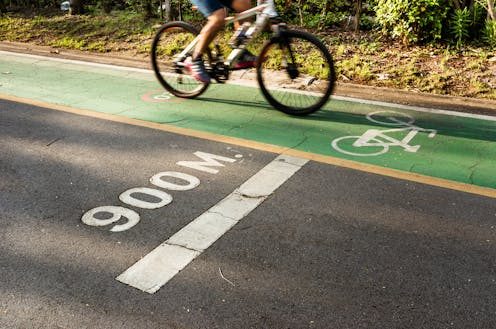
There are clear economic, environmental, safety and health benefits to getting people cycling more, but research shows would-be cyclists are reluctant to start without good cycle paths.
The problem for planners and policymakers is many Australians oppose cycle lanes, believing they’ll only force drivers to drive more slowly and extend travel times.
But our new study, published in the journal Accident Analysis and Prevention, suggests not everyone around the world sees cycle lanes this way.
We found people in the United Kingdom and Australia typically misunderstand the impact cycle lanes have on speed limits – wrongly believing the addition of a cycle lane means cars would inevitably need to go more slowly.
To be clear, nobody is suggesting you should hit the accelerator and drive aggressively fast near cyclists. But if there is a safe cycle path that affords good distance between cars and bikes, there’s no reason the addition of a cycle path should necessarily slow down traffic.
Misunderstanding around this issue may be fuelling avoidable opposition to cycling infrastructure.
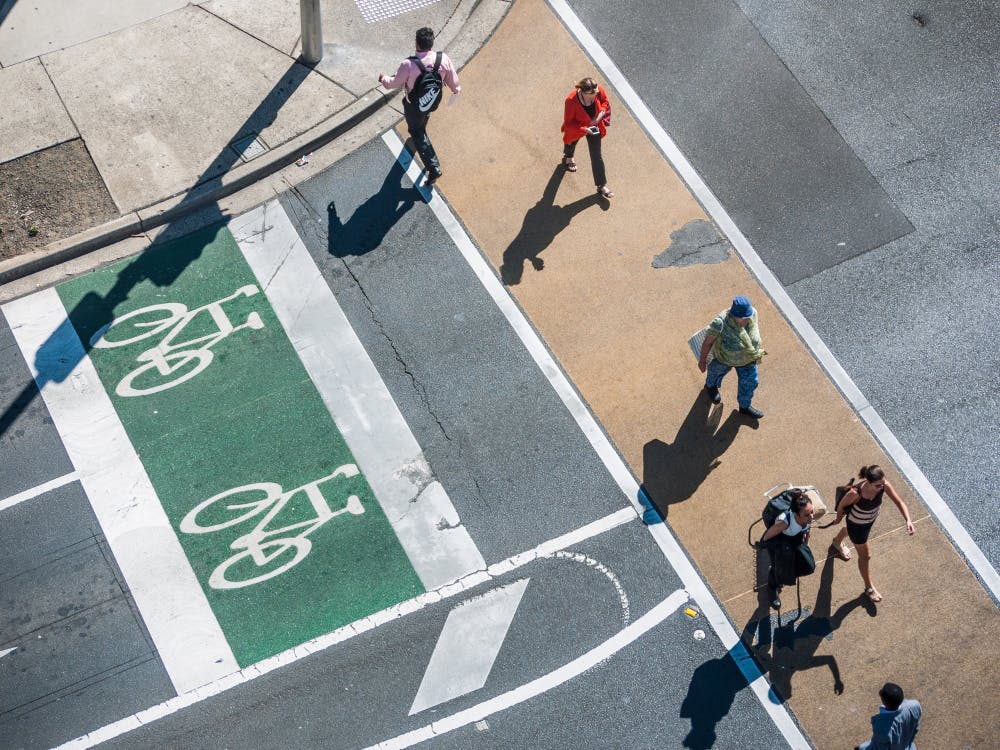
Read more: 3 in 4 people want to ride a bike but are put off by lack of safe lanes
Speed limits: a matter of perception
Our study involved 1,591 participants in the Netherlands, the UK and Australia. These three countries have similar speed limits in urban areas (50km/h), but the Netherlands has lower speed limits of 30km/h in residential areas.
First, we showed the study participants 15 pictures of streets without cycle lanes and asked them to estimate what the speed limit would be in these streets.
Interestingly, participants from the Netherlands always estimated much lower speeds for these pictures than their UK or Australian counterparts did.
This is important because previous research has shown that the higher speed limits are perceived, the faster drivers intend to drive. And higher speeds are the main contributor to road accidents (even more than drugs and fatigue).
Previous research has also shown 30km/h speed limits on local residential streets could reduce the Australian road death toll by 13%.
So, for our study, it was significant the Dutch participants always estimated the speed limit would be lower than the UK and Australian respondents did. It suggests Dutch drivers already view roads in a way that is safer for other road users (including cyclists).
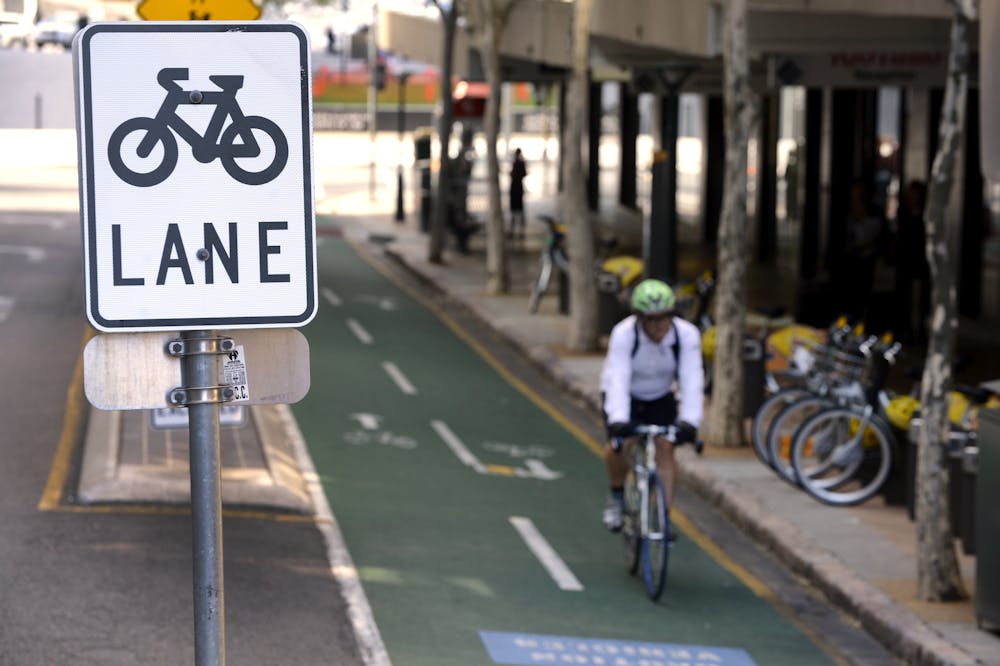 Our study involved 1,591 participants in the Netherlands, the UK and Australia.
Dan Peled/AAP
Our study involved 1,591 participants in the Netherlands, the UK and Australia.
Dan Peled/AAP
What about when cycle lanes are added into the picture?
We then showed the participants pictures of the very same streets but after cycle lanes had been built on them (but showed them in a way that meant our participants wouldn’t realise these were the same streets).
In other words, we first showed them the streets without the cycle lanes and then the same street with cycle lanes (some of the cycle lanes were separated lanes, featuring a physical barrier dividing cyclists from cars; others were painted-on bike lanes with no physical barrier).
As we showed these new pictures, we asked the participants again to estimate the speed limit in these streets.
Study participants from Australia and the UK tended to believe cycle lanes would necessitate lower speed limits for drivers. In other words; they saw cycle lanes are a symbol of a slow commute, which would presumably therefore drive down support from drivers.
On the other hand, respondents in the Netherlands (where cycling is more common) perceived cycle lanes would not necessitate lower speed limits for drivers.
In fact, these participants tended to think cycle lanes might even suggest traffic could go faster because the cyclists are in a separate lane (and not mixed in with car traffic).
In short, our research found cycle lanes are usually misinterpreted as meaning “drivers, slow down!” in places where they are not common.
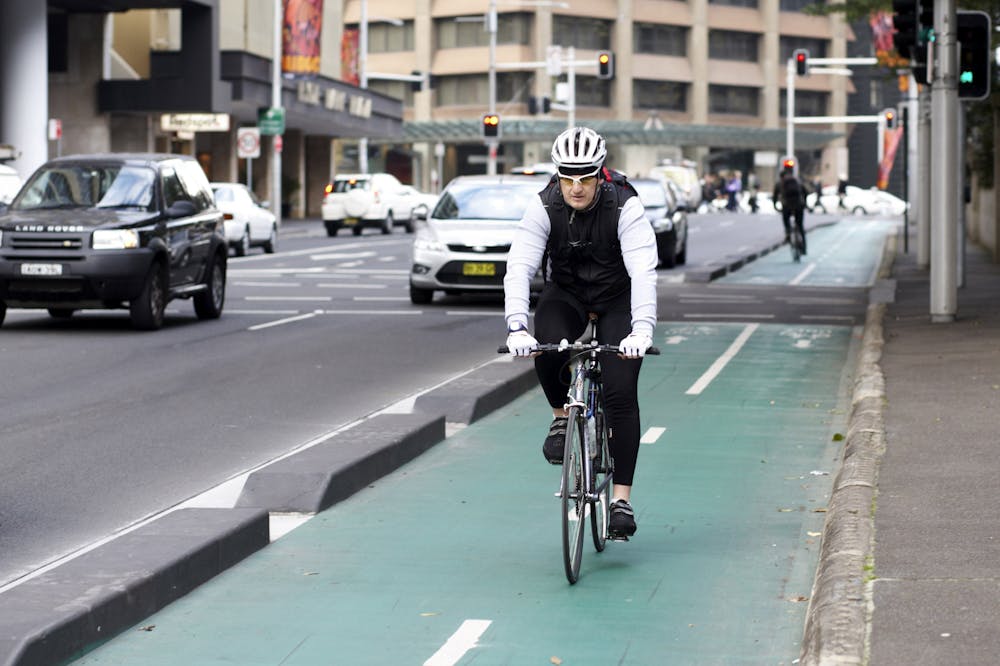 Our study shows that people’s support of cycle lanes is influenced by familiarity with them.
Christopher Samuel/AAP
Our study shows that people’s support of cycle lanes is influenced by familiarity with them.
Christopher Samuel/AAP
Where to from here?
Lower speed limits and cycle lanes are contested issues. Opposition usually comes from drivers who believe lower speed limits will significantly increase their journey times.
But this isn’t always the case. One 2017 study found “the generic impact of introducing 30km/h in urban residential streets is almost negligible in terms of travel time, ie. 48 seconds for a 27-minute trip, or less than 3%”.
In short, lower speed limits and cycle lanes will not necessarily make your driving time longer. Our study shows that people’s support of cycle lanes is influenced by familiarity with cycle lanes and perceptions of how driver speed limits will be affected by cycling infrastructure.
Australia can learn from other cities. Support for the implementation of lower speed limits and cycle lanes will make travelling safer, faster and more sustainable.
Read more: Cycle lanes blamed for urban congestion – here's the reality
Authors: Miguel Loyola, PhD Candidate on the Implementation of Sustainable Policies, ITLS, University of Sydney


















