

It's natural to want to feed wildlife after disasters. But it may not help
- Written by: Samantha Finnerty, Postdoctoral Research Associate - Wildlife Ecology, University of Sydney
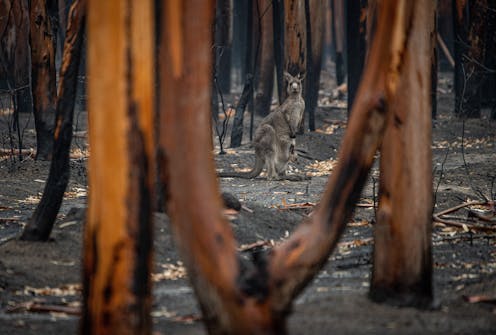
Over the past three years, Australians have been bombarded by natural disasters as record-breaking fires and monster floods hit communities hard.
Disasters don’t just affect humans. Wildlife, too, is often harmed. Think of the photos of thirsty koalas during the Black Summer fires, or the flood-hit mud-covered kangaroo. These images bring the hurt home to us in a way words can’t.
It’s no surprise many of us have felt compelled to try and help these animals, offering food, water and shelter to try to help them survive. We celebrate when a flood-affected koala is returned to the wild. But it’s worth taking a look at whether our instinctive responses actually do what we hope.
Unfortunately, there’s little scientific evidence these efforts help on a broad scale. It may help the animal in front of you – but the evidence is mixed on a species or ecosystem front. Sometimes, it can cause worse outcomes.
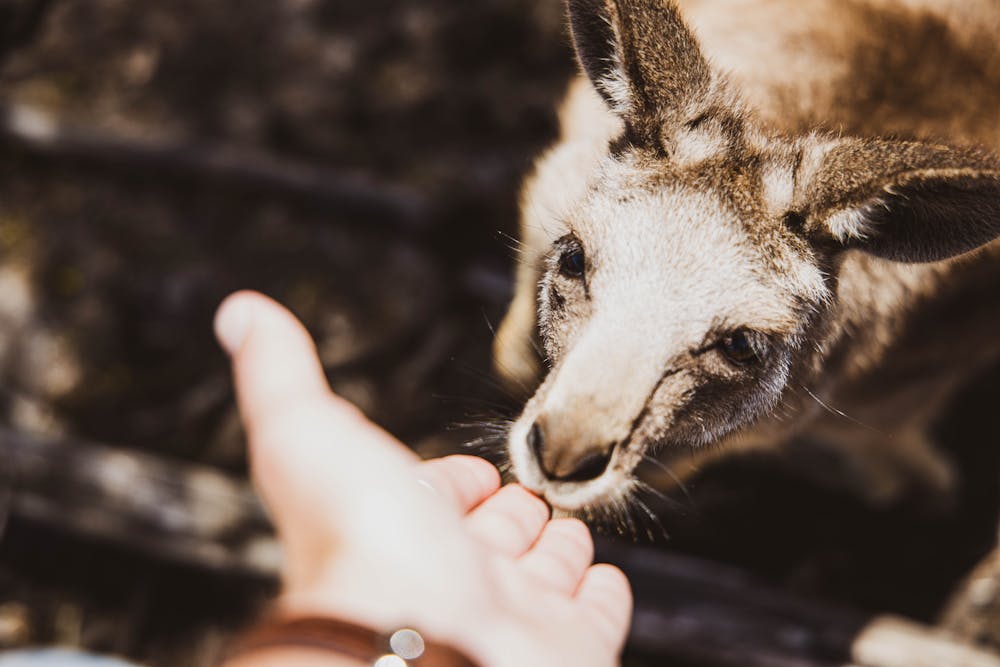
After fire, drought and flood, we want to help
Over the Black Summer of 2019-20, megafires burned vast areas of conservation land across many states. An estimated one billion animals were killed nationally and millions more left in a landscape with little to no food or shelter.
Seeing their plight, many wildlife carers and volunteers took food to burned areas, while state governments arranged aerial food drops for threatened species.
During droughts, it’s common for people to offer food and water to wildlife too.
Read more: How you can help – not harm – wild animals recovering from bushfires
The recent flooding in Australia’s eastern states has also affected wildlife, with snakes, wombats and koalas fleeing rising waters. The NSW government says such disasters can leave animals “injured, in distress, disoriented, heavily waterlogged, or in an unexpected location”.
During this year’s floods, there have been efforts to save yabbies and native fish from blackwater events, where decaying leaves and organic matter leach out oxygen from rivers. Others have tried to save stranded kangaroos.
But do efforts to help wildlife through disasters by giving them food and water actually have the desired effect?
 Wildlife in peril can become a lightning rod and cause many people to take action.
AAP
Wildlife in peril can become a lightning rod and cause many people to take action.
AAP
We just don’t know for sure
Authorities are split on this issue. While the Royal Society for the Prevention of Cruelty to Animals (RSPCA) was in favour of temporary feeding after the unprecedented Black Summer fires, the Victorian government is now listing a range of reasons not to feed wildlife during more recent floods.
These include the risks of wildlife becoming dependent on you for food and avoiding seeking out their own food, possible disease transfer, the risk of feeding wild animals something they can’t digest, and attracting predators and pests to feeding sites.
To date, there hasn’t been much research on feeding wildlife after disasters. Much of what we know relates to wildlife fed for tourism or recreation purposes. Think backyard bird feeders or attracting sharks for diving tours.
Here, the scientific consensus suggests feeding is a net negative. While it can help individual animals survive and thrive, it has wider flow-on effects.
It can increase disease by drawing unusual numbers of animals close together.
It can also disturb the natural balance of predator-prey systems, altering ecosystems and drawing invasive species. If you always put seed out, for instance, you may draw beautiful native birds to your backyard – but you may also draw mynah birds, feral pigeons and predators.
But aren’t disasters different? After all, it’s only intended to be temporary – helping wildlife survive until their normal food sources return.
The research that does exist paints a mixed picture. After the 2019 bushfires in Tasmania, researchers tracked what happened after volunteers put out feeding stations for animals. They found eight species came to eat: five common native species like brushtail possums and ravens, and three introduced species such as rabbits and rats.
Ecologists sometimes provide food, water and shelter when threatened species have lost habitat or access to food and water due to something humans have done. Research on this approach often demonstrates an overall benefit to the threatened species. But the consequences for the wider ecological community aren’t usually measured, which means they’re unknown.
We need to know what to do – and not to do
As climate change intensifies, so too do disasters and extreme weather. For example, climate scientists have warned the kinds of weather systems that fuelled the Black Summer of catastrophic bushfires will be up to four times more likely under predicted levels of warming.
The huge rainfalls over the past few years have prompted a boom in plant growth. When we return to dry El Niño conditions, we’ll be facing heightened fire risk once again.
And as global warming accelerates, extreme bursts of heavy rain will also become more frequent.
People naturally want to help animals caught in disasters. So let’s figure out what actually works and what doesn’t.
Our ongoing research project, Wildlife Assist, aims to fill some of these gaps in our knowledge by analysing what happened in the aftermath of the 2019-20 fires.
We want to answer questions such as: what does giving wildlife food, water and shelter after disaster actually do for individual animals? What effect does it have on broader populations and ecosystems? And what are the aims and motivations of people that choose to assist?
This is where you could help. If you were involved in giving food, water or shelter to wildlife during or after the Black Summer fires, we’d love to hear about your experience through our anonymous survey.
This project is a collaboration between the University of Sydney, University of New England, Taronga Conservation Society Australia and RSPCA Australia
Authors: Samantha Finnerty, Postdoctoral Research Associate - Wildlife Ecology, University of Sydney


















