

I’ve just been diagnosed with cancer, now what?
- Written by Marilynne N Kirshbaum, Professor and Chair of the Human Research Ethics Committee, Charles Darwin University
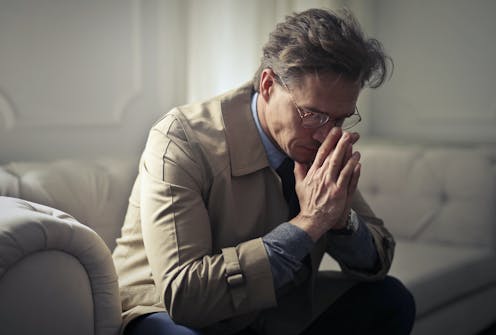
In one pivotal instant your life has changed and there will be no turning back. How will you accept, adjust and adapt to being “someone who has cancer”?
Well, first, you are still the same person. But now you have a definitive diagnosis calling for your immediate attention.
There are hundreds of kinds of cancer, distinguished and identified according to site, type of cell involved, aggressiveness and evidence of spread. These are the critical details you need to know as you begin to understand what is going on in your body.
There will be much to learn and understand about the disease and prognosis; social, emotional, sexual and spiritual effects; treatments, therapies and their side-effects; work implications and how all these opportunities and challenges will be intertwined.
But you don’t need to do everything at once. In time, and with support, you’ll be able to move forward with poise, strength, calm and intelligence.
Read more: Cancer is rising in under-50s – but the causes are a mystery
Emotions will vary – from you and others
Whatever your usual demeanour and emotional state, be ready for some surprises. This will be a period of uncertainty. Expect to find yourself experiencing the full gamut of reactions such as shock, anger, grief and guilt, along with warm and deep feelings of love, compassion and gratitude for the people and environment that surround you.
In the first few days, you might want to limit who you tell about your diagnosis or keep your news private to give yourself a chance to adjust without interference. Because, although well meaning, some people will react in unexpected ways and might cause you distress rather than be truly supportive or helpful.
Some people will be inclined to ask lots of questions, but you may not have all the answers. They might want to tell you other people’s stories, which you might not want or be ready to hear yet.
You have the option to completely accept the guidance of health-care professionals, who will give you the information they think you need at the time and direct you to further diagnostic tests and appointments.
However, you may want to know more about the type of cancer you have, the treatments being recommended, all possible side effects and seek out other sources. This will place the information you have received into perspective and will inform further questions. It is important to find resources that are credible.
Continuing work might be beneficial
For working people, the decision about returning to work will depend on how you feel and the flexibility of your workplace.
Assuming your body is up to it and it’s not a period where you will be immunosuppressed and susceptible to harmful effects of infections, work done at a steady pace is usually not only a boost to finances, but will have cognitive, social and emotional benefits.
The strategy here is to do a risk assessment of your job. Specify the challenges and discuss how they could be reduced with your manager. If you are your own boss, be flexible and kind.
Responding to cancer-related fatigue
The most common side effect of living with cancer (before, during and after all types of treatment) is a specific kind of extreme tiredness and lethargy called cancer-related fatigue.
Sometimes it appears alongside non-clinical depression and hopelessness. Some people can feel so awful they decline medical treatment, but for the majority, this type of fatigue gets in the way of enjoying life.
Read more: We asked ChatGPT and Dr Google the same questions about cancer. Here's what they said
Research on the most effective interventions to reduce cancer-related fatigue has evaluated a range of approaches, including medications and complementary therapies. Assuming the cause is not anaemia, which can be treated by a transfusion, the strongest evidence recommends physical, moderately aerobic exercise, often defined as “enough to break a sweat”.
However, for those who are not able to exercise at a moderate level – for example, if the cancer has metastasised to bones or if lung capacity is compromised – less physically demanding approaches can be valuable.
Prioritising things that bring you joy
A “joyful freedom” approach to cancer-related fatigue aims to bring back vitality through subtle, lifestyle adjustments. It’s a framework researchers developed based on a series of studies.
The first task is to list activities that bring joy. Then categorise each joy according to five attributes of energy-restoring activities:
- purposeful
- expansive
- connecting
- awe-inspiring
- nourishing.
This will raise awareness of how to best spend limited amounts of physical, emotional and cognitive energy.
Consider adding more of what brings joy into your life and remove some of the energy-depleting activities you do not enjoy. Making small changes can have a profound effect on your energy levels and give you the boost you need to live well with cancer.
In an ideal, well resourced national health service, GPs and specialist nurses would be available to provide holistic health promotion support for people with cancer. Realistically, this is rarely offered through mainstream public services. These services are more widely available in the private sector, or you may be able to find what you need through your local Cancer Council.
Read more: Olivia Newton-John gave a voice to those with cancer and shifted the focus to the life of survivors
Authors: Marilynne N Kirshbaum, Professor and Chair of the Human Research Ethics Committee, Charles Darwin University
Read more https://theconversation.com/ive-just-been-diagnosed-with-cancer-now-what-211522

















