how to comfort a child whose sibling has died
- Written by: Zoë Krupka, PhD Student, Faculty of Health Sciences, Lecturer, The Cairnmillar Institute, La Trobe University
In 1971, when I was four years old, my brother died of a congenital heart condition. Writing about this experience has prompted more responses than anything else I’ve ever written or spoken about. Untold and unheard stories appear in comments sections, strangers tell me cross-culturally consistent tales in the soft corners of conference rooms and speak about the siblings they’ve lost and how present the memories of them still are in their minds and hearts.
These stories all have one thing in common: a sense of being forgotten, left out of conversations about the dead, of rituals of mourning, and excluded from the respectful circle that is drawn around the bereaved.
Read more: Death and families – when 'normal' grief can last a lifetime
One of the reasons stories of sibling loss spark so much interest is that the research literature in the area is so sparse. We still know so little about what children who’ve lived through this kind of death need as they mourn.
While the quantitative literature has explored the profound negative lifelong physical and psychological health impacts of this kind of bereavement, so many social and familial factors contribute to these impairments that it’s hard to imagine how the figures would look if families and communities were better equipped to respond to grieving children.
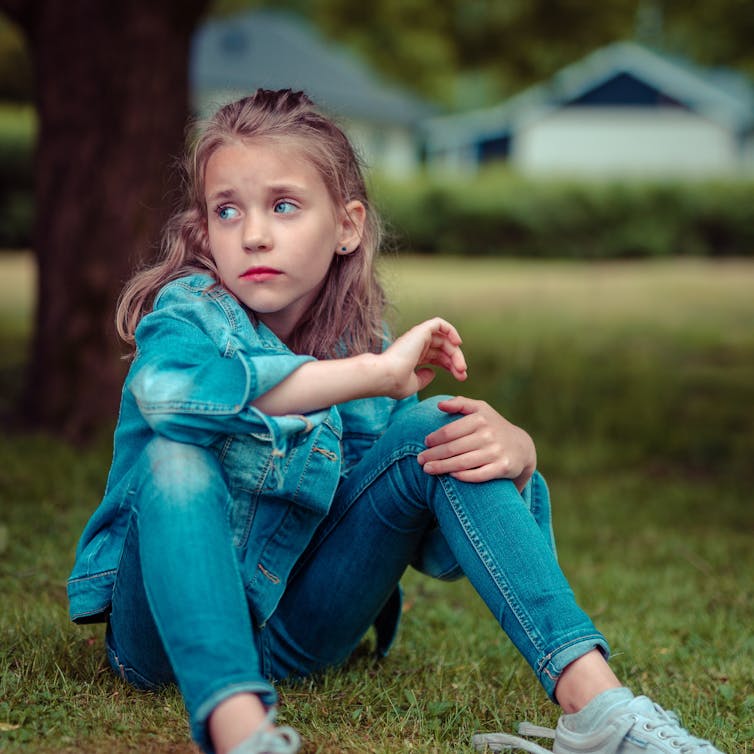 Children don’t forget about their lost siblings.
Janko Ferlič
Children don’t forget about their lost siblings.
Janko Ferlič
Part of the picture of sibling loss is that it is compounded. Children not only lose their sibling, but also the parents they knew disappear at least for a time into profound grief. This can lead to the loss of the child’s position as they try to cope with the higher expectations on their shoulders.
Adding to this complexity, the small body of qualitative research into children’s experience of losing a sibling highlights a raft of social failures. Silence about the mechanics of death, family isolation and the persistent myth across many cultures that children bounce back from grief more easily than adults are some of the most salient.
Read more: Singing death: why music and grief go hand in hand
In this literature, grieving children tell us about what they wanted and didn’t get, and reading it provides some guidance on how to support bereaved siblings for anyone willing to listen. The following short list of suggestions is drawn directly from this qualitative literature.
Make genuine room for children in discussions
The evidence is very strong that grieving children of all ages need to be involved at every level in discussions about death and in the planning and performing of death rituals.
But, if we’re going to make room for them, we have to get across our own death material and be prepared to answer painful, graphic and profound existential questions about death and dying, such as:
Can you show me what a decomposing body looks like? Why are we going to burn my sister in her coffin? When will you die? And how? When will I die? Why do some people die while others keep on living? Why my brother and not someone else?
To tell the truths about death to children and to really include them in family and community meaning-making is to expose our culture’s myths of death and dying, whatever they are, to profound criticism and scrutiny. That is what we are being asked to do.
Accept that children’s grief is no different to ours
Sibling bereavement researcher Betty Davies’s participants spoke to her again and again about their need for the lifelong persistence of their grief to be understood.
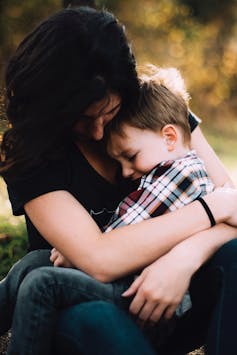 You never stop grieving the loss of a sibling.
Jordan Whitt
You never stop grieving the loss of a sibling.
Jordan Whitt
They spoke of wanting the adults in their lives to accept that their grief is no different to ours, that they are never too young to feel loss and that just because they are children doesn’t make them any more resilient than grown-ups.
They are asking us to challenge the almost universal myth that children forget, and instead to stand with them in their bereavement rather than setting them apart to take solace in their imagined innocence.
Honour continuing bonds with the dead
Our siblings play a significant role in our development, and this helps to explain some of the reasons why we are so deeply impacted when a sibling dies.
We develop our self in relationship to others, and our siblings are a kind of mirror. When they die, we lose a relationship that provided an essential reflection of who we are and who we might become. Children whose sibling has died need to have a place for their ongoing thoughts, feelings and connection to the dead throughout their lives.
Read more: Grief rituals: what Australia can learn from the Day of the Dead
For children who never knew their dead sibling, this affirmation of their connection to the lost one has a different quality but is no less important. While for these children the links are not made up of memories of a relationship, they are important symbolic representations of the self through the lens of the grief that came before.
For both groups of children, those who knew their dead sibling and those who did not, stories about the lost child help to make sense of who they are and of their place in the world.
We can all play a part in making space for children whose sibling has died to bear the unbearable – by offering solace in the form of genuine inclusion and by breaking the silence that can turn pain into suffering.
Zoë Krupka is the author of Holding hands in the dark: Unburdening a child whose sibling has died, a chapter in Brothers and Sisters Coping with Loss and Grief, published in 2018 by Interactive Publications.
Authors: Zoë Krupka, PhD Student, Faculty of Health Sciences, Lecturer, The Cairnmillar Institute, La Trobe University