Parking apps are sweeping Australia’s cities. Here’s what you may not know about them
- Written by Julia Powles, Associate Professor of Law and Technology; Director, UWA Tech & Policy Lab, Law School, The University of Western Australia
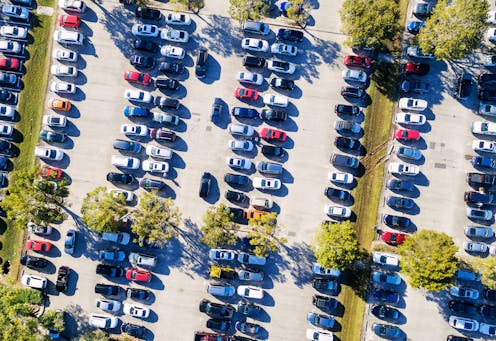
Parking, and the enormous amount of space we cede to it, is undergoing two revolutions. The first is the rise of parking apps. The second is a reckoning with whether we really need so much parking, and what else we could do with all that space.
In the middle of both revolutions sit drivers. Apps like EasyPark, CellOPark and PayStay promise efficiency through pay-as-you-go parking, adjusted to the minute and location via a smartphone app.
Drivers avoid the fuss of meters and overpaid or overrun tickets, and parking operators get easy-to-monitor databases. Meanwhile, app providers take a handsome per-session fee in the order of 5–12%, depending on the provider.
Councils and campuses have been sold the trick, festooning parking signs with QR codes, “parking is changing” declarations, and discreet signals of outsourced responsibility.
But who is behind these apps? Are we getting a good bargain? And what does it mean for us and our cities?
Rise of the parking apps
Parking apps have been around since the 2000s, with the Australian market picking up strongly in the last five years. Three of the most common apps are EasyPark, CellOPark and PayStay. In New South Wales, there is also a government-backed app, Park'nPay.
EasyPark is a Scandinavian export, now owned by private equity firm Vitruvian Partners. Tactically, EasyPark Australia’s spread through a city can feel like a stack of dominoes. In Perth, the app popped up in a string of outer councils before closing in on the prized centres of Stirling and Perth.
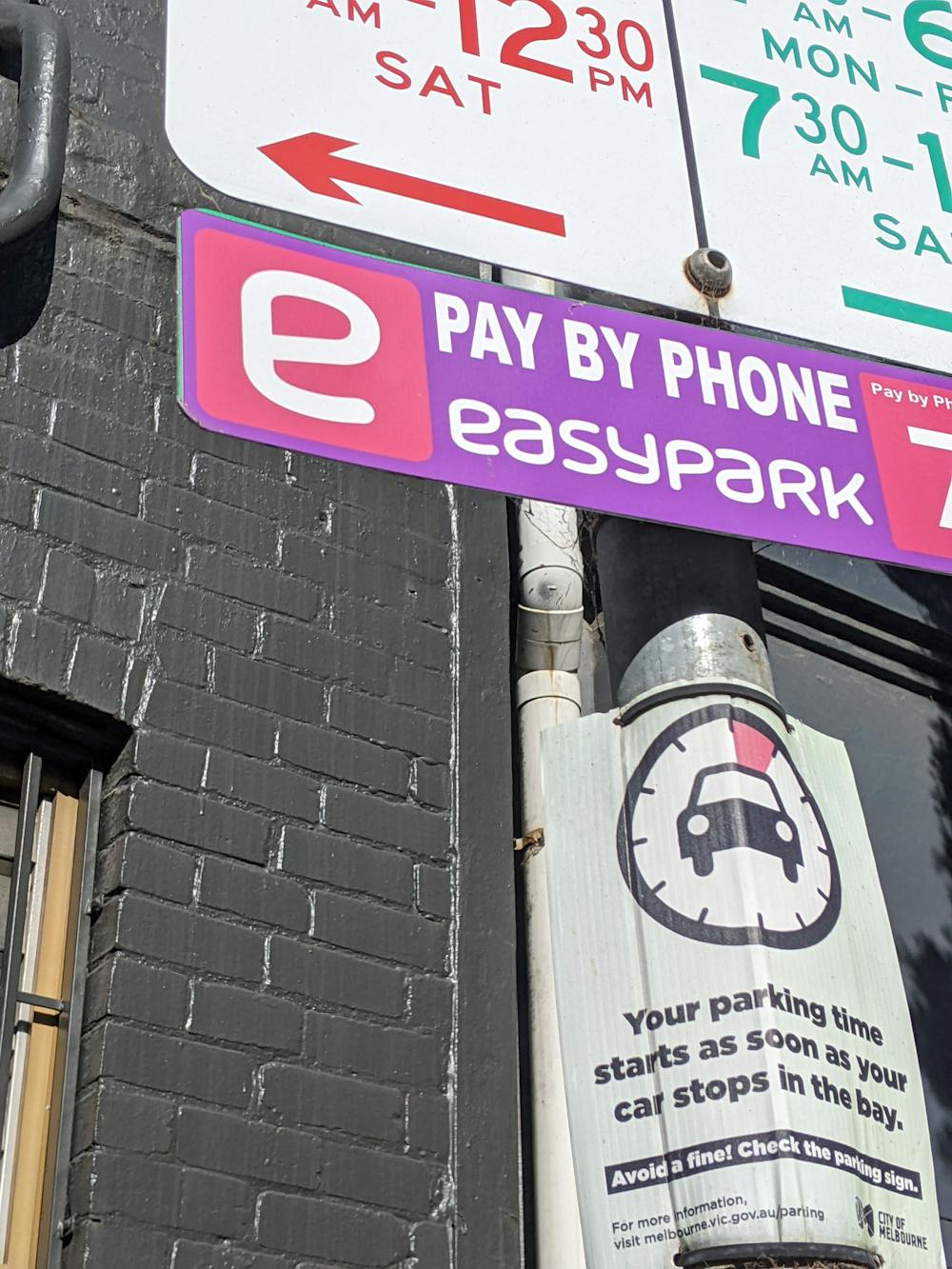
Encircled by EasyPark’s magenta signs, the service’s most recent adoptee is the University of Western Australia (the author’s home institution). Their competitor CellOPark didn’t get a look in, despite operating in the state for over a decade, including just down the road at Curtin University.
Australian-headquartered CellOPark services over 75% of Australian universities offering a parking app. Its service fee is 6% to EasyPark’s 11.5%, and it integrates directly with university authentication systems.
Terms of the bargain
App providers deserve payment as much as the next business. But parking apps strike deals that go beyond convenience, so we need to assess them fully and transparently.
The NSW Department of Customer Service recently learned this when it was slammed by NSW’s Auditor-General for dealings with Duncan Solutions (developer of Park'nPay). The auditor cited no evidence of “value for money” and a rushed procurement process.
There are several key considerations. The first – parking apps generate honeypots of detailed information on people and their movements. This presents new privacy costs and risks, as experienced by EasyPark’s European customers when home addresses, phone numbers, emails, scrambled passwords and partial financial information were stolen in a December 2023 hack. (The company claims no parking data was accessed in the breach.)
Read more: Why are there so many data breaches? A growing industry of criminals is brokering in stolen data
Those wanting to offer parking apps must determine precisely what data the apps collect, where it goes and what is done with it. They should conduct thorough risk assessments on potential data misuse. Preferably apps should maintain customer and location information encrypted and on-device, reducing the risk of improper third-party access.
Second, we need proper “value for money” assessments to address how parking apps cut into public revenue without significantly reducing costs (parking inspectors still patrol, and digital meters still need maintenance). Councils and campuses must publicly justify the trade-off – money paid to app providers reduces budgets for building public amenities or supporting core business.
In sum, there should be complete, public assessment of the financial, privacy, access and inclusion implications of adopting parking apps. To prevent underhanded dealing, councils and campuses should also enable open competition between apps, as Mosman Council has done in Sydney.
Parking is primal and paradoxical
Beyond data privacy and revenue implications, there is a more fundamental matter. Parking apps have a vested interest in an abundance of parking, it’s their core business.
But one of the most significant economic and environmental revolutions underway in cities is a radical reassessment of what we’ve sacrificed in pursuit of parking.
If we want long-term thinking about how to rescue and reimagine cities, we need to think beyond the apps.
Read more: Freeing up the huge areas set aside for parking can transform our cities
In the past two decades, urban planning scholars have revealed a number of stunning truths about drivers and cities. Landmark Australian research and books show that parking is primal and paradoxical.
Every driver feels they deserve “rockstar” parking, ideally right at their destination, secure and free – and they’re aggrieved if they can’t have it. Behind the wheel, we assume a universal impatience, intolerance and entitlement. It simmers above the unspoken anxiety of not being able to park.
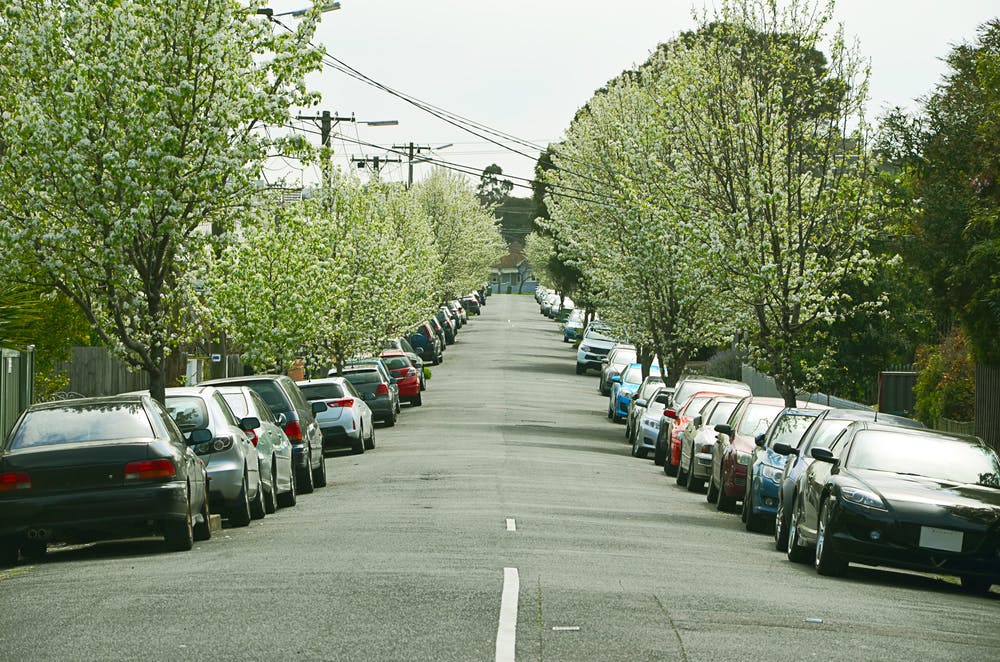 A quiet street tightly lined with parked cars, like this one in Footscray, Melbourne, is a common sight in many Australian suburbs.
doublelee/Shutterstock
A quiet street tightly lined with parked cars, like this one in Footscray, Melbourne, is a common sight in many Australian suburbs.
doublelee/Shutterstock
Since the 1950s, cities have been defined by their valiant efforts to cater to these base instincts.
We have paved them with carparks, relinquishing wetlands, parklands and foreshores. We have foregone housing and public amenities, all to ensure optimal storage of high-emissions private property.
Superficially, better managing the supply of parking presents a perfect union with parking apps. Real-time management is just the kind of technocratic petri dish where apps love to breed.
Yet scratch the surface and you’ll find the apps are locking in the status quo. They further subordinate people and places to the primacy of parking.
The great paradox is that while parking is both objectively abundant and an exorbitant tax on everyone, no driver is satisfied. So we build more parking, and download more apps, and our cities become less liveable.
Read more: Of all the problems our cities need to fix, lack of car parking isn't one of them
Authors: Julia Powles, Associate Professor of Law and Technology; Director, UWA Tech & Policy Lab, Law School, The University of Western Australia