Governments spend US$22 billion a year helping the fishing industry empty our oceans. This injustice must end
- Written by Vania Andreoli, PhD Candidate, The University of Western Australia
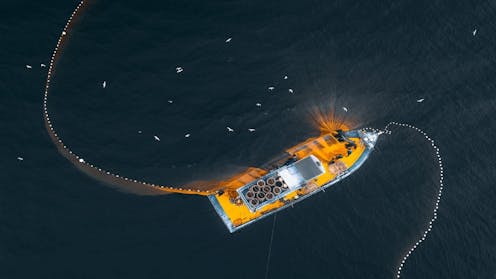
Overfishing has dire consequences for ocean health and for the millions of people who depend on fish for food and wellbeing. Globally, catch has been steadily declining since the 1990s. It’s a trend that’s likely to continue if we fail to act now.
Nearly all governments, including Australia’s, subsidise their fishing industries. Financial support comes in many forms, from taxpayer-funded fuel to reduced boat-building costs. These subsidies are harmful because they encourage overfishing. Some of the most environmentally damaging and least efficient fishing activities, such as bottom trawling and distant water fishing, would become unprofitable and cease without government subsidies.
Scientists worldwide are rallying for stringent regulations to eliminate harmful fisheries subsidies, which totalled a whopping US$22 billion in 2018. Safeguarding the ocean will strengthen food security and allow more equitable distribution of marine resources.
Trade ministers from around the world are set to convene later this month in Abu Dhabi at a key meeting of the World Trade Organization (WTO). In an open letter published today, we are among 36 marine experts calling on the WTO to adopt ambitious regulations promoting fisheries sustainability and equity, and to eliminate harmful fisheries subsidies.
Read more: Putting an end to billions in fishing subsidies could improve fish stocks and ocean health
A long-awaited agreement
International pressure from scientists helped to broker an earlier agreement on fishing subsidies, which is yet to be ratified.
In October 2021, 300 experts published an article in Nature calling for an end to harmful subsidies in the fishing sector.
After decades of fruitless negotiations, the WTO finally reached an agreement on fisheries subsidies in June 2022.
Once ratified by two-thirds of WTO members, this agreement will partially address the United Nations Sustainable Development Goal Target 14.6 to eliminate harmful subsidies.

Unfortunately, while this agreement is historic, it is narrow. It only prohibits member governments from financing illegal fishing activities and the exploitation of already overfished stocks. But it’s obvious illegal fishing should be banned and the focus on overfished stocks is too little, too late.
Experts argue the agreement fails to specifically address harmful subsidies across global fisheries and as such only affects a trivial component of subsidy-driven exploitation. The subsidies that reduce operating costs and increase fishing capacity, allowing vessels to travel further and remain at sea longer, remain in place.
Fisheries subsidies affect more than just fish
Scientists have been sounding the alarm for decades. Many published studies document the destabilising effects of fisheries subsidies on ecosystems. In addition to impacting biodiversity and ecosystems, subsidies also increase the CO₂ emissions that contribute to climate change.
More recently, studies have also applied a social perspective to this issue. Seafood lifts millions of people out of hunger, malnutrition and poverty. Yet more people will lose a secure source of food and nutrients if fish stocks continue to decline due to industrial overfishing.
Research shedding light on the concept of “equity” shows subsidies don’t just harm the ocean, they also affect human communities. These communities are largely in developing countries which are rarely the source of harmful fisheries subsidies. Rather, their waters are exploited by foreign vessels supported by wealthy governments’ fisheries subsidies.
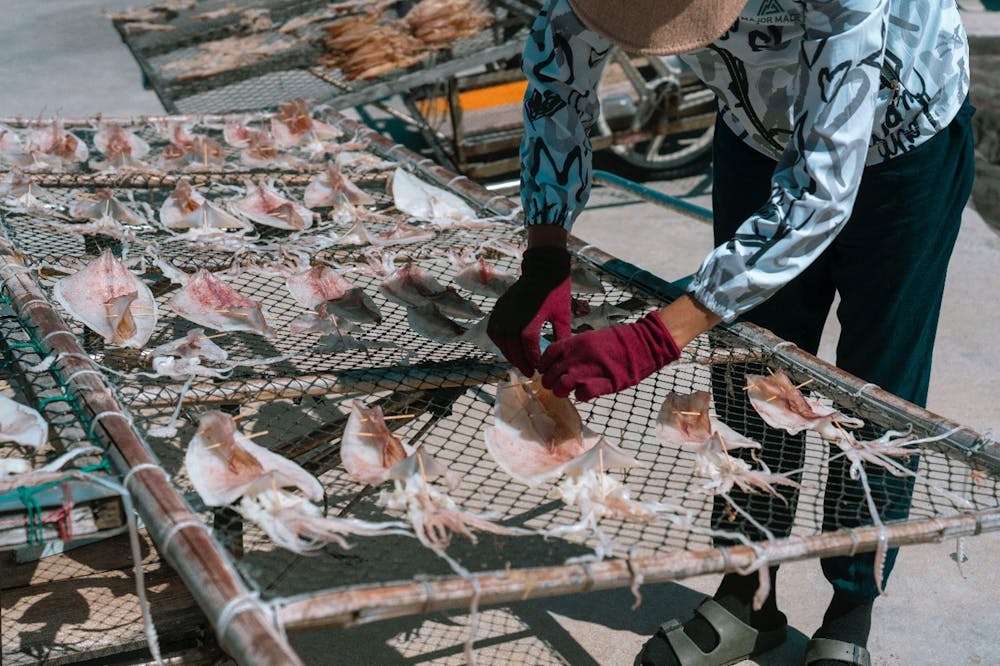 Fisheries contribute to livelihoods and food security of millions of people.
Jimmy Liao/Pexel, CC BY-SA
Fisheries contribute to livelihoods and food security of millions of people.
Jimmy Liao/Pexel, CC BY-SA
Fisheries subsidies foster unfair competition not only among countries but also between industrial and community led fishing fleets. In the Indian Ocean, the level of subsidies provided to industrial fisheries corresponds to the amount of seafood exported to international markets, largely supplying rich and food-secure countries. This shows governments are deliberately empowering their industrial fleets to fish for seafood largely exported and consumed elsewhere, instead of sustaining fisheries providing food for locals.
Read more: Fisheries subsidies fuel ocean depletion and hurt coastal communities
The good, the bad and the ugly
While most nations contribute to harmful subsidies, ten nations are responsible for 70% of this unsustainable financing. Chief among them are China, Japan and the European Union, reflecting the significant size of their distant water fishing fleets that typically access the resources of less-developed nations.
In contrast, Australia contributes only 0.1% of global harmful subsidies. Only 6% of Australia’s annual US$400 million in fisheries subsidies is considered harmful. While Australia should give attention to its ongoing annual taxpayer contribution of US$25 million to the fishing sector, it is well placed to demonstrate global leadership on how fishing can deliver sustainable and equitable outcomes without harmful subsidies.
An essential opportunity
A second wave of negotiations on fisheries subsidies is expected during the WTO Ministerial Conference this February in Abu Dhabi. This conference represents an invaluable opportunity to better protect the ocean.
In anticipation of this meeting, we are urging nations to adopt more ambitious regulations that eliminate harmful subsidies, prioritising fisheries sustainability and ocean equity.
Harmful fisheries subsidies are not only unsustainable but profoundly unfair. Based on the extensive body of evidence, the WTO should agree to eliminate harmful subsidies once and for all.
Authors: Vania Andreoli, PhD Candidate, The University of Western Australia