

a puma prowls Tasmania’s forests in Robbie Arnott’s wild eco-Western
- Written by: Caitlin Macdonald, PhD candidate, Faculty of Arts and Social Sciences, University of Sydney
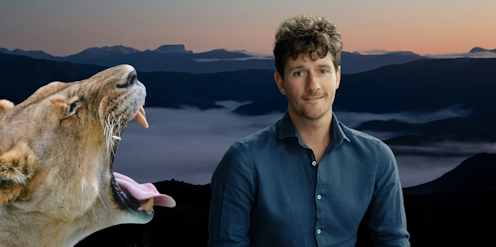
Robbie Arnott’s fourth novel, Dusk, opens with a nod to a persistent and almost comical rumour that circulates in Australian folklore: the tale of big cats prowling the bush and forests. While there is little evidence to suggest pumas were ever transported to or held in captivity in Lutrawita/Tasmania, the novel embraces this myth, making the mysterious presence of a puma named Dusk all the more captivating.
The novel starts with a rumour, reminiscent of the “mad whale” that opens Arnott’s previous novel Limberlost:
Word reached the twins that a puma was taking shepherds up in the highlights. And not just shepherds – the hunters who’d tried to catch the creature were being killed, too, killed and dragged through the snow and devoured.

The story recounts that deer were originally introduced to Tasmania by graziers. The deer quickly became a nuisance, impossible to manage, bullying merino sheep off the land. The graziers, desperate and mad, shipped over five breeding pairs of puma from the Andes to hunt the deer. Instead, the pumas targeted the sheep.
According to the history Arnott invents, Dusk, the “man-killer”, is the last surviving member of the graziers’ misbegotten plan.
Primal, indifferent menace
In Limberlost, Arnott framed the whale as an exaggerated tale, a monstrous creature imagined by a young boy. In Dusk, he treats the puma otherwise: her menace is primal and indifferent, driven by survival rather than vengeance. The puma’s presence is an emblem of the novel’s exploration of belonging, the consequences of disrupting natural ecosystems, and the ripple effects of colonisation.
 The story follows 37-year-old twins Iris and Floyd Renshaw, the children of convict escapees, who have lived their entire lives on the fringes of society. The twins are sojourners, surviving on labour, hunting and theft.
The novel begins as they set off on a journey to the Tasmanian highlands, spurred by rumours of the bounty for Dusk. In the fictional town of Rossdale, the twins meet Patrick Lees, a man similarly driven by the lure of the bounty. They form an uneasy alliance to track and kill the puma.
The novel is primarily told from Iris’s perspective, with one interlude from Floyd. Arnott weaves in flashbacks to the twins’ childhood with their alcoholic, abusive parents. Iris and Floyd were raised in an environment where survival was paramount, quickly learning to rely on each other.
Yet their relationship is not without its own complications. Floyd has chronic pain and the source of his injury remains mysterious until late in the novel, creating tension between the siblings. Iris wonders about life apart from him, but, ever pragmatic and capable, she feels both tethered to and protective of her brother.
A near-mythical Tasmania
Dusk continues Arnott’s tradition of exploring myth, human relationships and the natural world. Set sometime in the early 19th-century, Dusk is a Western of a different sort: reflective and understated. It is marked by the twins’ relentless yet quiet struggle to prove they are unlike their parents, prove they are hard workers, above the law. The novel straddles the line between eco-fiction and historical drama, offering a richly textured reflection on trust, survival and the ways the past constantly informs the present.
The story follows 37-year-old twins Iris and Floyd Renshaw, the children of convict escapees, who have lived their entire lives on the fringes of society. The twins are sojourners, surviving on labour, hunting and theft.
The novel begins as they set off on a journey to the Tasmanian highlands, spurred by rumours of the bounty for Dusk. In the fictional town of Rossdale, the twins meet Patrick Lees, a man similarly driven by the lure of the bounty. They form an uneasy alliance to track and kill the puma.
The novel is primarily told from Iris’s perspective, with one interlude from Floyd. Arnott weaves in flashbacks to the twins’ childhood with their alcoholic, abusive parents. Iris and Floyd were raised in an environment where survival was paramount, quickly learning to rely on each other.
Yet their relationship is not without its own complications. Floyd has chronic pain and the source of his injury remains mysterious until late in the novel, creating tension between the siblings. Iris wonders about life apart from him, but, ever pragmatic and capable, she feels both tethered to and protective of her brother.
A near-mythical Tasmania
Dusk continues Arnott’s tradition of exploring myth, human relationships and the natural world. Set sometime in the early 19th-century, Dusk is a Western of a different sort: reflective and understated. It is marked by the twins’ relentless yet quiet struggle to prove they are unlike their parents, prove they are hard workers, above the law. The novel straddles the line between eco-fiction and historical drama, offering a richly textured reflection on trust, survival and the ways the past constantly informs the present.
 Arnott is one of many Tasmanian authors who engange with the island’s popular idealisation as an untouched natural space – and with its complicated colonial history. In this respect, Dusk resembles the fiction of Richard Flanagan, Danielle Wood, Heather Rose, Favel Parrett, Christopher Koch and Rohan Wilson.
Arnott’s descriptions of Tasmania are striking. The landscape is haunting and hostile, filled with ancient remnants of the past and quiet reminders of colonial presence. Arnott casts Tasmania in a near-mythical light, where fossils are as common as (and mistaken for) trees, and the natural world feels both familiar and alien. His genius lies in his ability to evoke the strange beauty of the land, which seems to hold its own secrets.
As Iris traverses the eerie terrain, she finds herself strangely connected to it:
As she followed the river she began to see more of them, rising from the earth – cold, random, alabaster. Ribs and limbs and hips, impossibly old, haunting the green life of the country, beckoning her west. […] She felt that she fitted into this landscape, among these millennia-dead beasts.
The sense of belonging Iris experiences in the landscape stands in stark contrast to the alienation she feels in human society. She and Floyd are outcasts:
It was the simplest kind of curse. No magic, nothing otherworldly. The easiest of damnations, a trap stretched open for a lifetime, a barbed gift delivered at birth. Nothing more than a name: Renshaw.
Arnott captures both the gruelling nature of their lives as a consequence of their tainted name and their hardy adaptability to a nomadic lifestyle.
Unable to afford lodging and subjected to sleeping in stables, Iris searches for work. After a day’s work with peat cutters, she shares a meal with her companions, who are likely Indigenous. She marvels at their skill in transforming “rough game into this soft delight” and wonders how long they’ve been practising such traditions – and how long they will be “allowed to”.
Arnott is one of many Tasmanian authors who engange with the island’s popular idealisation as an untouched natural space – and with its complicated colonial history. In this respect, Dusk resembles the fiction of Richard Flanagan, Danielle Wood, Heather Rose, Favel Parrett, Christopher Koch and Rohan Wilson.
Arnott’s descriptions of Tasmania are striking. The landscape is haunting and hostile, filled with ancient remnants of the past and quiet reminders of colonial presence. Arnott casts Tasmania in a near-mythical light, where fossils are as common as (and mistaken for) trees, and the natural world feels both familiar and alien. His genius lies in his ability to evoke the strange beauty of the land, which seems to hold its own secrets.
As Iris traverses the eerie terrain, she finds herself strangely connected to it:
As she followed the river she began to see more of them, rising from the earth – cold, random, alabaster. Ribs and limbs and hips, impossibly old, haunting the green life of the country, beckoning her west. […] She felt that she fitted into this landscape, among these millennia-dead beasts.
The sense of belonging Iris experiences in the landscape stands in stark contrast to the alienation she feels in human society. She and Floyd are outcasts:
It was the simplest kind of curse. No magic, nothing otherworldly. The easiest of damnations, a trap stretched open for a lifetime, a barbed gift delivered at birth. Nothing more than a name: Renshaw.
Arnott captures both the gruelling nature of their lives as a consequence of their tainted name and their hardy adaptability to a nomadic lifestyle.
Unable to afford lodging and subjected to sleeping in stables, Iris searches for work. After a day’s work with peat cutters, she shares a meal with her companions, who are likely Indigenous. She marvels at their skill in transforming “rough game into this soft delight” and wonders how long they’ve been practising such traditions – and how long they will be “allowed to”.
 Robbie Arnott captures both the gruelling lives and hardy adaptability of his characters.
Samuel Scrimshaw/Unsplash
Yet there is nuance to Arnott’s representation of the sense of dislocation felt by the twins and by the novel’s Indigenous characters. Later, Iris questions Lydia, one of the peat cutters, about their “family business” and traditions:
I assumed this was something you’ve been doing forever. That the peat wine was your invention, an old tribal remedy or something?
Lydia’s response encapsulates the tension between preservation and adaptation:
We’ve used the peat forever, but selling it to you lot is a new thing […] Gotta survive somehow.
Arnott excels in his depiction of social exile and the cost of survival. He alludes to the inevitable, disturbing erosion of Indigenous ways of life under the pressures of the settler economy. Lydia repeats “you lot” a second time when Iris asks if they can track the puma:
Yes, I could track her. Even with all that you lot have taken from us, I could do it.
Iris flinches, feeling the impact of being categorised as part of, and thus complicit in, settler invasion. Her shock at being included in this collective identity and legacy of violence is ours, too.
History of dispossession
Dusk is an example of contemporary Australian fiction contending with the “non-Indigenous desire to belong to a stolen land,” identified by historian David Crouch in his exploration of the Australian postcolonial condition. Arnott subtly critiques the romanticised vision of Tasmania as an untouched natural space. He reveals that beneath the surface of this idealisation lies a history of dispossession, adaptation and survival. The Tasmanian landscape, though magnificent and mythical in Arnott’s prose, is haunted by the legacies of colonisation.
The novel holds a quiet power. Acts of compassion and generosity, often small and understated, are foregrounded. These moments – a handkerchief offered to a grieving father, a meal shared with a stranger – are the balm to the twins’ lives as pariahs.
Yet acts of compassion toward animals are what truly take centre stage. Echoing an incident with a trapped and injured quoll in Limberlost, Arnott depicts profound moments of desperation where caged animals are freed. Iris recalls her brother approaching an eagle caught in a snare. She “waited to hear the snap of a neck, or for Floyd to leap backwards, blood streaming down his wrists”. But rather than killing the bird, Floyd frees the eagle from the snare. His tender and practical care for the suffering animal surprises Iris.
As in his previous novels, Arnott draws a sharp distinction between the domesticated and the wild. The animals that populate the novel – horses, cockatoos, deer and kangaroos – are calm, existing within the bounds of human understanding. But Dusk, like the eagle Floyd encounters, is different. She is untouchable, primal and fiercely independent.
Arnott’s puma operates similarly to the thylacine in Tasmanian fiction, in works like Julia Leigh’s The Hunter (1999) and Sarah Kanake’s Sing Fox to Me (2016). Both are haunting symbols of the island’s fraught colonial history. Yet the puma represents a different facet of this legacy: an invasive species brought by settlers, a predator with a contested existence.
Robbie Arnott captures both the gruelling lives and hardy adaptability of his characters.
Samuel Scrimshaw/Unsplash
Yet there is nuance to Arnott’s representation of the sense of dislocation felt by the twins and by the novel’s Indigenous characters. Later, Iris questions Lydia, one of the peat cutters, about their “family business” and traditions:
I assumed this was something you’ve been doing forever. That the peat wine was your invention, an old tribal remedy or something?
Lydia’s response encapsulates the tension between preservation and adaptation:
We’ve used the peat forever, but selling it to you lot is a new thing […] Gotta survive somehow.
Arnott excels in his depiction of social exile and the cost of survival. He alludes to the inevitable, disturbing erosion of Indigenous ways of life under the pressures of the settler economy. Lydia repeats “you lot” a second time when Iris asks if they can track the puma:
Yes, I could track her. Even with all that you lot have taken from us, I could do it.
Iris flinches, feeling the impact of being categorised as part of, and thus complicit in, settler invasion. Her shock at being included in this collective identity and legacy of violence is ours, too.
History of dispossession
Dusk is an example of contemporary Australian fiction contending with the “non-Indigenous desire to belong to a stolen land,” identified by historian David Crouch in his exploration of the Australian postcolonial condition. Arnott subtly critiques the romanticised vision of Tasmania as an untouched natural space. He reveals that beneath the surface of this idealisation lies a history of dispossession, adaptation and survival. The Tasmanian landscape, though magnificent and mythical in Arnott’s prose, is haunted by the legacies of colonisation.
The novel holds a quiet power. Acts of compassion and generosity, often small and understated, are foregrounded. These moments – a handkerchief offered to a grieving father, a meal shared with a stranger – are the balm to the twins’ lives as pariahs.
Yet acts of compassion toward animals are what truly take centre stage. Echoing an incident with a trapped and injured quoll in Limberlost, Arnott depicts profound moments of desperation where caged animals are freed. Iris recalls her brother approaching an eagle caught in a snare. She “waited to hear the snap of a neck, or for Floyd to leap backwards, blood streaming down his wrists”. But rather than killing the bird, Floyd frees the eagle from the snare. His tender and practical care for the suffering animal surprises Iris.
As in his previous novels, Arnott draws a sharp distinction between the domesticated and the wild. The animals that populate the novel – horses, cockatoos, deer and kangaroos – are calm, existing within the bounds of human understanding. But Dusk, like the eagle Floyd encounters, is different. She is untouchable, primal and fiercely independent.
Arnott’s puma operates similarly to the thylacine in Tasmanian fiction, in works like Julia Leigh’s The Hunter (1999) and Sarah Kanake’s Sing Fox to Me (2016). Both are haunting symbols of the island’s fraught colonial history. Yet the puma represents a different facet of this legacy: an invasive species brought by settlers, a predator with a contested existence.
 Thylacine.
Tasmanian Museum
The brilliance of Arnott’s story is in the moments that starkly distinguish between trust and betrayal, kindness and cruelty. Dusk is both intimate and expansive, touching on the underlying realities of Tasmania’s colonial past and the tender and wearying ties that bind us together.
Arnott’s lyrical and restrained prose mirrors the landscape he describes – beautiful, rugged and full of hidden depths. For those familiar with his work, Dusk continues the exploration of the natural world and humanity’s place within it begun in his debut, Flames, in 2018. For newcomers, it serves as an arresting introduction to one of Australia’s most unique literary voices.
Authors: Caitlin Macdonald, PhD candidate, Faculty of Arts and Social Sciences, University of Sydney
Thylacine.
Tasmanian Museum
The brilliance of Arnott’s story is in the moments that starkly distinguish between trust and betrayal, kindness and cruelty. Dusk is both intimate and expansive, touching on the underlying realities of Tasmania’s colonial past and the tender and wearying ties that bind us together.
Arnott’s lyrical and restrained prose mirrors the landscape he describes – beautiful, rugged and full of hidden depths. For those familiar with his work, Dusk continues the exploration of the natural world and humanity’s place within it begun in his debut, Flames, in 2018. For newcomers, it serves as an arresting introduction to one of Australia’s most unique literary voices.
Authors: Caitlin Macdonald, PhD candidate, Faculty of Arts and Social Sciences, University of Sydney 

















