

Microsoft, TikTok and AI are ‘disrupting’ book publishing. But do we want their effortless art?
- Written by: Julian Novitz, Senior Lecturer, Writing, Department of Media and Communication, Swinburne University of Technology
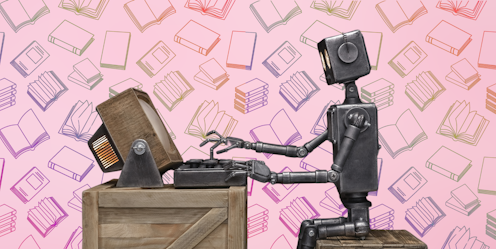
Publishing is one of many fields poised for disruption by tech companies and artificial intelligence (AI). New platforms and approaches, like a book imprint by Microsoft and a self-publishing tech startup that uses AI, promise to make publishing faster and more accessible than ever.
But they also may threaten jobs – and demand a reconsideration of the status and role of books as cultural objects. And what will be the impact of TikTok owner ByteDance’s move into traditional book publishing?
Microsoft’s 8080 Books
Last week, Microsoft announced a new book imprint, 8080 Books. It will focus on nonfiction titles relating to technology, science and business.
8080 Books plans “to test and experiment with the latest tech to accelerate and democratize book publishing”, though as some sceptics have noted, it is not yet entirely clear what this will entail.

 8th Note Press, BookTok’s imprint, is housed by a publisher who also hosts imprints by Sarah Jessica Parker and Crooked Media.
Stefan Postlestle/Richard Shotwell/AAP
8th Note Press focuses on the fantasy and romance genres (and authors) generating substantial followings on BookTok, the TikTok community proving invaluable for marketing and promoting new fiction. In the United States, authors with a strong presence on BookTok have seen a 23% growth in print sales in 2024, compared to 6% growth overall.
Access to Tiktok’s data and the ability to engineer viral videos could give 8th Note Press a serious advantage over legacy publishers in this space.
Hundreds of AI self-publishing start-ups
These initiatives reflect some broader industry trends. Since OpenAI first demoed ChatGPT in 2022, approximately 320 publishing start-ups have emerged. Almost all of them revolve around AI in some way. There is speculation that the top five global publishers all have their own proprietary internal AI systems in the works.
Spotify’s entry into the audiobook market in 2023 has been described as a gamechanger by its CEO, and is now using AI to recommend books to listeners. Other companies, like Storytel and Nuanxed, are using AI to autogenerate audiobook narration and expedite translations.
The embrace of AI may produce some useful innovations and efficiencies in publishing processes. It will almost certainly help publishers promote their authors and connect books with invested audiences. But it will have an impact on people working in the sector.
8th Note Press, BookTok’s imprint, is housed by a publisher who also hosts imprints by Sarah Jessica Parker and Crooked Media.
Stefan Postlestle/Richard Shotwell/AAP
8th Note Press focuses on the fantasy and romance genres (and authors) generating substantial followings on BookTok, the TikTok community proving invaluable for marketing and promoting new fiction. In the United States, authors with a strong presence on BookTok have seen a 23% growth in print sales in 2024, compared to 6% growth overall.
Access to Tiktok’s data and the ability to engineer viral videos could give 8th Note Press a serious advantage over legacy publishers in this space.
Hundreds of AI self-publishing start-ups
These initiatives reflect some broader industry trends. Since OpenAI first demoed ChatGPT in 2022, approximately 320 publishing start-ups have emerged. Almost all of them revolve around AI in some way. There is speculation that the top five global publishers all have their own proprietary internal AI systems in the works.
Spotify’s entry into the audiobook market in 2023 has been described as a gamechanger by its CEO, and is now using AI to recommend books to listeners. Other companies, like Storytel and Nuanxed, are using AI to autogenerate audiobook narration and expedite translations.
The embrace of AI may produce some useful innovations and efficiencies in publishing processes. It will almost certainly help publishers promote their authors and connect books with invested audiences. But it will have an impact on people working in the sector.
 Companies like Storytel are using AI to narrate audiobooks.
Karolina Grabowska/Pexels
Publishing houses have been consistently reducing in-house staff since the 1990s and relying more heavily on freelancers for editorial and design tasks. It would be naïve to think AI and other emergent technologies won’t be used to further reduce costs.
We are moving rapidly towards a future where once-important roles in the publishing sector – editing, translation, narration and voice acting, book design – will be increasingly performed by machines.
Spines’ CEO and co-founder, Yehuda Niv, has said, when queried, “We are not here to replace human creativity”. He emphasised his belief this automation will allow more writers to access the book market.
Storytel and Nuanxed have both suggested the growth of audiobook circulation will compensate for the replacement of human actors and translators. Exactly who will benefit the most from this growth – authors or faceless shareholders – remains to be seen.
Side hustles, grifts and ‘easy’ writing
I appreciate Schillace’s genuine, thoughtful optimism about AI and other new technologies. (I will admit to not having read his book yet, but did have a stimulating conversation with its bot.) But my mind is drawn back to the techno-utopianists of the 19th century, like Edward Bellamy.
In his 1888 novel, Looking Backward, Bellamy speculates on a future in which art and literature flourishes, once advanced automation has freed people from the drudgery of miserable labour, leaving them with more time for cultural pursuits.
The inverse seems to be occurring now. Previously important and meaningful forms of cultural work are being increasingly automated.
I could be shortsighted about this, of course. The publishing disruption is just getting underway, and we’ve already made some great strides towards dispensing with the admittedly often quite miserable labour of writing itself.
Companies like Storytel are using AI to narrate audiobooks.
Karolina Grabowska/Pexels
Publishing houses have been consistently reducing in-house staff since the 1990s and relying more heavily on freelancers for editorial and design tasks. It would be naïve to think AI and other emergent technologies won’t be used to further reduce costs.
We are moving rapidly towards a future where once-important roles in the publishing sector – editing, translation, narration and voice acting, book design – will be increasingly performed by machines.
Spines’ CEO and co-founder, Yehuda Niv, has said, when queried, “We are not here to replace human creativity”. He emphasised his belief this automation will allow more writers to access the book market.
Storytel and Nuanxed have both suggested the growth of audiobook circulation will compensate for the replacement of human actors and translators. Exactly who will benefit the most from this growth – authors or faceless shareholders – remains to be seen.
Side hustles, grifts and ‘easy’ writing
I appreciate Schillace’s genuine, thoughtful optimism about AI and other new technologies. (I will admit to not having read his book yet, but did have a stimulating conversation with its bot.) But my mind is drawn back to the techno-utopianists of the 19th century, like Edward Bellamy.
In his 1888 novel, Looking Backward, Bellamy speculates on a future in which art and literature flourishes, once advanced automation has freed people from the drudgery of miserable labour, leaving them with more time for cultural pursuits.
The inverse seems to be occurring now. Previously important and meaningful forms of cultural work are being increasingly automated.
I could be shortsighted about this, of course. The publishing disruption is just getting underway, and we’ve already made some great strides towards dispensing with the admittedly often quite miserable labour of writing itself.
 We’re moving closer to ‘dispensing with the admittedly often quite miserable labour of writing itself’.
Polina Zimmerman/Pexels
Soon after the launch of ChatGPT, science-fiction magazines in the US had to close submissions, due being inundated with AI-generated short stories, many of them almost identical. Today, there are so many AI-assisted books being published on Amazon, they have had to limit self-publishing authors to just three uploads per day.
AI-assisted publishing enterprises range from side hustles focusing on republishing editions of texts in the public domain, to grifts targeting unsuspecting readers and writers. All these schemes are premised on the idea writing can be rendered easy and effortless.
The use of AI may have other, delayed, costs though.
Can AI be a ‘thinking partner’?
When I was younger, writing and publishing a lousy short story just obliterated my time and personal relationships. Now I can do so with a one-sentence prompt, if I have a mind to – but apparently, this will destroy a lake somewhere.
Of course, as the No Prize for Pessimism bookbot takes pains to remind me, using AI in the writing process needn’t be a matter of lazy auto generation. It can be used for generative drafting, which is then revised, again and again, and integrated into the text.
AI can operate as a “thinking partner”, helping the writer with ideation and brainstorming. The technology is in its infancy, after all: there is bound to be some initial mess. But whatever way it is used, AI will help writers get to publication faster.
8080 Books’ charter offers a lot of rhetorical praise for the form of the book. We are told that books “matter”, that they impart “knowledge and wisdom”, that they “build empathy”. 8080 Books also wants to “accelerate the publishing process” and see less “lag” between the manuscript submission and its arrival in the marketplace. It wants books that are immediate and timely.
Slow can be good
But what is a book if it arrives easily and at speed? Regardless of whether it is AI-generated or AI-assisted, it won’t be quite the same medium.
For much of their history, books have been defined by slowness and effort, both in writing and the journey towards publication. A book doesn’t always need to be up to date or of the moment.
Indeed, the hope might be that the slowness and effort of its production can lead to the book outlasting its immediate context and remaining relevant in other times and places.
Greater speed and broader access may be laudable aims for these publishing innovations. But they will also likely lead to greater disposability – at least in the short term – for both publishing professionals and the books themselves.
Authors: Julian Novitz, Senior Lecturer, Writing, Department of Media and Communication, Swinburne University of Technology
We’re moving closer to ‘dispensing with the admittedly often quite miserable labour of writing itself’.
Polina Zimmerman/Pexels
Soon after the launch of ChatGPT, science-fiction magazines in the US had to close submissions, due being inundated with AI-generated short stories, many of them almost identical. Today, there are so many AI-assisted books being published on Amazon, they have had to limit self-publishing authors to just three uploads per day.
AI-assisted publishing enterprises range from side hustles focusing on republishing editions of texts in the public domain, to grifts targeting unsuspecting readers and writers. All these schemes are premised on the idea writing can be rendered easy and effortless.
The use of AI may have other, delayed, costs though.
Can AI be a ‘thinking partner’?
When I was younger, writing and publishing a lousy short story just obliterated my time and personal relationships. Now I can do so with a one-sentence prompt, if I have a mind to – but apparently, this will destroy a lake somewhere.
Of course, as the No Prize for Pessimism bookbot takes pains to remind me, using AI in the writing process needn’t be a matter of lazy auto generation. It can be used for generative drafting, which is then revised, again and again, and integrated into the text.
AI can operate as a “thinking partner”, helping the writer with ideation and brainstorming. The technology is in its infancy, after all: there is bound to be some initial mess. But whatever way it is used, AI will help writers get to publication faster.
8080 Books’ charter offers a lot of rhetorical praise for the form of the book. We are told that books “matter”, that they impart “knowledge and wisdom”, that they “build empathy”. 8080 Books also wants to “accelerate the publishing process” and see less “lag” between the manuscript submission and its arrival in the marketplace. It wants books that are immediate and timely.
Slow can be good
But what is a book if it arrives easily and at speed? Regardless of whether it is AI-generated or AI-assisted, it won’t be quite the same medium.
For much of their history, books have been defined by slowness and effort, both in writing and the journey towards publication. A book doesn’t always need to be up to date or of the moment.
Indeed, the hope might be that the slowness and effort of its production can lead to the book outlasting its immediate context and remaining relevant in other times and places.
Greater speed and broader access may be laudable aims for these publishing innovations. But they will also likely lead to greater disposability – at least in the short term – for both publishing professionals and the books themselves.
Authors: Julian Novitz, Senior Lecturer, Writing, Department of Media and Communication, Swinburne University of Technology 

















