

What’s the difference between osteoarthritis and rheumatoid arthritis?
- Written by: Giovanni E. Ferreira, NHMRC Emerging Leader Research Fellow, Institute of Musculoskeletal Health, University of Sydney
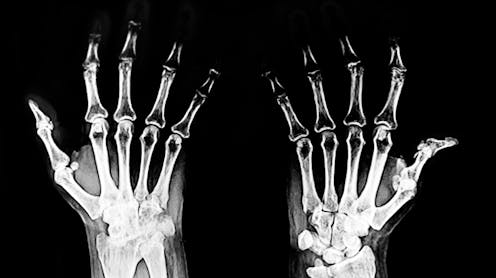
Arthritis – an umbrella term for around 100 conditions that damage the joints – affects 4.1 million Australians. This is expected to rise by 31% to 5.4 million by 2040 and cost the Australian health-care system an estimated $12 billion each year.
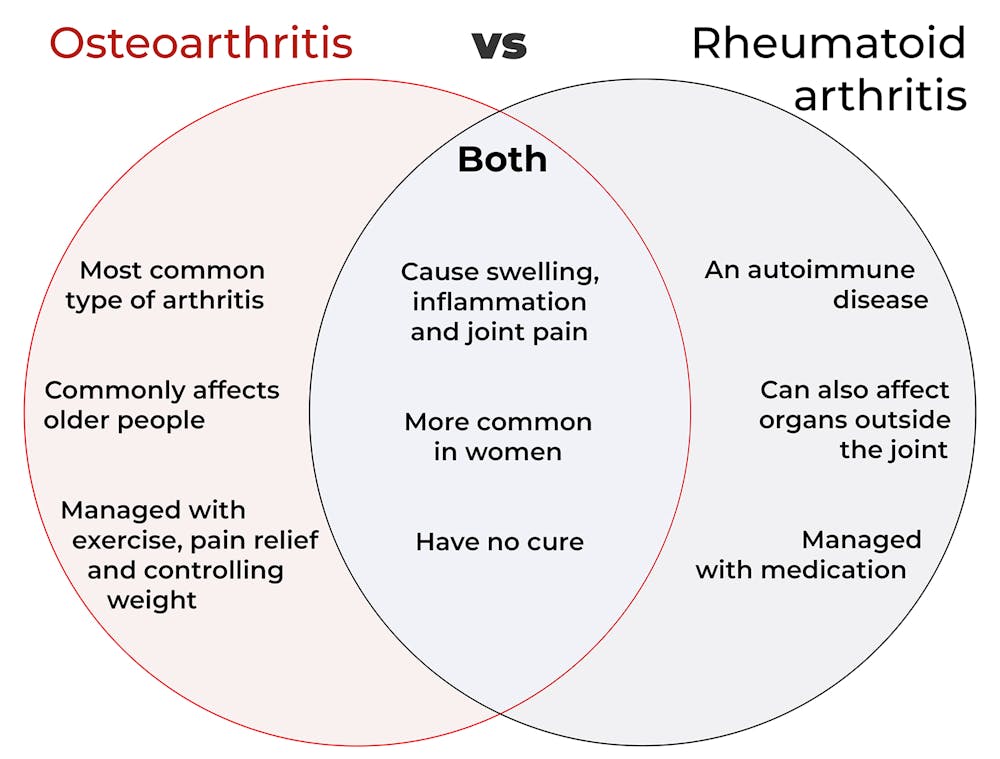
The two most common types, osteoarthritis and rheumatoid arthritis, can both cause joint pain, swelling and stiffness. Both are more common in women. Neither can be cured.
But their causes, risk factors and treatments are different – here’s what you need to know.
What is osteoarthritis?
Osteoarthritis is the most common form of arthritis. It affects 2.1 million Australians, mostly older people. About a third of Australians aged 75 and older have the condition.
It can affect any joint but is most common in the knees, hips, fingers, thumbs and big toes.
The main symptom is pain, especially during movement. Other symptoms may include swelling, stiffness and changes to the shape of joints.
The main risk factors are ageing and obesity, as well as previous injuries or surgery. For osteoarthritis in the hands, genetics also play a big role.
Signs of osteoarthritis can appear on knee scans from around age 45 and become more common with age.
However, this type of arthritis not simply the “wear and tear” of ageing. Osteoarthritis is a complex disease that affects the whole joint. This includes the cartilage (“shock-absorbing” connective tissue protecting your bones), bones, ligaments (connective tissue holding bones and body parts in place) and joint lining.
How is it diagnosed?
Diagnosis is based on symptoms (such as pain and restricted movement) and a physical exam.
The disease generally worsens over time and cannot be reversed. But the severity of damage does not always correlate with pain levels.
For this reason, x-rays and MRI scans are usually unhelpful. Some people with early osteoarthritis experience severe pain, but the damage won’t show up on a scan. Others with advanced and visible osteoarthritis may have few symptoms or none at all.
What about rheumatoid arthritis?
Unlike osteoarthritis, rheumatoid arthritis is an autoimmune disease. This means the immune system attacks the joint lining, causing inflammation and damage.
Common symptoms include pain, joint swelling and stiffness, especially in the morning.
Rheumatoid arthritis is less common than osteoarthritis, affecting around 514,000 Australians. It mostly impacts the wrists and small joints in the hands and feet, though larger joints such as the elbows, shoulders, knees and ankles can also be involved.
It can also affect other organs, including the skin, lungs, eyes, heart and blood vessels. Fortunately, disease outside the joint has become less common in recent years, likely due to better and earlier treatment.
Rheumatoid arthritis often develops earlier than osteoarthritis but can occur at any age. Onset is most frequent in those aged 35–64. Smoking increases your risk.
How is it diagnosed?
As with osteoarthritis, your doctor will diagnose rheumatoid arthritis based on your symptoms and a physical exam.
Some other tests can be useful. Blood tests may pick up specific antibodies that indicate rheumatoid arthritis, although you can still have the condition with negative results.
X-rays may also reveal joint damage if the disease is advanced. If there is uncertainty, an ultrasound or MRI can help detect inflammation.
Topical and oral anti-inflammatories are usually recommended to manage pain. However, opioids (such as tramadol or oxycodone) are not, due to their risks and limited evidence they help.
In some cases antidepressants such as duloxetine may also be considered as a treatment for pain though, again, evidence they help is limited.
What about rheumatoid arthritis?
Treatments for rheumatoid arthritis focus on preventing joint damage and reducing inflammation.
It’s essential to get an early referral to a rheumatologist, so that treatment with medication – called “disease-modifying anti-rheumatic drugs” – can begin quickly.
These medicines suppress the immune system to stop inflammation and prevent damage to the joint.
With no cure, the overall goal is to achieve remission (where the disease is inactive) or get symptoms under control.
Advances in treatment
There is an increasing interest in prevention for both types of arthritis.
A large international clinical trial is currently investigating whether a diet and exercise program can prevent knee osteoarthritis in those with higher risk – in this case, women who are overweight and obese.
For those already affected, new medicines in early-stage clinical trials show promise in reducing pain and improving function.
There is also hope for rheumatoid arthritis with Australian researchers developing a new immunotherapy. This treatment aims to reprogram the immune system, similar to a vaccine, to help people achieve long-term remission without lifelong treatment.
Authors: Giovanni E. Ferreira, NHMRC Emerging Leader Research Fellow, Institute of Musculoskeletal Health, University of Sydney

















