

How a year of trying to buy nothing made me a smarter shopper and a better teacher
- Written by: Ellen Heyting, PhD student in Education and Head of Years 11 and 12, Monash University
It started as a New Year’s resolution driven by guilt and a touch of sibling rivalry – but by the end of the year, it taught me valuable lessons as a teacher, including about the benefits of failure.
At Christmas dinner 2018, my sister declared she would buy nothing for a year. After living in Bangladesh for two years, she had seen how the world’s fashion industry was wreaking havoc on the country’s people and environment.
I decided to follow her lead. As an Australian living in Finland, I still can’t imagine going a year without a flight home to see family. So buying nothing (apart from groceries) would do something to offset all those carbon-costly air miles.
I’m also a high school humanities teacher, and realised what I was learning while trying to buy nothing could prove useful in a classroom.
Modelling behaviour
The effectiveness of “modelling” – demonstrating a behaviour, which is then observed and imitated by someone else – as a teaching strategy has long been known in education literature. There is recent evidence to suggest modelling is an effective strategy in education for sustainable development too.
Given this research, I thought modelling sustainable and ethical decision-making while teaching could prompt some interesting discussions, without needing to preach to my students.
This is known as education for sustainable development 1 (ESD1), where the goal is to raise awareness and change students’ behaviours. ESD1 has also been called instrumental ESD. It’s widely used in teacher training courses and school curricula around the world. It involves encouraging students to learn how their behaviours impact the environment, and what behaviours they could substitute or modify to reduce their ecological footprint.
However, some researchers argue this type of education for sustainable development is not enough, and advocate also including emancipatory education for sustainable development, or ESD2. Its goal is to build students’ capacity in more innovative, critical thinking about sustainable development.
Read more: Involving kids in making schools sustainable spreads the message beyond the classroom
How I applied modelling in my classroom
As I began my year of buying nothing, I was about to start teaching Year 7 students a unit called “Progress: At What Cost?”. It examines the parallels between the first industrial revolution – a time of extraordinary change, but also labour exploitation, colonisation and huge increases in pollution – and the challenges from progress today, including from climate change, structural inequalities and the technological revolution.
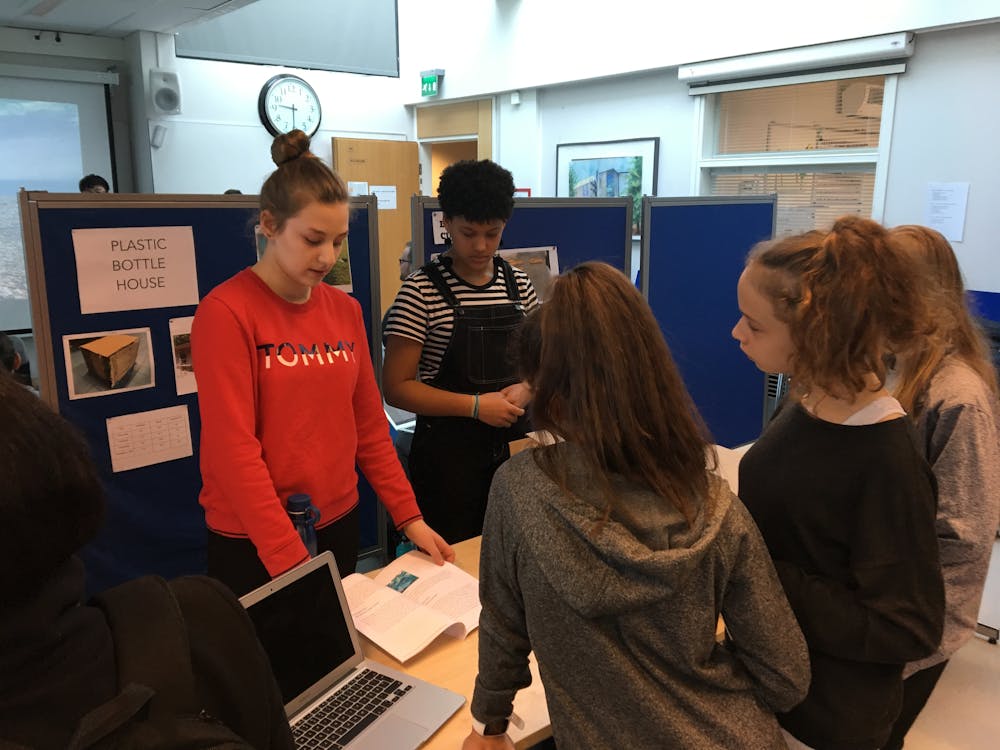 Year 7 International School of Helsinki students pitching ideas at their innovation fair.
Author provided
Year 7 International School of Helsinki students pitching ideas at their innovation fair.
Author provided
A combination of humanities, English, science and design, the unit culminates with an innovation fair. The students choose one of the United Nation’s Sustainable Development Goals to solve, and at the fair, students, teachers and parents walk around with $1000 in pretend “seed money” to “invest” with the students whose solutions they like best.
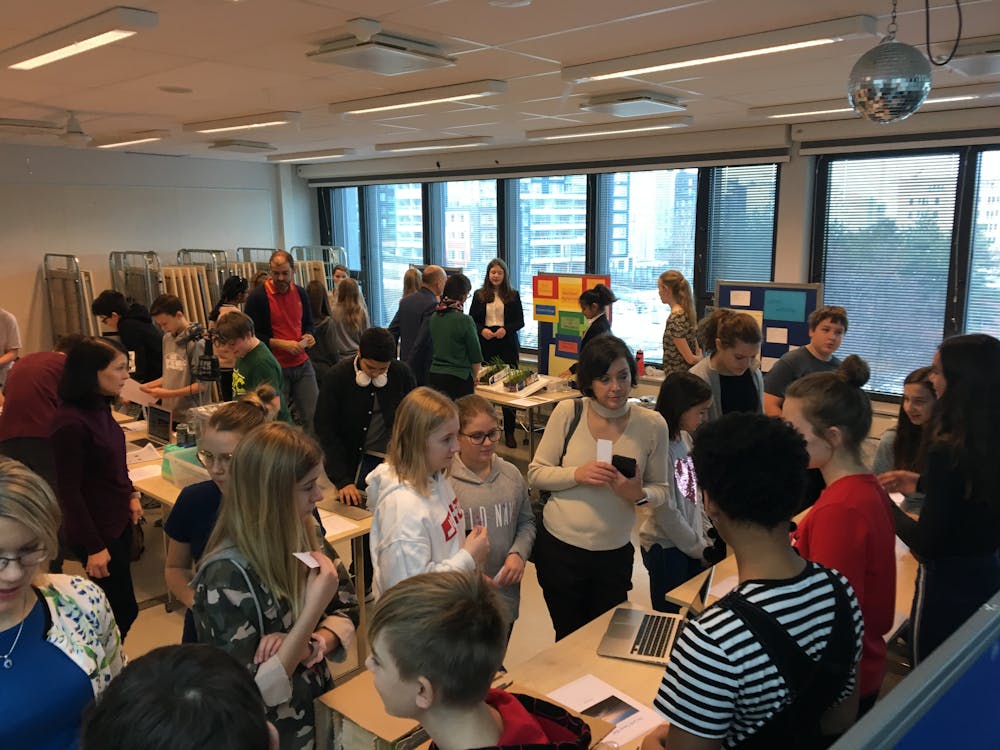 Students trying to win ‘investment’ for their ideas at the innovation fair.
Author provided
Students trying to win ‘investment’ for their ideas at the innovation fair.
Author provided
I’ve come to see these two strands of education for sustainable development as complementary. The first, more concrete ESD1 – learning about the global supply chain, our ecological footprints and low-carbon alternatives – allows students to see the impact of their actions today. ESD2 encourages students to imagine the challenges they might face in future, as well as new solutions.
Read more: Climate explained: why some people still think climate change isn't real
My failures produced the best lessons
If I think about what improved in my classroom because of my new year’s resolution, the biggest gains in my students’ and my own thinking came from discussing my failures.
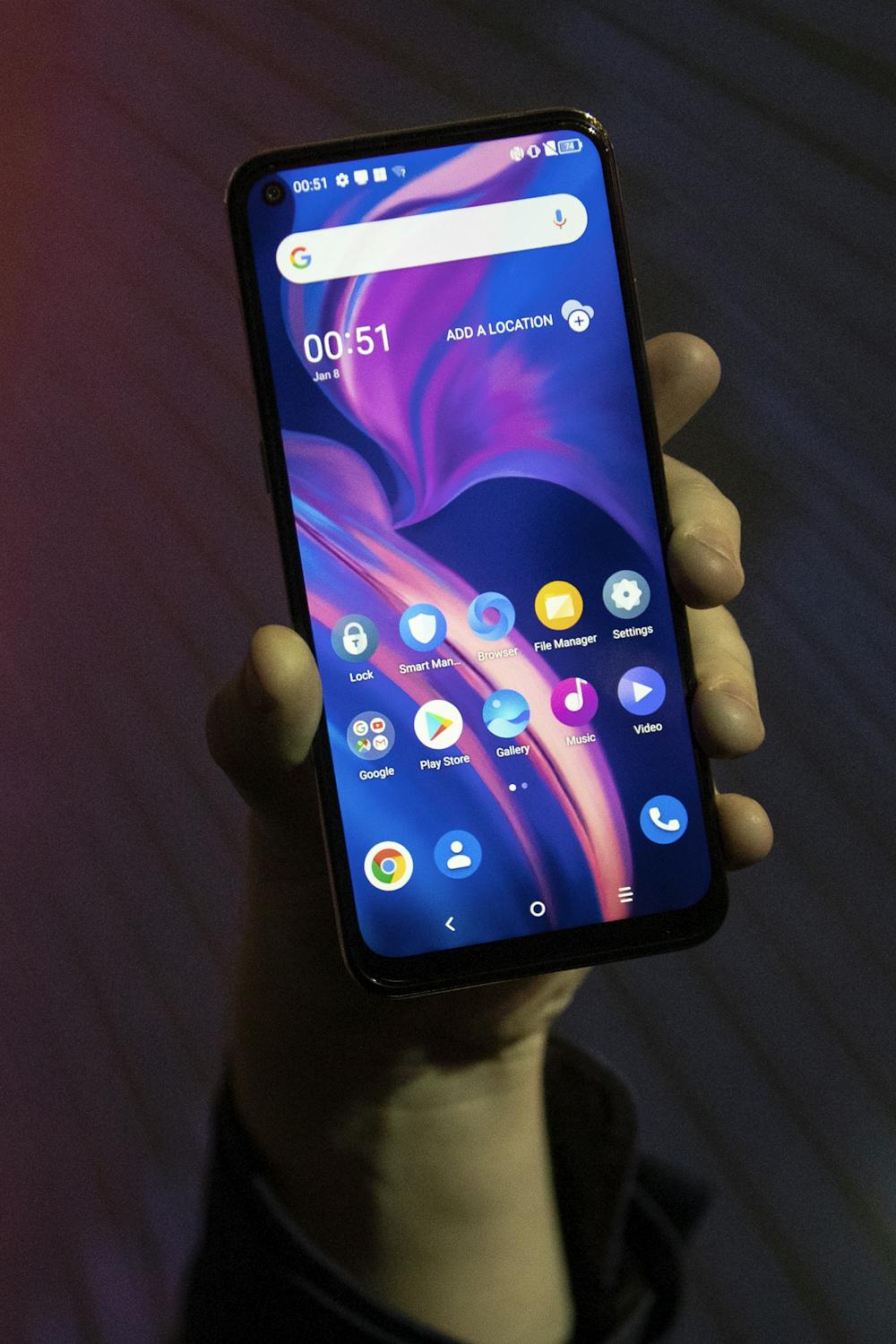 In a 24 hour tech-free challenge, the author discovered she was more hooked on her phone than her students.
EPA/Etienne Laurent
In a 24 hour tech-free challenge, the author discovered she was more hooked on her phone than her students.
EPA/Etienne Laurent
I didn’t make it the whole year without buying anything. I bought four things: food containers so I could avoid plastic wrap, new running shoes when my old ones began falling apart, a secondhand bike after mine was stolen and a secondhand phone when mine died in a storm.
I went about a week without a phone. It turned out I was as addicted to it as the teenagers in my class. This sparked a conversation about smart phones, screen-time and social media addiction as added costs of progress, and a class challenge to go tech-free for 24 hours. Two students out of the 36 in my class made it. I didn’t.
I decided to buy a secondhand “new” phone. I talked to my students about my checklist of sustainable consumption questions, which helped me buy almost nothing all year:
- Could I go without it? (No, as it turned out with my phone: I am an addict.)
- Could I repair what I had? (I tried drying my old phone out in a bag of rice for two days, but it didn’t work.)
- Could I buy a secondhand one? (Yes! I got one from Swappie.)
What I saved and learned
As my year of buying almost nothing in 2019 came to a close, I had no motivation to hit the post-holiday sales. I’d also saved at least few thousand dollars, which instead went towards paying off my mortgage and more meals out with friends.
At the beginning of this new school year, I don’t pretend to have all the answers about living sustainably. But as a consumer and as a teacher, there’s a lot I can do. I can support my students’ activism, including if they choose to join a Fridays for future school strike for the climate. I can support – and challenge – their critical reasoning capacity in our classrooms the rest of the week. Each of us can make a difference – and we can all start by practising what we preach.
Authors: Ellen Heyting, PhD student in Education and Head of Years 11 and 12, Monash University

















