Who decides when parliament sits and what happens if it doesn't?
- Written by Anne Twomey, Professor of Constitutional Law, University of Sydney
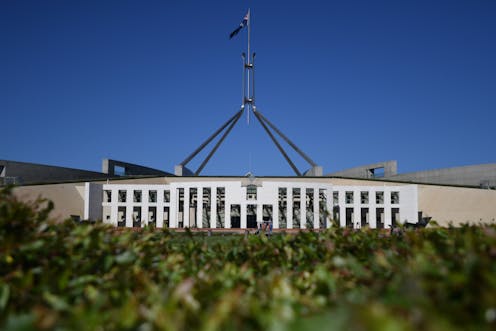
Complaints have been ringing out about how few days the federal parliament is proposed to sit in the first half of next year.
The parliamentary sitting calendar for 2022 has just been released. This includes ten days of sittings in the first three months of the year.
Who decides when parliament sits, how often must it sit and what are the consequences of reduced sitting periods?
What does the Constitution say?
The Constitution largely leaves parliament’s sitting timetable for parliament to decide. There are some limitations. First, section 5 requires parliament to meet within 30 days of the day appointed for the return of the election writs after an election.
Second, section 6 says the period between two sessions of parliament must not be 12 months or longer. This means parliament cannot be “prorogued” (formally suspended, with its session ended) for a year or more. But it is more often the case that when parliament isn’t sitting, it is simply adjourned during a session, rather than prorogued. There is no express constitutional limit upon how long or how often parliament may be adjourned.
There is, however, a practical limit. The government cannot spend money unless parliament passes budget bills to fund its annual operations. Parliament must therefore sit at least annually to pass a budget. In practice, it is also needed to sit to pass laws from time to time.
Who decides when parliament sits?
In the House of Representatives, the government effectively decides the sitting timetable. Since 2008, however, that timetable is formally approved by the House under standing order 29. The Senate determines its own sitting timetable, but for practical reasons, both houses usually sit at the same time, except, for example, when the Senate is holding estimates hearings.
The practice, since 1994, has been to have three different sitting periods within a year. There are the autumn sittings that run from February to April, the budget sittings from May to June, and the spring sittings from August to December. The general pattern is two sitting weeks in Canberra followed by two weeks without sittings. Ordinarily, parliament does not sit in January or July.
From 1901 to 2016, the House of Representatives sat, on average, for 67 days each year spread over 20 sitting weeks. The pandemic has recently disrupted the sitting patterns and reduced sitting times. The holding of an election also results in a reduced number of sitting days in a year, as the following table shows.
Why doesn’t parliament sit all the time?
As parliament sits in Canberra, which is a long way from the homes of the vast majority of MPs, it sits in staggered two-week blocks. This means politicians spend time in their electorates, so they can properly represent them and meet and aid their constituents. It gets them out of the hot-house of parliament and back into the real world. It also means that they can spend time at home with their families.
But if parliament rarely sits, doesn’t that mean that politicians hardly work at all?
People often think politicians aren’t working if they are not sitting in the chamber. But attending and speaking in the chamber is only a tiny part of the work of a politician.
Read more: Politics with Michelle Grattan: Christmas can't come too soon for Morrison
Backbench MPs spend most of their time working in their electorates, attending public events and working on parliamentary committees, which still operate when parliament is not sitting.
Ministers spend the vast bulk of their time outside parliament administering their departments and other government agencies, developing policy and legislative proposals, fulfilling their statutory functions and participating in cabinet.
Whether a politician is lazy or hard-working has no relationship with how often parliament sits.
Is next year’s proposed sitting timetable unusual?
Yes, it does seem that there are fewer proposed sitting days in February and March than normal, but it is hard to judge against recent years due to COVID-19 disruptions and elections.
The proposed 2022 sitting calendar has seven sitting days for the House of Representatives in February and three in March. The four proposed sitting days in April, eight in May and eleven in June will likely be lost due to the next federal election. This is why people are suggesting that there will be only ten sitting days in the first half of 2022.
That is comparable with the last election year of 2019, in which there were seven sitting days in February, none in March and only four in April leading up to a May election. It is fewer, however, than in the non-election year of 2020, in which there were eleven sitting days in February and five in March, before COVID-19 disruptions occurred, and in 2021 when there were eleven sitting days in February and eight in March.
Overall, it does appear the 2022 sitting calendar is loaded in such a way as to limit parliamentary sitting days in the lead-up to an election, but it is not completely disproportionate to other years, particularly when there was an election in the first half of the year.
What is the effect of fewer sitting days?
If parliament sits for fewer days in the first half of next year, it will reduce the number of opportunities to question the government in question time and raise issues of public importance. It will reduce the opportunities for the houses to disallow delegated legislation, such as any controversial regulations made by the government. It will also reduce the opportunities for parliamentary committees to table and debate their reports, although committees can continue to undertake hearings and scrutinise government action while parliament is adjourned.
Read more: VIDEO: Michelle Grattan on a crazy week in Canberra
From the point of view of a government with a slim majority and fractious members, the fewer the sitting days, the less the risk of its own members voting against it, and the possibility of being defeated on bills, as the Morrison government was in 2019 on the Medevac bill .
It also provides an excuse not to introduce promised bills or to let controversial matters languish without resolution prior to an election.
Finally, the absence of parliamentary sittings sucks out the oxygen of publicity for independents and parliamentary rebels who lose their parliamentary stage before the people. One can see why the idea of fewer sitting days would be attractive to the government and opposed by the opposition.
Authors: Anne Twomey, Professor of Constitutional Law, University of Sydney
Read more https://theconversation.com/who-decides-when-parliament-sits-and-what-happens-if-it-doesnt-172861