

how the rapid development of COVID vaccines prepares us for future pandemics
- Written by: Paul Griffin, Professor, Infectious Diseases and Microbiology, The University of Queensland
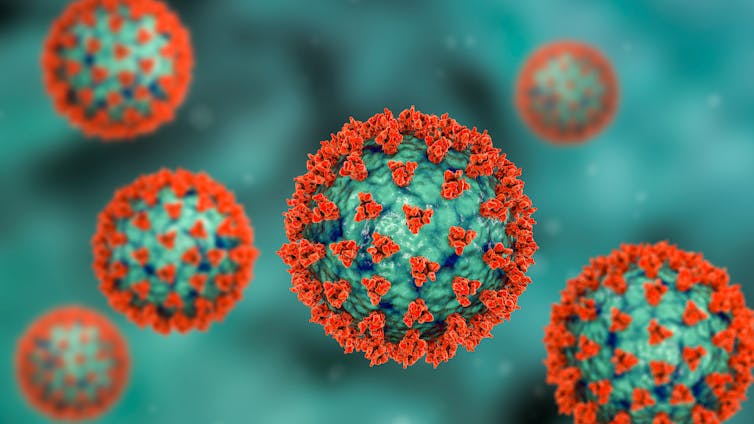
Since COVID was first reported in December 2019, there have been more than 775 million recorded infections and more than 7 million deaths from the disease. This makes COVID the seventh-deadliest pandemic in recorded history.
Factors including climate change, disruption of animal habitats, poverty and global travel mean we’re only likely to see more pandemics in the future.
It’s impossible to predict exactly when the next pandemic will happen, or what it will be. But experts around the world are working to prepare for this inevitable “disease X”.
One of the cornerstones of being prepared for the next pandemic is being in the best possible position to design and deploy a suitable vaccine. To this end, scientists and researchers can learn a lot from COVID vaccine development.
A look back
After SARS-CoV-2 (the virus that causes COVID) was discovered, vaccine development moved very quickly. In February 2020 the first batch of vaccines was completed (from Moderna) and the first clinical trials began in March.
An mRNA vaccine from Pfizer/BioNTech was the first to be approved, on December 2 2020 in the United Kingdom. Approvals for this and other vaccines, including shots developed by Moderna (another mRNA vaccine) and Oxford/AstraZeneca (a viral vector vaccine), followed elsewhere soon afterwards.
Previously the fastest vaccine developed took around four years (for mumps in the 1960s). Had COVID vaccines taken this long it would mean we would only just be rolling them out this year.
An estimated 13.72 billion COVID vaccine doses have now been administered, with more than 70% of the world’s population having received at least one dose.
The rapid development and rollout of COVID vaccines is likely to be one of the greatest achievements of medical science ever. It also means we are in a much better position to respond to future emerging pathogens.
New vaccine technology
A lot of work over many years prepared us to develop COVID vaccines as quickly as we did. This included developing new platforms such as viral vector and mRNA vaccines that can be adapted quickly to new pathogens.
While scientists had been working on mRNA vaccines for decades before the COVID pandemic, the COVID shots from Pfizer/BioNTech and Moderna were the first mRNA vaccines to be approved for human use.
These vaccines work by giving our body instructions (the “m” in mRNA stands for messenger) to make SARS-CoV-2 spike proteins. These are proteins on the surface of the virus which it uses to attach to our cells. This means when we encounter SARS-CoV-2, our immune system is poised to respond.
This technology will almost certainly be used to protect against other diseases, and could potentially help with a future pandemic.
In the meantime, scientists are working to improve mRNA technology even further. For example, “self-amplifying RNA” has the potential to enhance immune responses at lower doses compared with conventional mRNA.
While our current COVID vaccines are safe and very effective at protecting against severe disease, they’re not perfect. We may never be able to achieve a “perfect” vaccine, but some additional properties we’d like to see in future COVID vaccines include being better at reducing transmission, lasting longer, and needing to be updated less often as new variants emerge.
Even now there are many COVID vaccines in clinical trials. So hopefully, COVID vaccines that improve on the initial shots will be available relatively soon.
Other desirable attributes include vaccines we can administer by alternate routes to needles. For COVID and other diseases such as influenza, we’re seeing significant developments locally and internationally on vaccines than can be administered via skin patches, through the nose, and even orally.
Some challenges
Developing vaccines for COVID was a huge challenge, but one that can mostly be judged a success. Research has estimated COVID vaccines saved 14.4 million lives across 185 countries in just their first year.
However, the story of COVID vaccination has also had many other challenges, and arguably a number of failures.
First, the distribution of vaccines was not equitable. Analysis of the initial rollout suggested nearly 80% of eligible people in high-income countries were vaccinated, compared with just over 10% in low-income nations.
Supply of vaccines was an issue in many parts of the world, so expanding local capacity to enable more rapid production and distribution of vaccines will be important for the next pandemic.
Further, adverse events linked to COVID vaccines, such as rare blood clots after the AstraZeneca vaccine, affected perceptions of vaccine safety. While every serious adverse event is significant, these incidents were very rare.
However, these issues exacerbated other challenges that hampered vaccine uptake, including the spread of misinformation.
Misinformation remains a problem now and will probably still be prevalent whenever we face the next pandemic. Addressing this challenge involves understanding what’s deterring people from getting vaccinated, then informing and educating, addressing misinformation both about vaccination and the risks of the disease itself.
Restoring and building trust in public health authorities also needs to continue to be a focus. Trust in governments and health authorities declined during the COVID pandemic, and evidence shows lower trust is associated with lower vaccine uptake.
Ongoing preparation
There’s no doubt our recent experience with COVID, particularly the rapid development of multiple safe and effective vaccines, has put us in a better position for the next pandemic.
This didn’t happen by accident. There was a lot of preparation even before COVID was first discovered that facilitated this. Organisations like the Coalition for Epidemic Preparedness Innovations (CEPI) have been supporting research to develop vaccines rapidly to respond to a new threat for some time.
CEPI has an ongoing program that aims to be able to develop a vaccine against a new threat, or disease X, in just 100 days. While COVID vaccines have been a huge achievement, work continues in the hope we will be able to develop a vaccine even faster next time.
This article is part of a series on the next pandemic.
Authors: Paul Griffin, Professor, Infectious Diseases and Microbiology, The University of Queensland


















