

what now for the women of America?
- Written by: Erica Millar, Senior research fellow, La Trobe University
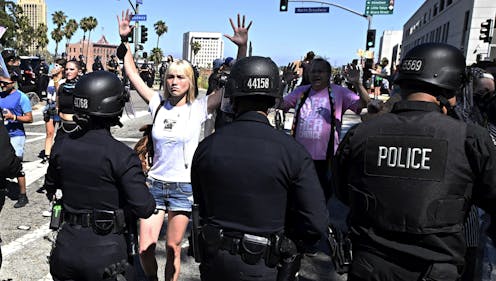
In a post-Roe world, 26 US states are certain or likely to ban abortion and one quarter of abortion clinics are predicted to close. Indeed, many closed the day Roe was overruled.
With increasing ferocity over the past 15 years, abortion access in the US has been gradually eroded since the 1973 landmark Supreme Court ruling on Roe v Wade, through measures including the banning of federal funding for abortion, and state laws that enforce mandatory counselling and stringent licensing requirements for abortion clinics.
In 2021, states across the US introduced 663 abortion restrictions and enacted 108 of them, a record number in any year since 1973. One quarter of US abortion clinics closed between 2011-2016, and, as of early 2022, there were five states with only one clinic.
The erasure of the constitutional right to abortion will be felt most acutely in states with already dramatically reduced access. It will not result in a seismic shift in access but will accelerate a decades long process that is far from over for either anti-choice activists, or the pro-choice majority.
Ending Roe won’t end abortions
Women have always circumvented restrictive abortion laws and, with the advent of medical abortion, it’s never been safer to do so. Individuals can safely self-manage their abortion using oral medications.
Pregnant Americans living in states hostile to abortion rights are getting abortion pills online or via the telephone, or travelling to buy them elsewhere — in the pharmacies in cities just over the Texan-Mexican border, for example.
Of course, this is far from ideal — medical abortion is only recommended up to the twelfth week of pregnancy, and women should optimally have the choice of surgical or medical methods. Good information about medical abortion is key to its success and safety.
Clinics over the border from the worst affected states will be placed under increased pressure. Many states will criminalise travelling to obtain an abortion, “aiding and abetting” someone from getting an abortion (by, for example, driving them to an interstate abortion clinic), and searching for or providing information about how to obtain an abortion (via the telephone or internet for example). Yet such measures will be difficult to enforce.
Read more: US Supreme Court overturns Roe v. Wade – but for abortion opponents, this is just the beginning
Forced pregnancies don’t usually end in adoptions
It’s estimated about one quarter of people who would have had an abortion under Roe will be forced to continue with a pregnancy post-Roe.
These pregnancies will, in about 90% of cases, lead to parenthood. Despite what the Supreme Court imagines, forced pregnancy, birth and parenthood, and not adoption, is generally the alternative to abortion.
Moreover, far from being “voluntary”, adoption is, as legal scholar Dorothy Roberts writes, most often “forced upon politically marginalised people as a response to crises caused by race, class, and gender inequities”.
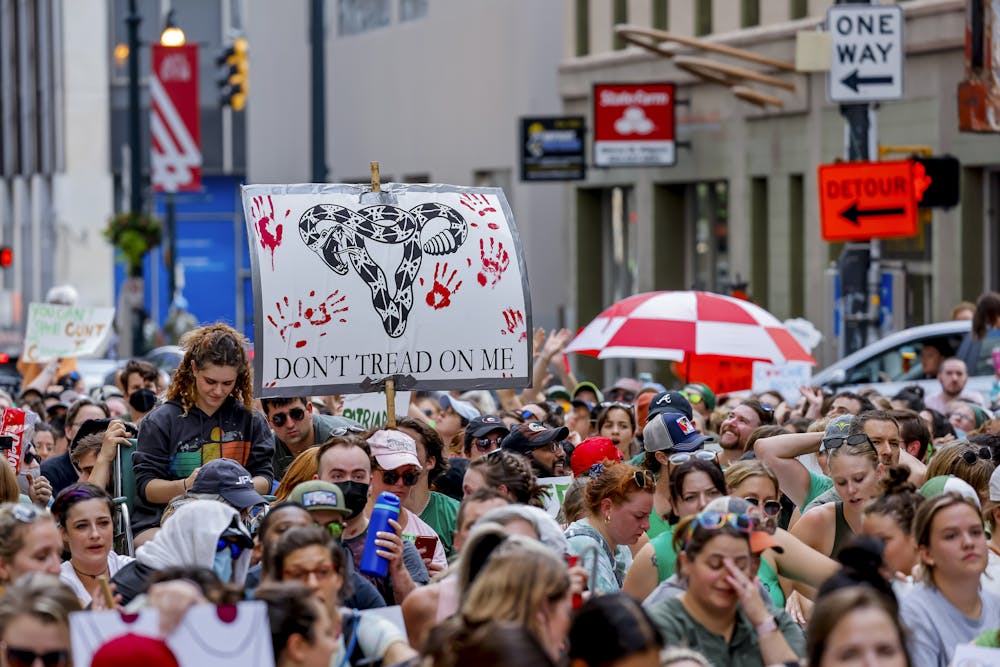
The end of Roe will increase inequality
Forced pregnancy will further entrench existing inequalities. Wealthy Americans in states that will ban or restrict abortion will continue to have abortions because they will have the capacity and resources to travel interstate or access abortion pills online.
Three quarters of abortion seekers in the US are living in poverty. Black women get abortions at nearly three times the rate of white women, and a higher proportion of Black women live in states that will restrict or criminalise abortion.
Police will disproportionately target non-white people in laws criminalising abortion. Today, 38 states have laws that can be used to charge a woman for pregnancy outcomes, including charges related to drug addiction and accidental falls.
Of the 1,200 prosecutions under these laws over the past 15 years, 52% were against Black women.
Last year, Brittanay Poolaw, a 21-year-old Native American woman, went to hospital in Oklahoma seeking help for a miscarriage, and was charged and convicted of first-degree manslaughter of her unborn child.
The complications for medical abortion and miscarriage are identical. Seeking medical help in this context may work for white women, who will be less subject to medical-legal surveillance, but is likely to subject racial minorities to increased surveillance for miscarriage.
Forced pregnancy increases poverty levels and takes a toll on children born and women’s health, their well-being, and their relationships well into the future.
Continuing with a pregnancy and birth is always more dangerous than abortion, and these risks are greater for Black women, who die 3.5 times more often in birth and the postpartum period than white women. Deaths resulting from the failure to properly manage miscarriage are also very possible.
What now?
The post-Roe world is undoubtedly concerning but is not all doom and gloom. Abortion is likely to remain protected in 20 states and the District of Columbia, and some states have recently strengthened their capacity to become abortion “safe havens”.
Responding to already restrictive contexts, US activists are organised to maximise and help fund abortion travel and self-managed care. With only 34% of the US population supportive of the Supreme Court’s decision, US pro-choice activists and organisations have significant force behind them.
Read more: Roe overturned: What you need to know about the Supreme Court abortion decision
Authors: Erica Millar, Senior research fellow, La Trobe University
Read more https://theconversation.com/the-end-of-roe-what-now-for-the-women-of-america-185769


















